


The European Union agreed on Wednesday to phase out Russian gas imports by late 2027 as part of an effort to end the bloc's decade-long dependency on Russian energy.
Under the agreement, the EU will permanently halt the import of Russian gas and move towards a phase-out of Russian oil. Liquefied natural gas imports will be phased out by the end of 2026 and pipeline gas by the end of September 2027.
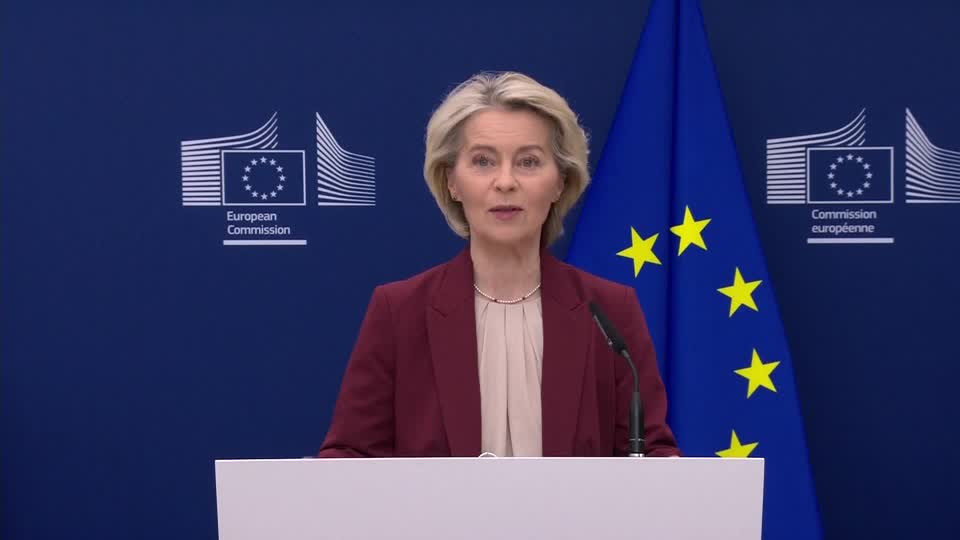
"Today, we are stopping these imports permanently. By depleting (Russian President Vladimir) Putin's war chest, we stand in solidarity with Ukraine and set our sights on new energy partnerships and opportunities for the sector," European Commission President Ursula von der Leyen said.
"This is the dawn of a new era, the era of Europe's full energy independence from Russia."
EU members will also submit "national diversification" plans regarding oil and gas supplies to the commission by March 1, and will be required to notify the EU executive whether they have Russian gas supply contracts or national bans in place.
The Kremlin hit back, saying the move to ban all imports of Russian gas by autumn 2027 would only force the EU to have more expensive energy and "accelerate" its power decline.
Hungary is also challenging the decision at the EU's Court of Justice, its Foreign Minister Peter Szijjarto said on Wednesday.
He said the move violated the EU's founding document and that it was a sanctions measure disguised as trade policy.
"Accepting and implementing this Brussels order is impossible for Hungary," Szijjarto said during a briefing broadcast on his Facebook page.
As of October, Russia accounted for 12 percent of EU gas imports, down from 45 percent before the start of its war with Ukraine in 2022, with Hungary, France and Belgium among the countries still receiving supplies.
The European Commission is also committed to phasing out remaining oil imports from Russia by the end of 2027, with a legislative proposal to be presented early next year. (AFP, Reuters)
EU agrees deal to cut Russian gas by late 2027
2025-12-03 HKT 22:24
Share this story


