


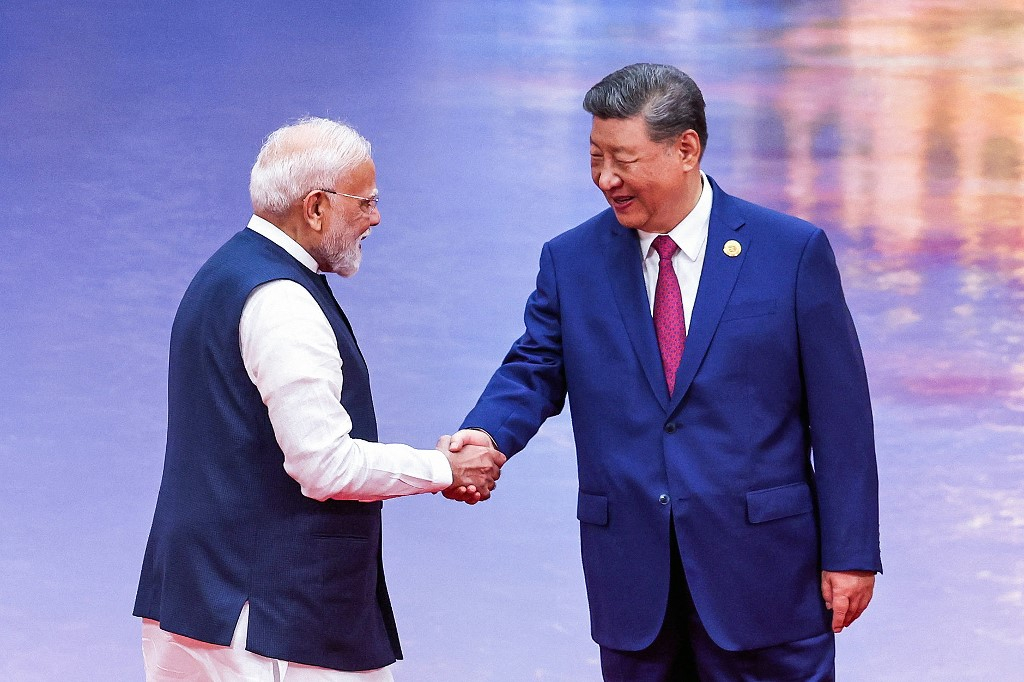
India has cut red tape to speed business visas for Chinese professionals, two officials said, in a major step to boost ties between the Asian giants and end chronic delays that cost output worth billions of dollars because of scarce technicians.
As Indian Prime Minister Narendra Modi cautiously rekindles ties with Beijing in the face of punishing US tariffs, the officials said New Delhi dropped a layer of bureaucratic scrutiny and shortened visa approval times to less than a month.
India had blocked virtually all Chinese visits after the nuclear-armed neighbours clashed on their Himalayan frontier in mid-2020, widening its vetting of business visas beyond the home and foreign ministries.
The issues around securing visas have now been completely resolved, said one of the officials, adding that "we have removed the layer of administrative vetting and are processing the business visas within four weeks".
Think tank the Observer Research Foundation estimates the tougher scrutiny led to production losses of US$15 billion over four years to Indian electronics makers, which import key machinery from China to make mobile telephones.
Major Chinese electronics companies, such as Xiaomi, reportedly struggled last year to get visas.
Industry executives have said such curbs hit their plans to expand in India, while the solar industry has also been hit by shortages of skilled labour.
The removal of red tape comes after Modi visited China this year for the first time in seven years, meeting President Xi Jinping and discussing ways to improve ties.
Subsequently, both countries resumed direct flights, for the first time since 2020.
The easing of curbs was prompted by a high-level committee headed by a former cabinet secretary, Rajiv Gauba, now a member of the top government think tank, which also aims to ease investment curbs on China that hurt foreign investor sentiment.
"We welcome the government's decision to expedite skilled-visa approvals for professionals from land-bordering countries," said Pankaj Mohindroo, head of industry body the Indian Cellular and Electronics Association.
The changes come at a crucial time for India, which is scaling up production across categories from finished goods to components and sub-assemblies, he added.
India's warmer ties with China follow the surprise levy of a 50 percent tariff on Indian goods by US President Donald Trump, including a penal tariff of 25 percent for buying Russian oil.
Modi has doubled down on focusing measures to boost growth by improving the environment for foreign investment, including business with China.
India also recently cut consumption tax and eased labour laws to lure foreign investors.
"We are cautiously easing some rules around restriction on China, which, we hope, will improve the overall business environment," a second official said. (Reuters)
India moves to cut red tape for Chinese professionals
2025-12-12 HKT 14:27
Share this story


