


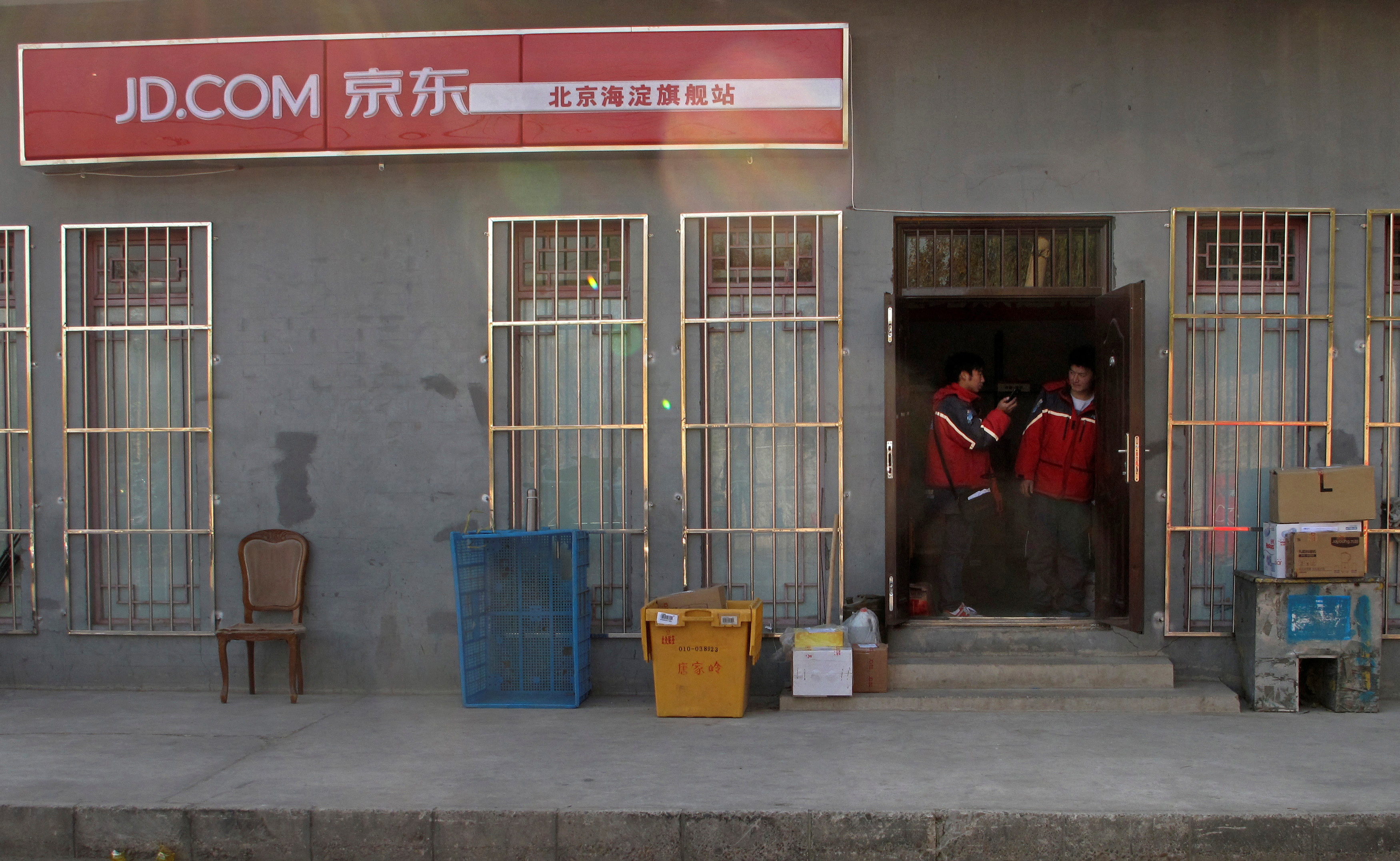
JD.com, one of China's largest e-commerce firms, has pledged 22 billion yuan in housing support for its army of couriers as competition intensifies in the instant retail market.
JD.com's move, announced in a post on its official WeChat account on Friday, follows a similar promise from food delivery firm Meituan. Last month, Meituan said it would invest 10 billion yuan over the next five years to build a more comprehensive welfare system for its delivery riders.
JD.com and Meituan, along with Alibaba, have this year been locked in a battle for market share in the instant retail space, which refers to goods delivered within one hour.
This rivalry has pushed companies to allocate billions of dollars towards consumer subsidies and discounts, squeezing profit margins and prompting regulatory scrutiny.
Mainland authorities have summoned Meituan, JD.com and Alibaba, urging them to scale back their rivalry and engage in "rational competition".
The battle has intensified pressure on China's estimated 12 million couriers who zip around on bikes wearing their signature bright yellow, red, orange and blue uniforms of their respective employers delivering everything from bubble tea to iPhones.
The plight of delivery workers has entered the Chinese public's consciousness in recent years as the subject of hit movies, best-selling memoirs and viral videos on social media highlighting the often precarious existence of drivers.
In response, firms have promised better social insurance coverage for couriers and some have changed incentive structures so that riders are rewarded for making deliveries on time, rather than penalised for lateness.
JD.com stated in its Friday post that it had already provided 28,000 units of housing for frontline employees and would provide 150,000 units over the next five years.
Meituan has a subsidised "Rider Apartments" scheme in cities such as Beijing, Shenzhen and Chongqing, offering riders affordable, secure and subsidised housing, with rents in some areas of Beijing offered at around 50 percent of market rates. (Reuters)
JD.com rides wave of courier concern in 22b yuan move
2025-12-12 HKT 15:46
Share this story


