


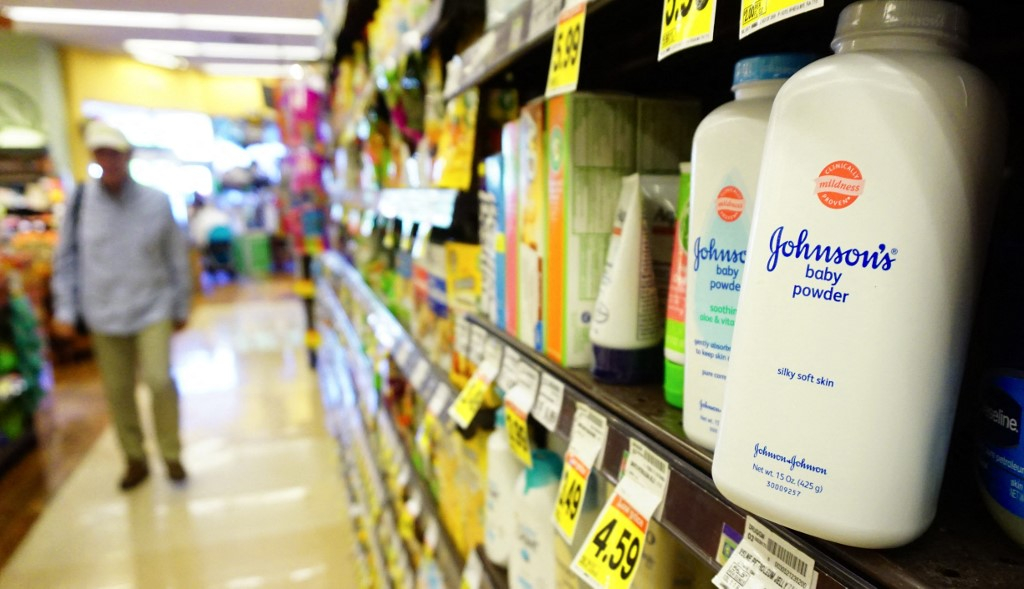
A California jury has awarded US$40 million to two women who said Johnson & Johnson’s baby powder was to blame for their ovarian cancer.
The jury in Los Angeles Superior Court on Friday awarded US$18 million to Monica Kent and US$22 million to Deborah Schultz and her husband after finding that Johnson & Johnson knew for years its talc-based products were dangerous but failed to warn consumers.
Erik Haas, Johnson & Johnson's worldwide vice president of litigation, said in a statement the company planned to "immediately appeal this verdict and expect to prevail as we typically do with aberrant adverse verdicts".
Kent was diagnosed with ovarian cancer in 2014, according to court records. Schultz was diagnosed in 2018. Both women are California residents who say they used J&J's baby powder after bathing for 40 years. Their treatments for ovarian cancer have involved major surgeries and dozens of rounds of chemotherapy, they testified at the trial.
In closing arguments, Andy Birchfield, an attorney for the women, told the jury that Johnson & Johnson knew as far back as the 1960s that its product could cause cancer.
"Absolutely they knew, they knew and they were doing everything they could to hide it, to bury the truth about the dangers," he said.
Allison Brown, an attorney for Johnson & Johnson, said the only people to tell Kent and Schultz that their cancers were caused by talc were their lawyers, as the alleged connection isn't backed by any major US health authority and there is no study that shows talc can migrate from the outside of the body to the reproductive organs.
"They don't have the evidence in this case, and they hope you don't mind," she told the jury.
J&J is facing lawsuits from more than 67,000 plaintiffs who say they were diagnosed with cancer after using its baby powder and other talc products, according to court filings.
The company has said its products are safe, do not contain asbestos and do not cause cancer. J&J stopped selling talc-based baby powder in the United States in 2020, switching to a cornstarch product.
J&J has sought to resolve the litigation through bankruptcy, a proposal that has been rejected three times by federal courts, most recently in April. The bankruptcies had put most cases on hold. Brown and Kent's cases are the first to go to trial since the latest Chapter 11 attempt was dismissed.
Before the bankruptcy attempts, J&J had a mixed record in talc trials, with verdicts as high as US$4.69 billion awarded to women who said baby powder caused their ovarian cancer. The company has won some trials outright and had other verdicts reduced on appeal.
The majority of lawsuits involve ovarian cancer claims. Cases alleging talc caused a rare and deadly cancer called mesothelioma make up a smaller portion of the claims J&J is facing. The company has previously settled some of those claims but has not struck a nationwide settlement, so many lawsuits over mesothelioma have proceeded to trial in state courts in recent months.
In the past year, J&J has been hit with several substantial verdicts in mesothelioma cases, including one for more than US$900 million in Los Angeles in October. (Reuters)
Two women get US$40m in talcum powder cancer verdict
2025-12-13 HKT 10:21
Share this story


