


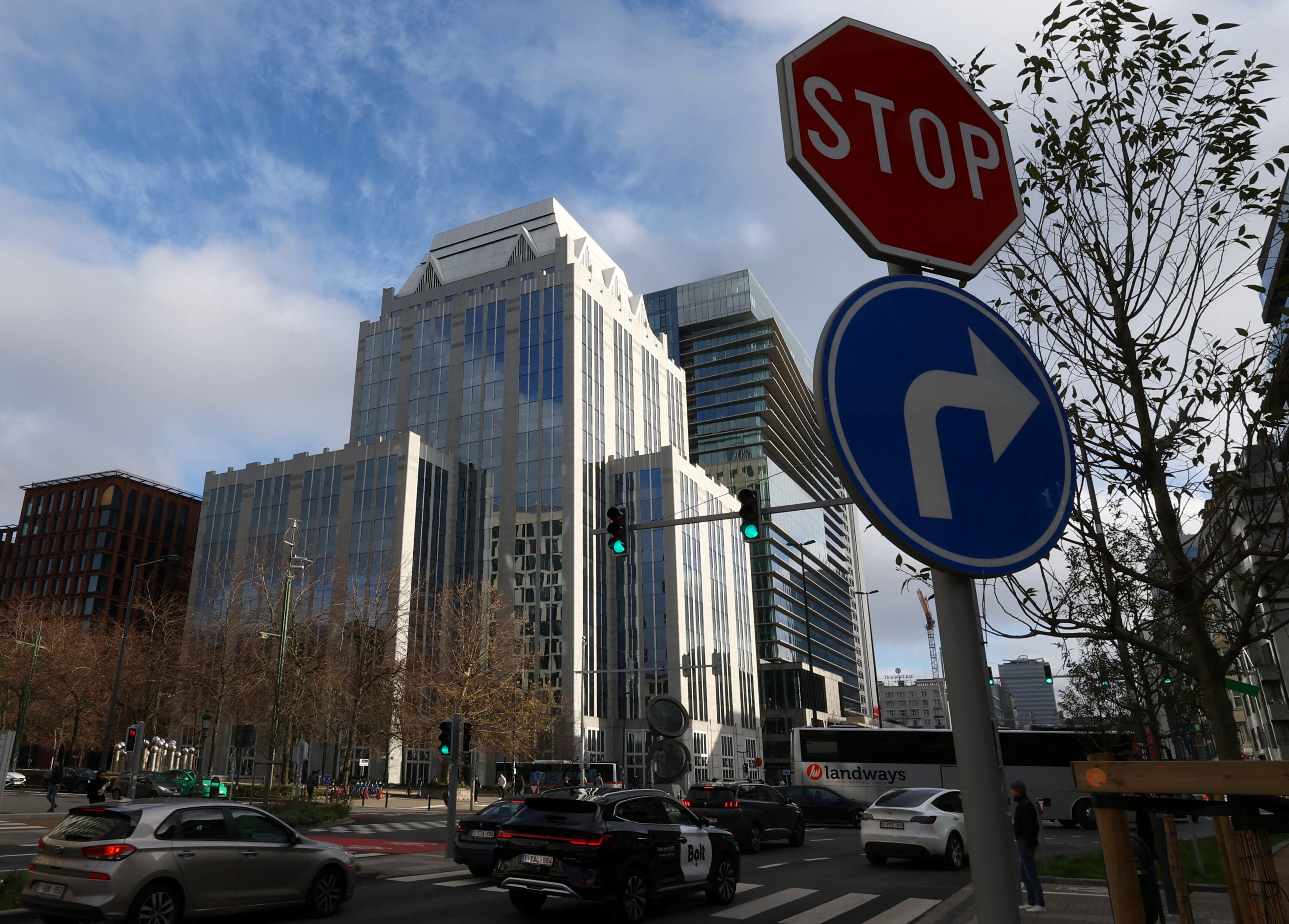
A Moscow court on Monday said it had received a lawsuit from Russia's central bank that sought US$229 billion in damages from Belgian central securities depository Euroclear.
News of the lawsuit came as the European Union's top diplomat Kaja Kallas said the bloc must take "very important" decisions on funding Ukraine at a crunch summit this week, but that talks over using frozen Russian assets were getting harder.
"We are not there yet, and it is increasingly difficult, but we're doing the work and we still have some days," she said.
"We will not leave the meeting before we get a result."
Kallas was speaking days after the European Union on Friday indefinitely froze Russia’s assets in Europe to ensure that Hungary and Slovakia, both with Moscow-friendly governments, can’t prevent the billions of euros from being used to support Ukraine.
Using a special procedure meant for economic emergencies, the EU has blocked the assets until the Russian-Ukraine conflict ends and compensates its neighbour for the heavy damage that it has inflicted for almost four years.
EU Council president António Costa said European leaders had committed in October “to keep Russian assets immobilised... today we delivered on that commitment.”
It’s a key step that will allow EU leaders to work out at a summit how to use the tens of billions of euros in Russian Central Bank assets to underwrite a huge loan to help Ukraine meet its financial and military needs over the next two years.
“Next step: securing Ukraine’s financial needs for 2026–27,” added Costa, who will chair the December 18 summit.
The move also prevents the assets, estimated to total around 210 billion euros, from being used in any negotiations to end the conflict without European approval.
A 28-point plan drafted by US and Russian envoys stipulated that the EU would release the frozen assets for use by Ukraine, Russia and the United States.
That plan, which surfaced last month, was rejected by Ukraine and its backers in Europe.
French Foreign Minister Jean-Noël Barrot wrote on X that the EU decision means that “no one will decide in place of the Europeans the use of these funds”.
The vast majority of the funds – around 193 billion euros at the end of September – are held in Euroclear, a Belgian financial clearing house.
The money was frozen under sanctions the EU imposed on Russia over the Ukraine conflict that began on February 24, 2022, but these sanctions must be renewed every six months with the approval of all 27 member countries. (Reuters)
Moscow files US$229b assets lawsuit as EU fight looms
2025-12-15 HKT 16:46
Share this story


