


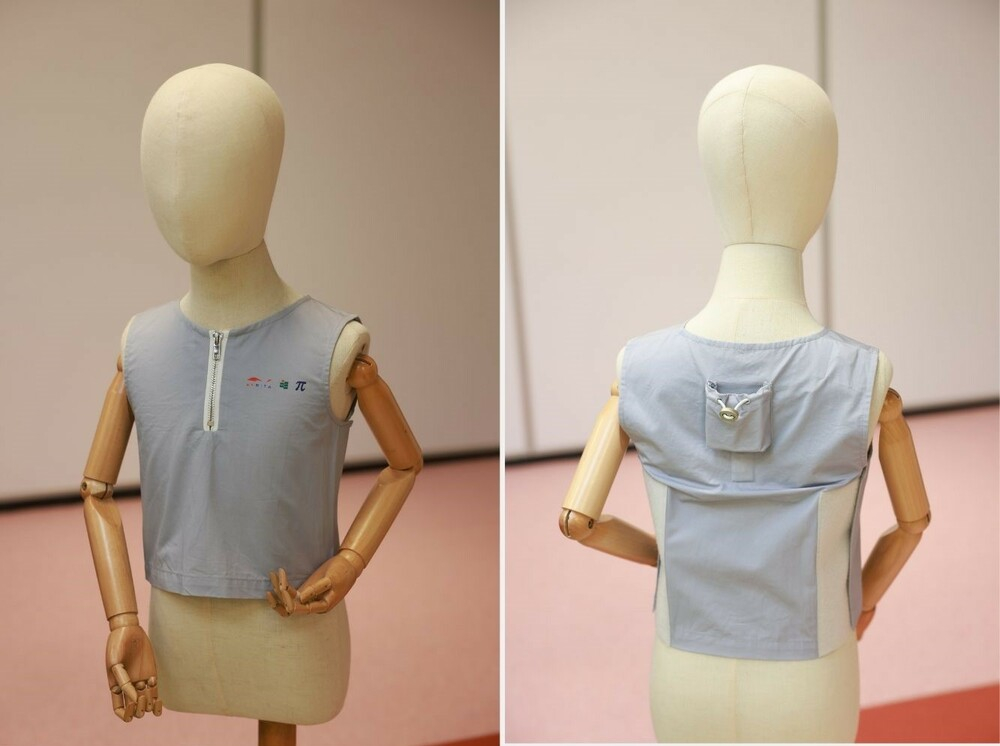
A research team at The Education University of Hong Kong has created the world's first AI-powered smart vest to help children with attention deficit hyperactivity disorder (ADHD) improve their focus and classroom behaviour.
According to the team, an estimated 6.4 percent of children and adolescents live with ADHD in the city, meaning tens of thousands of students struggle daily with attention and behavioural regulation.
The vest is equipped with two small devices on on its shoulder and back section that monitor trunk and core muscle activity.
When it detects hyperactive movements, it delivers gentle vibrations to prompt the wearer to self-regulate, reducing the need for direct teacher intervention.
More than 40 children aged seven to 12 from over 10 primary schools have tested the vest.
Results show it can reduce hyperactive movements by up to 54 percent, with corresponding gains in attention and classroom engagement.
According to principal investigator Fu Hong, the vest can be tailored to a student's schedule.
"If I suppose that from 9am to 10am, there is Chinese class, and in that class, we normally need them to sit well in the classroom, that means if any hyperactivity is detected, [the smart vest can be adjusted to] give them vibrations," she said.
"If that is a PE [class], we can just turn it off."
This adaptability, Fu noted, helped improve sitting stability, attention and rule-following by approximately 10 to 15 percent during trials.
Beyond real-time support, the vest connects to a behavioural data platform that visualises a student’s activity patterns across different lessons.
Fu said teachers and parents could track these trends to inform psychological assessments, school-based support and personalised intervention plans – providing objective data to evaluate the effectiveness of existing measures.
The team now aims to conduct larger, longer-term pilot programmes across more schools and subjects to further validate the vest’s real-world feasibility.
If results remain promising, Fu hopes the smart vest can be commercialised within the next one to two years.
AI vests help pull out all the stops for ADHD students
2025-12-15 HKT 17:35
Share this story


Fu Hong speaks to Hailey Yip

