


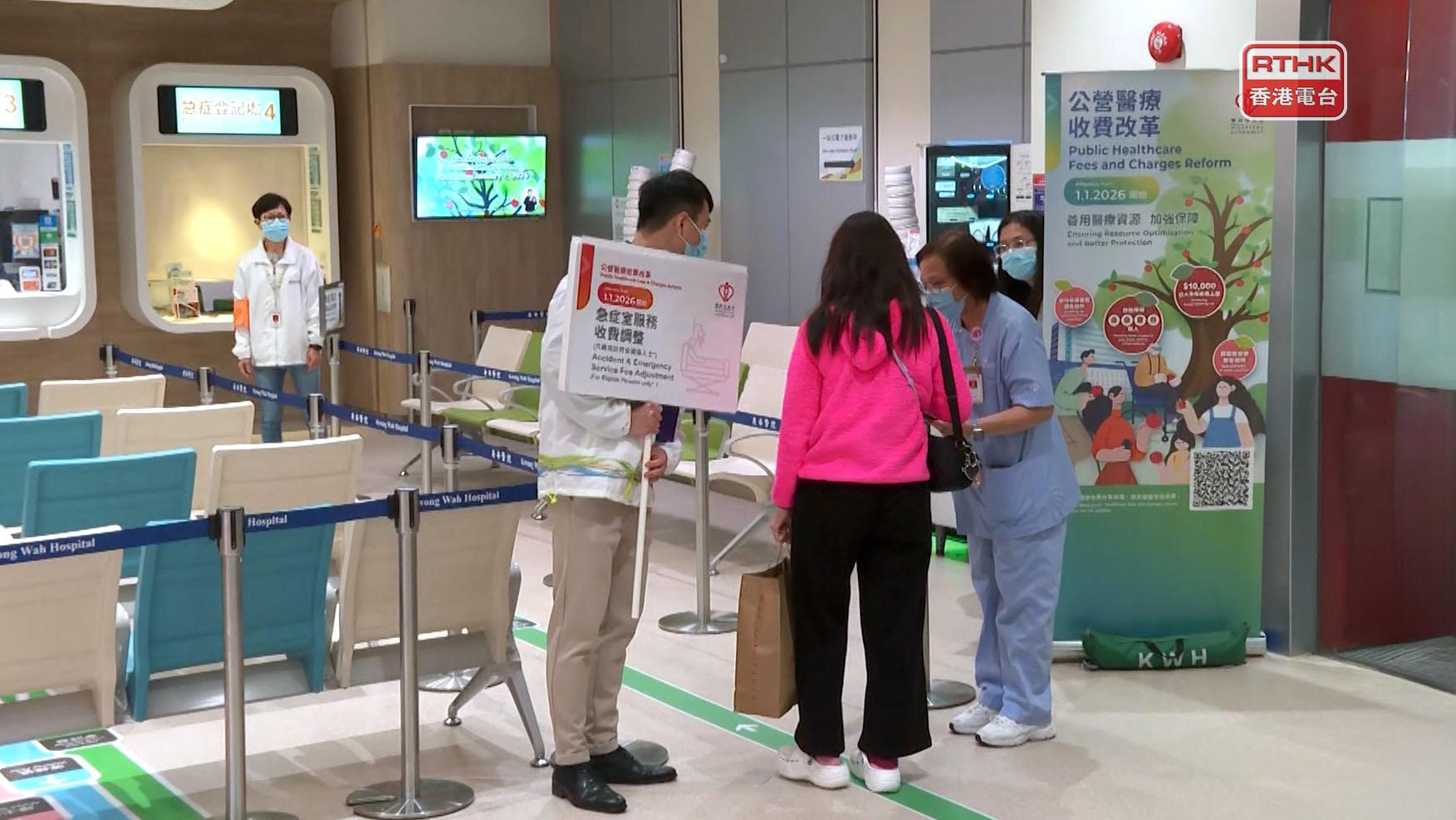
The government's reform to Hong Kong's public healthcare service charges took effect at midnight on Thursday, with a small number of patients benefiting from transitional arrangements.
The new fee structure, implemented after the stroke of midnight on New Year's Day, sees the standard accident and emergency charge rise from HK$180 to HK$400.
There is no charge for patients triaged as critical or emergency cases.
The daily charge for an inpatient acute bed has increased to HK$300 from HK$120. However, there is no longer an admission fee of HK$75.
Speaking on an RTHK radio programme, Axel Siu, chairman of the Hospital Authority's coordinating committee in accident and emergency, said that operations across all hospitals proceeded without issue.
He credited a comprehensive public information campaign for the smooth transition.
The entire process remains unchanged, Siu said, with patients first registering at the emergency department to be assessed by a triage nurse.
During the transition, Siu said, flexible arrangements had been put in place.
"Up to 12.50 am, approximately nine people were handled with discretionary pricing and paid the old fee," he said.
He said these cases were at various hospitals, with a maximum of two per hospital.
Siu said there was no last-minute rush of patients seeking consultations before the new fee regime took effect.
"At midnight, patient numbers are naturally low, so we didn't see people hurrying to register before the change. Overall, operations went smoothly," he said.
There was little public concern about the fee increase, Siu noted, as patients visiting at night typically have urgent health needs and are less concerned about cost.
Ambassadors have been stationed in clinical departments, including emergency rooms, to help the public understand the new charges, he said.
Siu reiterated that the reform's primary goal is to change the way the public uses emergency services.
The aim, he said, is to make it clear that emergency rooms are for severe cases and to encourage those with less serious ailments - or who are in a stable condition - to consider alternatives such as family doctors or private clinics.
Siu said this would allow emergency departments to concentrate their resources on the most critical patients.
Midnight fees rush fails to come to pass at hospitals
2026-01-01 HKT 11:24
Share this story


