


Japan declined on Wednesday to comment on the absence of the Bank of Japan from a statement by other central banks supporting US Federal Reserve chair Jerome Powell, following the Trump administration's threat of criminal indictment.
"The matter concerns the BoJ's own judgement, so the government will refrain from commenting," said Japan's top government spokesman, Chief Cabinet Secretary Minoru Kihara.
The BoJ was not among the major central banks that issued the joint statement backing Powell, with the heads of the European Central Bank, the Bank of England, the Bank of Canada, as well as the central bank chiefs of Sweden, Denmark, Switzerland, Australia, South Korea, Brazil and France among those who signed.
Asked about the importance of independence of central banks, Kihara said the government believes that the ultimate responsibility for macroeconomic policy lies with the government.
"As stipulated by law that monetary policy is part of overall economic policy, the BoJ is required to maintain close coordination and sufficient communication with the government," he said. "That said, the specific methods of monetary policy should be entrusted to the BoJ."
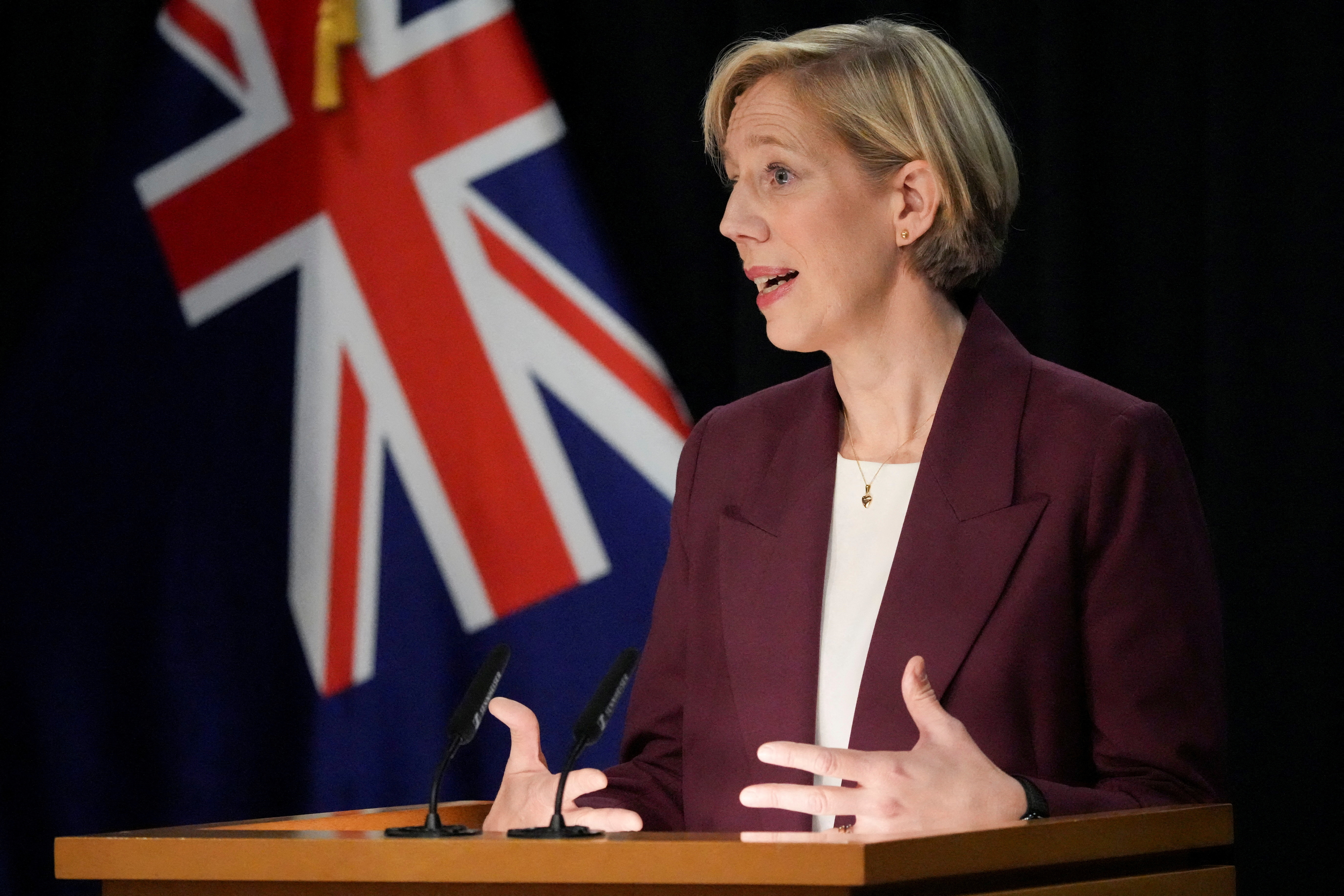
That came as New Zealand's Foreign Minister Winston Peters publicly rebuked the country's new central bank governor for signing the statement.
The Reserve Bank of New Zealand said its Swedish governor, Anna Breman, had signed because she believed strongly in the independence of central banks and that her signature indicated the support of the the central bank, which is statutorily independent of the New Zealand government.
However, the decision to do so was criticised by Peters, who said in a post on X that "the RBNZ has no role, nor should it involve itself, in US domestic politics. We remind the Governor to stay in her New Zealand lane and stick to domestic monetary policy."
Peters' post said that if advice on signing on to the statement had been sought from the Ministry of Foreign Affairs and Trade, Breman – a Swedish economist who started as New Zealand's central bank governor on December 1, 2025 – would have been told to stick to domestic monetary policy.
New Zealand, which is not a formal ally of the United States but is a close friend, has managed its relationship with the US carefully in recent years and Peters has spoken about the need to respect the United States.
"Close friends do not need to be, and should not be, confrontational and rude with one another, as New Zealand sometimes was towards the United States in the mid-to-late 1980s. And we should never forget what binds and unites us, bonds stronger and more long-lasting than the controversies and headlines of the moment," Peters said in a speech last April. (Reuters)
Japan, NZ central banks face heat over Powell stance
2026-01-14 HKT 13:09
Share this story


