


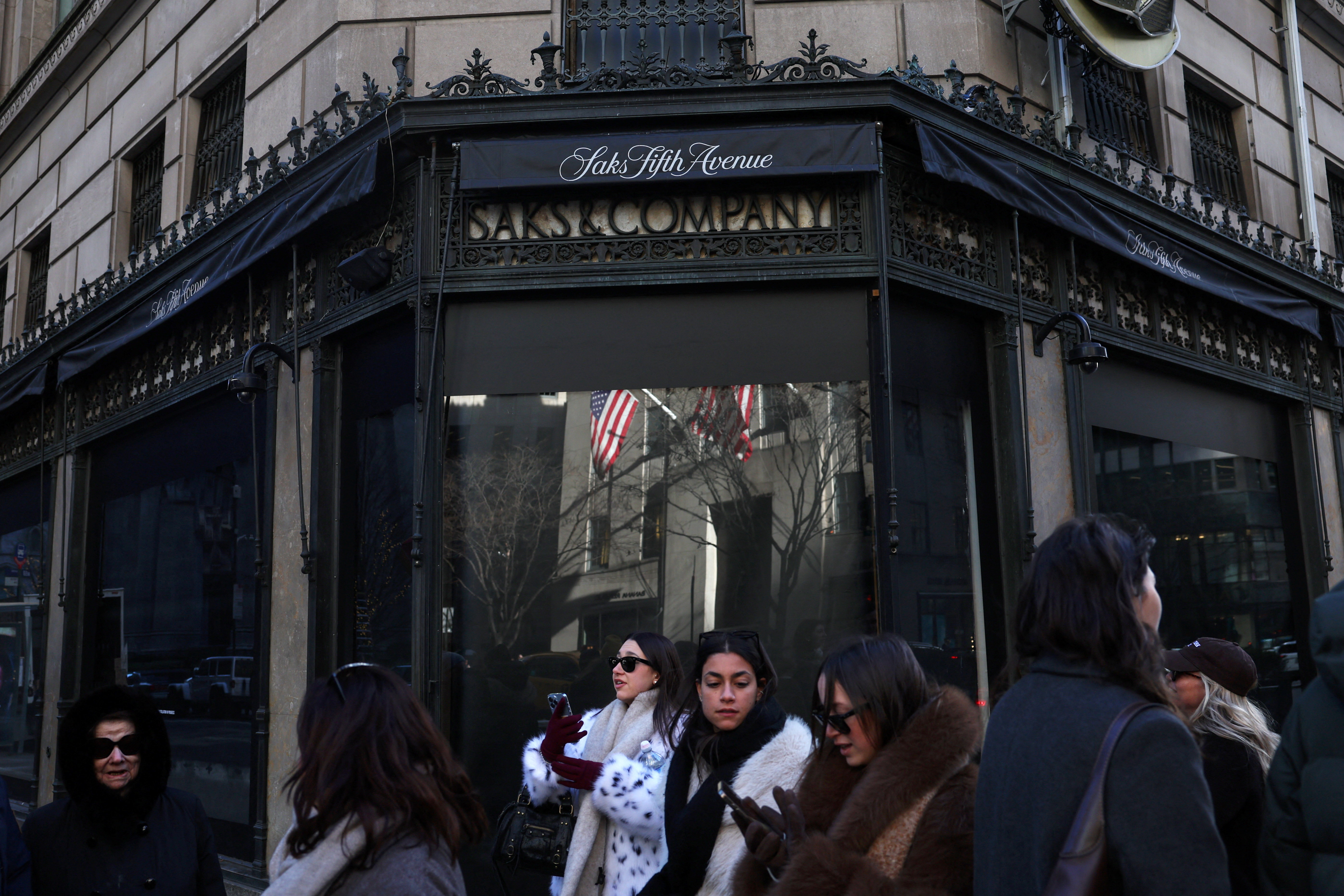
High-end department store conglomerate Saks Global has filed for bankruptcy protection in one of the largest retail collapses since the pandemic.
Saks Fifth Avenue, an affiliate of Saks Global, listed US$1 billion to US$10 billion in assets and liabilities, according to court documents filed with the US Bankruptcy Court in Houston, Texas, late on Tuesday.
The move cast uncertainty over the future of US luxury fashion barely a year after a takeover that brought Saks Fifth Avenue, Bergdorf Goodman and Neiman Marcus under the same roof.
A retailer long loved by the rich and famous, from Gary Cooper to Grace Kelly, Saks fell on hard times after the Covid pandemic, as competition from online outlets rose, and brands started more frequently selling items through their own stores.
Saks Global was close to finalizing a US$1.75 billion financing package with creditors that would allow its stores to remain open, two insiders said earlier on Tuesday.
The financing would provide an immediate cash infusion of US$1 billion through a debtor-in-possession loan from an investor group led by Pentwater Capital Management in Naples, Florida, and Boston-based Bracebridge Capital, the people said.
An additional US$250 million in financing would also be available through an asset-backed loan provided by the company's banks, the people said. The luxury retailer would have access to another US$500 million of financing from the investor group once it successfully exits bankruptcy protection, the sources added.
A host of luxury brands were among the unsecured creditors, led by Chanel and Gucci owner Kering at about US$136 million and US$60 million respectively, the court filing said. The world’s biggest luxury conglomerate, LVMH, was listed as an unsecured creditor at US$26 million. In total, Saks Global estimated there were between 10,001 and 25,000 creditors.
In 2024, parent company Hudson's Bay had bet on scale by merging it with rival Neiman Marcus, creating the entity now known as Saks Global. The US$2.7 billion deal was built on about US$2 billion in debt financing and equity contributions from investors including Amazon, Salesforce and Authentic Brands.
Amazon and Authentic Brands were listed in the court filing as equity investors. (Reuters)
Saks Global seeks bankruptcy protection
2026-01-14 HKT 16:22
Share this story


