


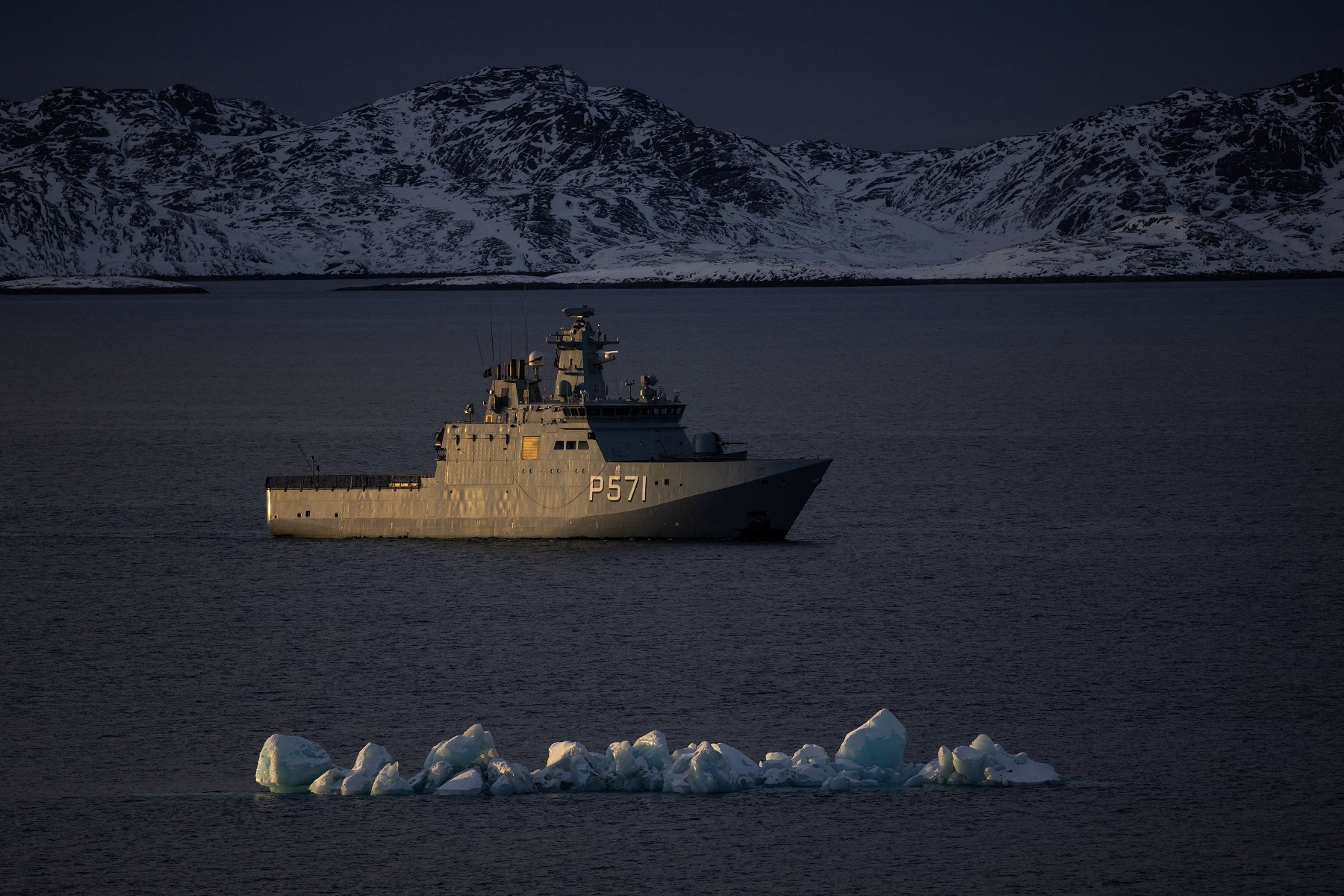
European countries sent small numbers of military personnel to Greenland on Thursday as Denmark said it was pressing on with plans for a "larger and more permanent" Nato presence to secure the island coveted by US President Donald Trump.
The modest European deployments, meant to help Denmark prepare military exercises, sent a message of support a day after a meeting of officials from the US, Denmark and Greenland failed to reach any breakthrough on the impasse.
Denmark's defence minister, Troels Lund Poulsen, told journalists in Copenhagen on Thursday he did not have a final figure for the envisaged expanded Nato presence in Greenland.
"But it is clear that we now will be able to plan for a larger and more permanent presence throughout 2026 and that is crucial to show that security in the Arctic is not only for the Kingdom of Denmark, it is for all of Nato."
Germany's defence ministry said the aim was to "explore the framework conditions for possible military contributions to support Denmark in ensuring security in the region".
However, the White House said the European military mission in Greenland would not deter Trump from pursuing control of the autonomous, mineral-rich Danish territory.
"I don't think troops in Europe impact the president's decision-making process, nor does it impact his goal of the acquisition of Greenland at all," Press Secretary Karoline Leavitt told a briefing when asked about the deployment.
Responding to Leavitt's comments, Denmark's foreign minister again ruled out any US acquisition of Greenland.
Lars Lokke Rasmussen told public broadcaster DR: "This is out of the question. It's not what we want in Denmark, nor in Greenland and it runs counter to all international rules. It infringes on sovereignty."
Russia meanwhile dismissed as a "myth" it posed a danger to Greenland.
Part of Danish territory "has been included in Washington's arbitrarily defined sphere of US interests," Russian foreign ministry spokeswoman Maria Zakharova said.
"Against this backdrop, the myth of some kind of Russian threat, rigorously promoted by Denmark and other members of the European Union and Nato for many years, is especially hypocritical." (Agencies)
European troops arrive in Greenland
2026-01-16 HKT 07:40
Share this story


Jamie Clarke reports

