


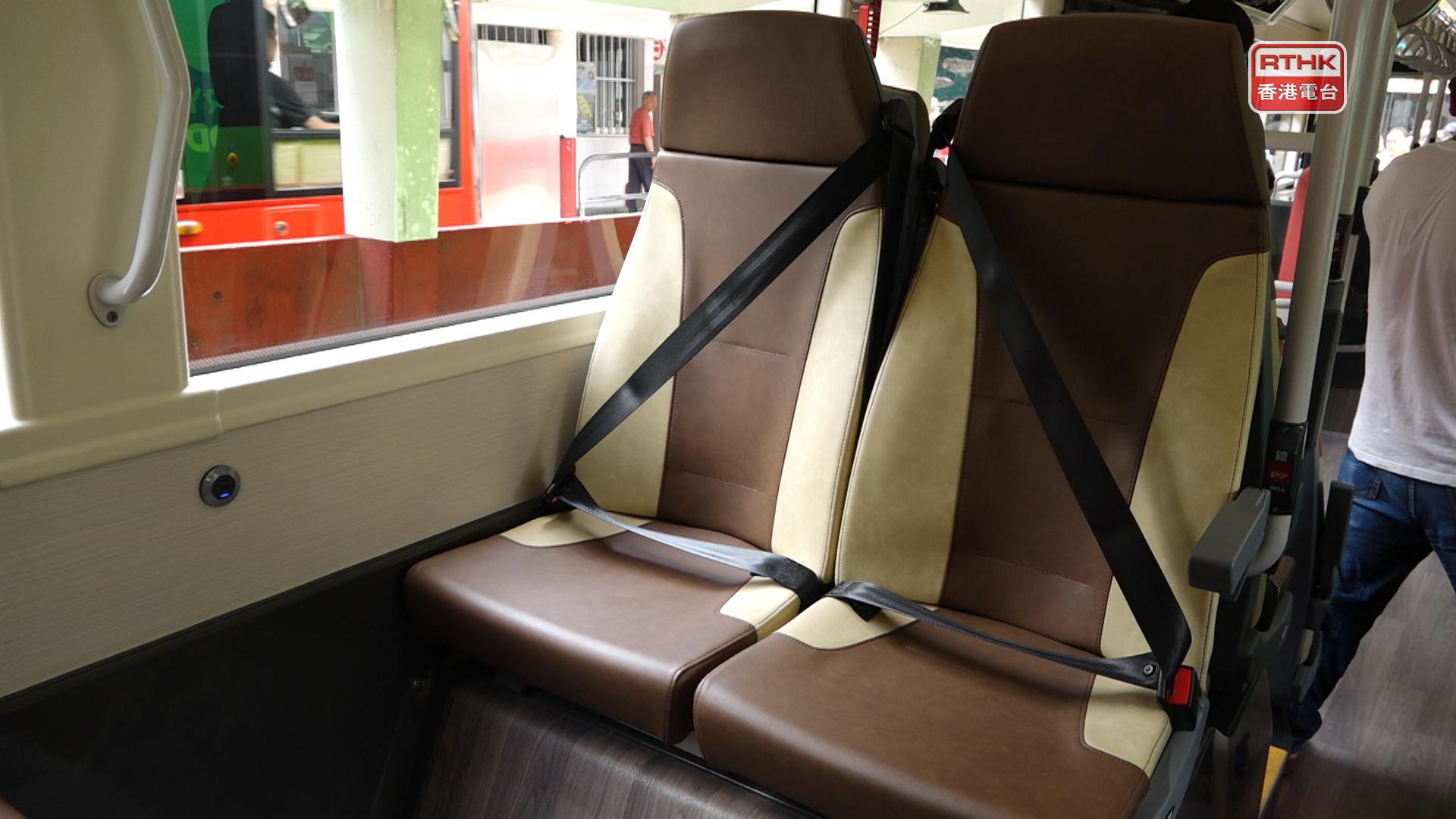
The Transport Department on Thursday said it might extend the promotional period for mandatory seatbelt law for public buses if that's deemed necessary, after the new legislation sparked much debate.
The department's safety director, Stella Lee, said it understands people's concerns over things such as the difficulty to use the belts and their cleanliness.
Lee said the department has instructed bus companies to step up cleansing and checking to see how tight the belts are.
"We understand that it takes people time to adapt to new laws. So initially we will focus mainly on promotion and public education," she said on a Commercial Radio programme.
"We will keep monitoring the implementation situation, and if we find it necessary to do this longer, then we shall do so. We think promotion and education needs to be done continuously."
When asked whether there's room for adjustments to the new legislation, Lee said everyone agrees that seatbelts are necessary and offer greater protection to passengers.
As to whether the government can change the seatbelts to ones that go around the waist only, the official said they constantly review safety devices to see if there are better and more effective ones on the market.
Lee stressed that it's necessary to mandate the wearing of seatbelts on all bus routes.
She said Hong Kong's road conditions are different to those of other places, as they go through hilly terrain and even some buses on shorter journeys would go on highways.
Back in 2018, the government formed an independent committee to review franchised bus services after a serious crash in Tai Po that led to 19 deaths and dozens of injuries.
A member of the committee, engineering scholar Lo Hong-kam, said it recommended the installation of seatbelts for existing buses after undergoing a cost and benefit analysis, but didn't conclude that wearing them should be mandatory.
He noted that the committee was of the view that once the seatbelts are available, passengers would naturally use them.
The government subsequently allocated HK$500 million for franchised bus companies to install safety devices, including refitting seatbelts.
"I think the ultimate principle is that since the seatbelts are there, they should be used, otherwise the money invested would go to waste," Lo said on the same programme.
"If the seatbelts are installed, the people can use them, or they should use them as much as possible."
He noted that Hong Kong is unique in that there are some four million bus passenger trips a day, and even a low traffic incident rate could lead to many casualties.
Govt may spend more time promoting seatbelt mandate
2026-01-29 HKT 13:07
Share this story


