


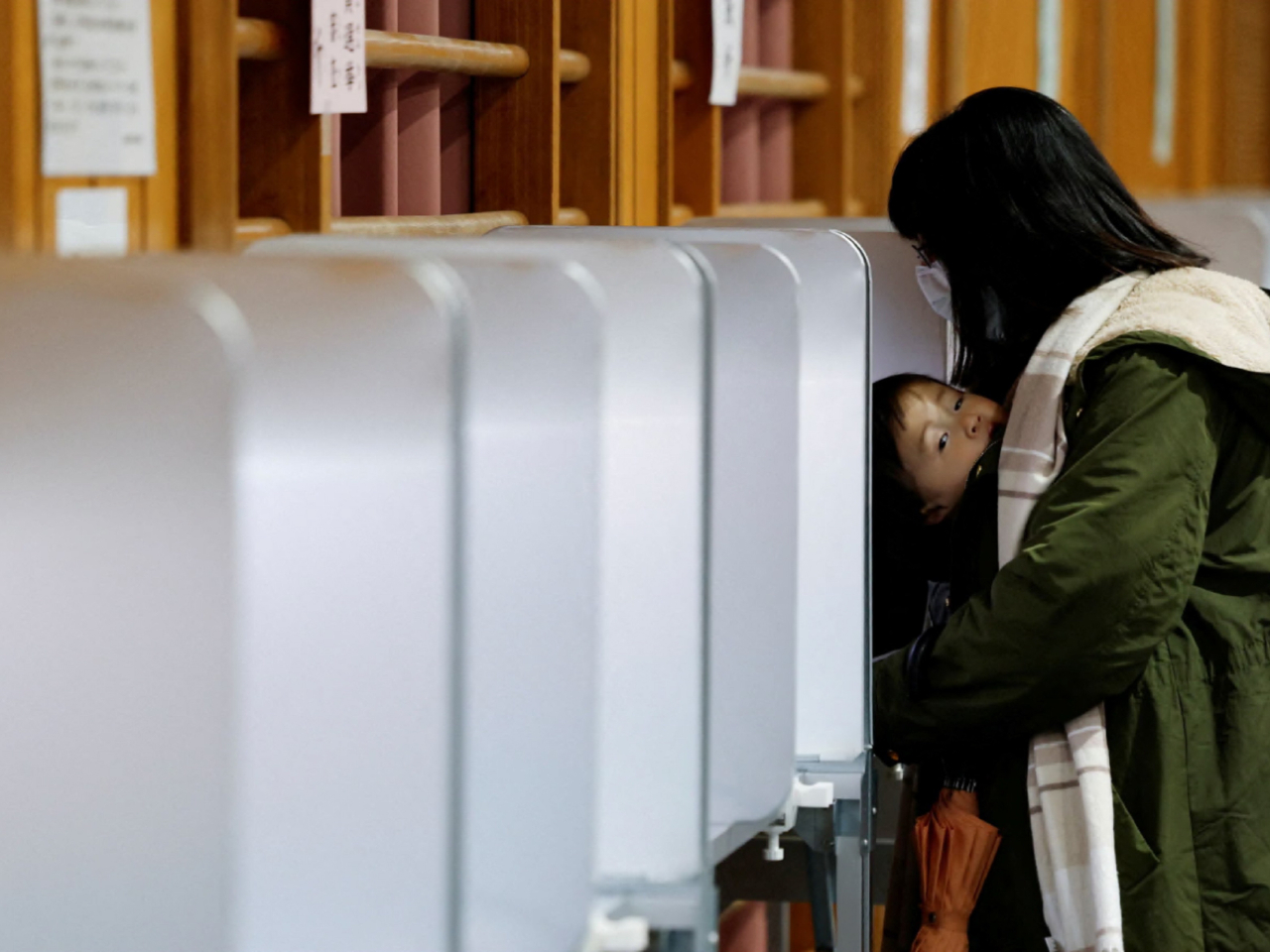
Japan's ruling coalition of the Liberal Democratic Party (LDP) and the Japan Innovation Party (JIP) won more than a two-thirds majority in the House of Representatives following Sunday's general election, public broadcaster NHK reported early on Monday.
The ruling bloc secured 352 seats, surpassing the two-thirds majority necessary to enact a bill approved by the lower house but rejected by the House of Councillors, or the upper house, NHK reported.
The LDP, which had 198 seats before the election, gained control of two-thirds of the 465-member lower house on its own after winning a total of 316 seats.
The outcome does not appear too favourable for the JIP as a junior partner, which added two seats to its pre-election strength of 34 seats in the lower house. The JIP's influence over the coalition is expected to decline due to the LDP controlling a majority even on its own, NHK said.
Japan's main opposition party, the Centrist Reform Alliance formed in January by the Constitutional Democratic Party of Japan and the Komeito party, saw its seat count drastically reduced to 49 from the pre-election tally of 172, NHK reported.
Yoshihiko Noda and Tetsuo Saito hinted at resigning as the alliance's co-leaders, with both saying in a joint NHK interview that they have already made up their minds to take responsibility for the heavy losses.
The Sanseito party, a populist group which had two seats before the election, won 15 seats, while the Democratic Party for the People won 28, compared to its pre-election seat count of 27.
A total of 1,284 candidates ran for the 465 seats in the House of Representatives, which consist of 289 in single-seat constituencies and 176 through proportional representation in 11 regional blocks across Japan.
Sunday's vote marked Japan's first lower house election held in February since 1990, a decision by Japanese Prime Minister Sanae Takaichi that has drawn criticism as heavy snowfall in many parts of the country made campaigning difficult.
US President Donald Trump congratulated Takaichi, wishing the conservative "Great Success."
"Congratulations to Prime Minister Sanae Takaichi and her Coalition on a LANDSLIDE Victory," Trump wrote on his Truth Social platform.
"It was my Honor to Endorse you and your Coalition. I wish you Great Success in passing your Conservative, Peace Through Strength Agenda." (Xinhua/AFP)
_____________________________
Last updated: 2026-02-09 HKT 07:59
Japan's ruling coalition secures lower house majority
2026-02-08 HKT 21:10
Share this story


Jamie Clarke reports

