


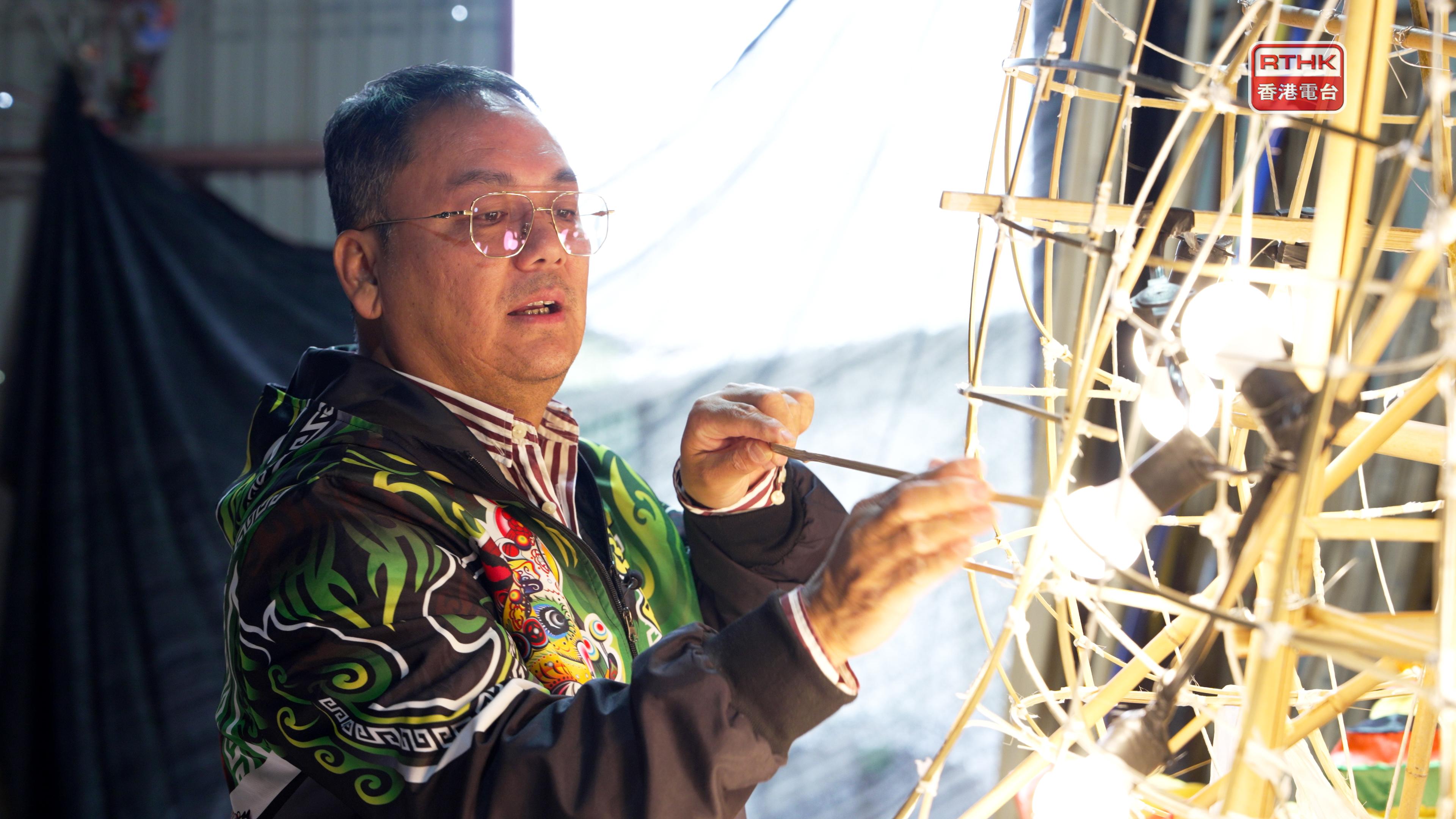


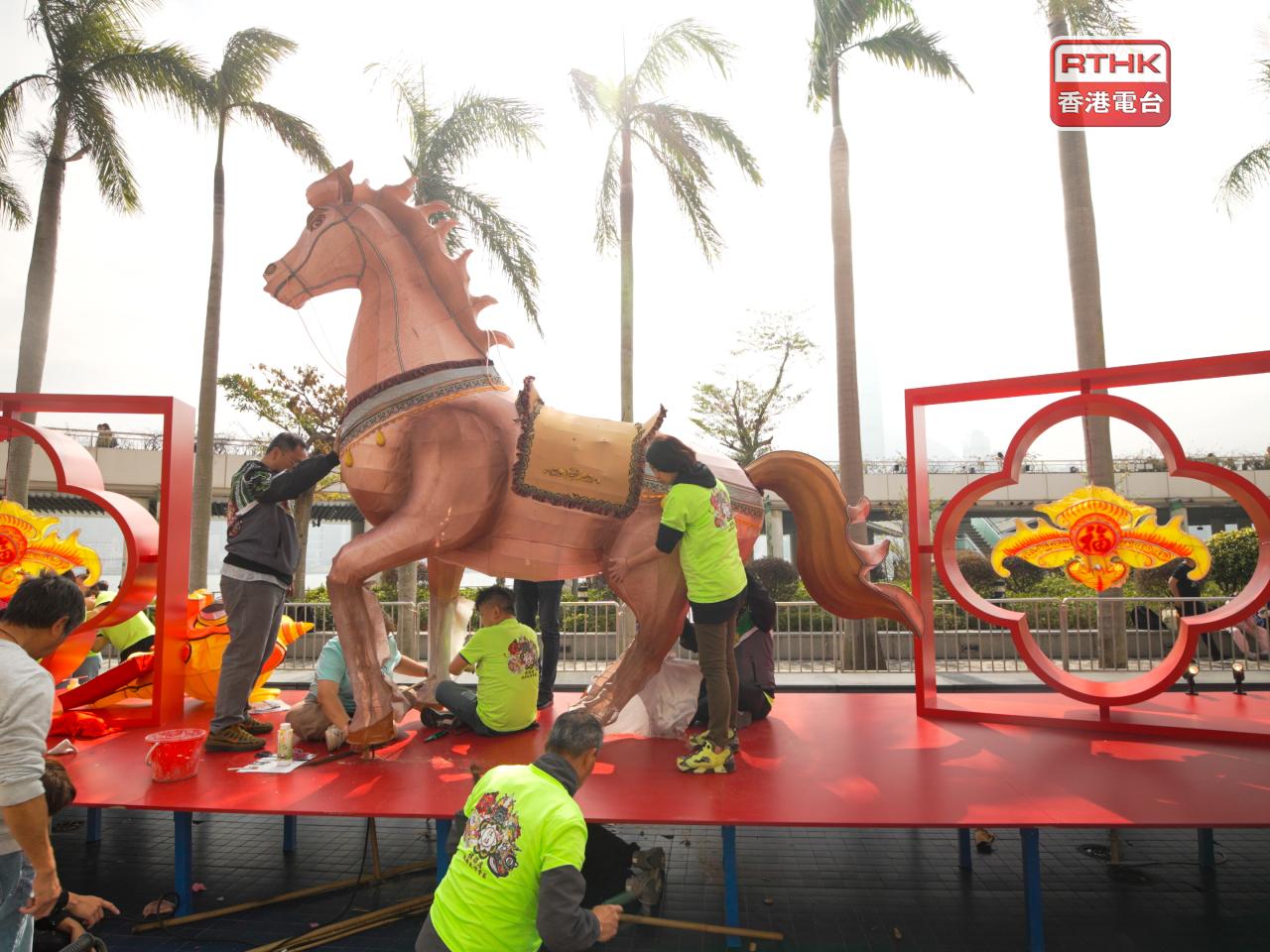
“I make the formless take shape,” Mo said, as he carefully adjusted his impressive showpiece's flowing tail.
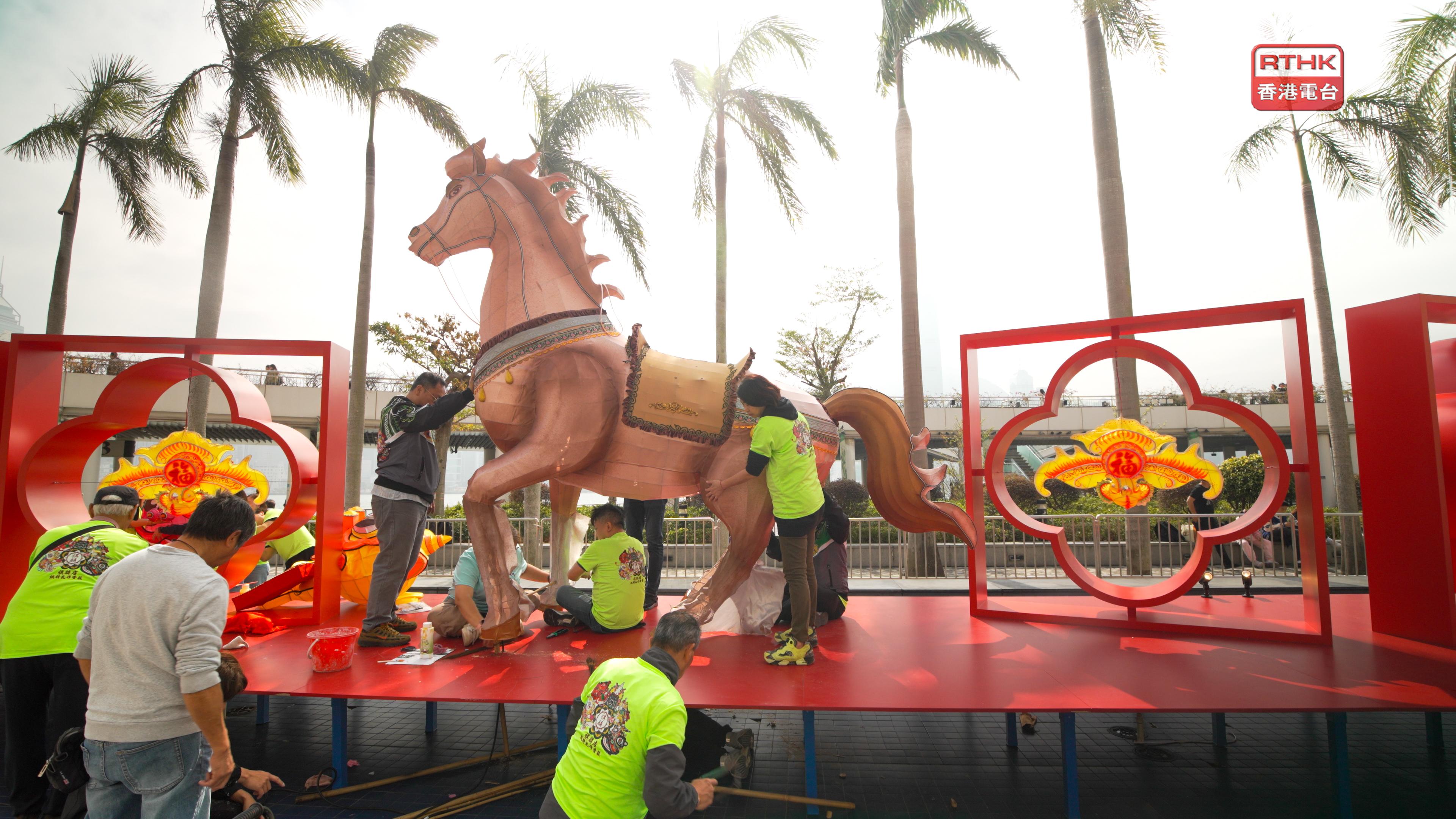
Titled “Spirited Horse”, the larger-than-life lantern was chosen as the centerpiece of the annual lantern display at the Hong Kong Cultural Centre Piazza on the Tsim Sha Tsui waterfront.
The galloping stallion symbolises “rising up and moving forward" to celebrate the Year of the Horse.
Built from hundreds of bamboo strips – roughly ten times the amount required for a conventional round lantern – the gigantic lantern symbolises nearly four decades of Mo’s dedication to the demanding traditional craft.
“There are many details to think about. The horse's forelegs and muscles have to be sculpted to show it’s running. The hind legs are bigger. I also want to make the tail and mane feel flowing and light.”
Starting from just a single A4 sketch, Mo completed the lantern in just over two weeks with the assistance of his apprentice. And due to its size, the head and the torso – which included its legs and tail – were built separately and had to be attached at the Cultural Centre.
To help preserve the craft, Mo founded the Hong Kong Traditional Paper Crafting Arts Union in 2016.
He regularly holds training classes and has set up an exhibition hall in Kwu Tung to display the works of his students and apprentice.
“When I started this group, I had hopeful optimism. I wanted to use my own strength to promote paper crafting, one person at a time, in hopes that it would grow from one to ten, and ten to a hundred.”
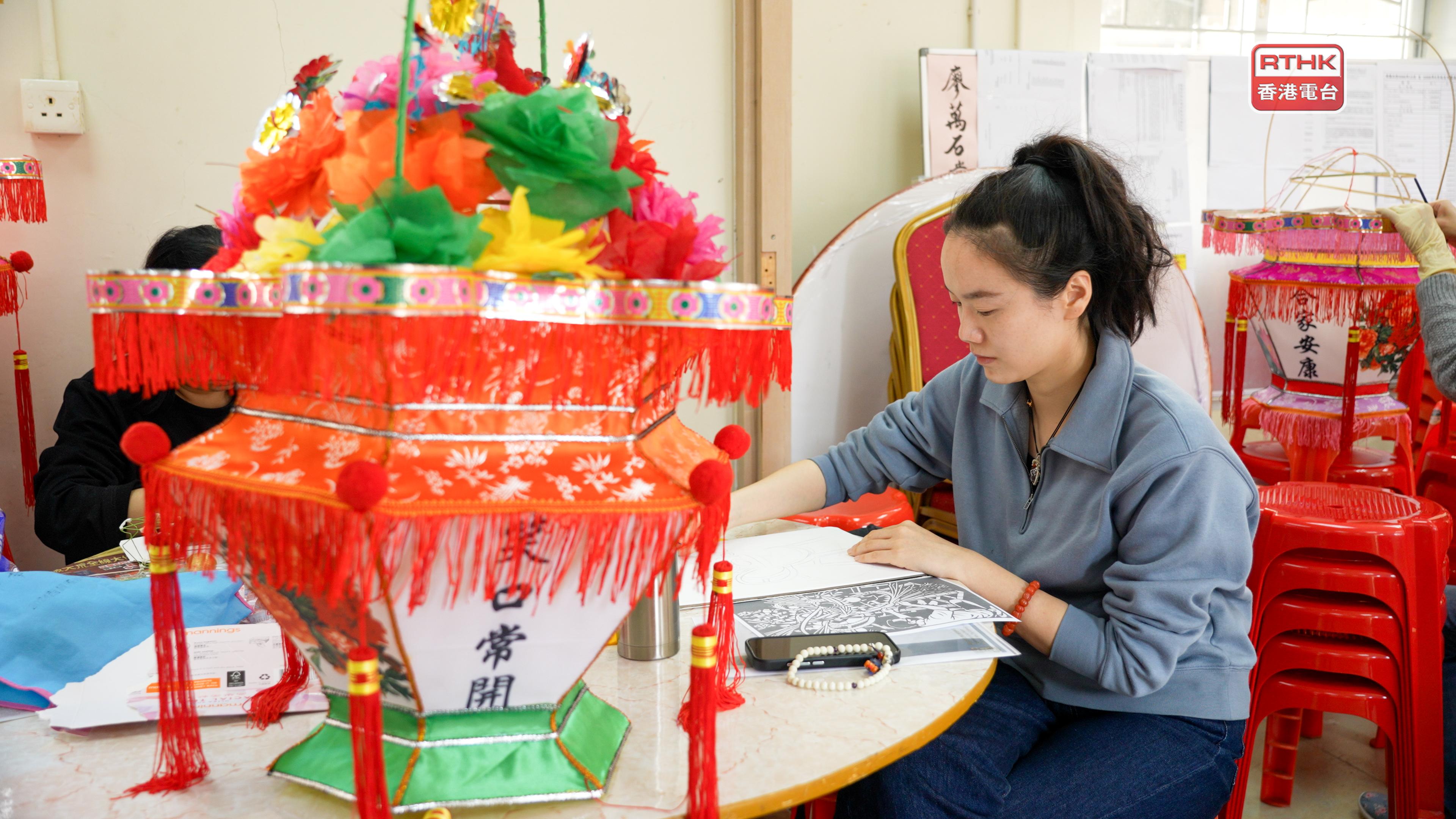
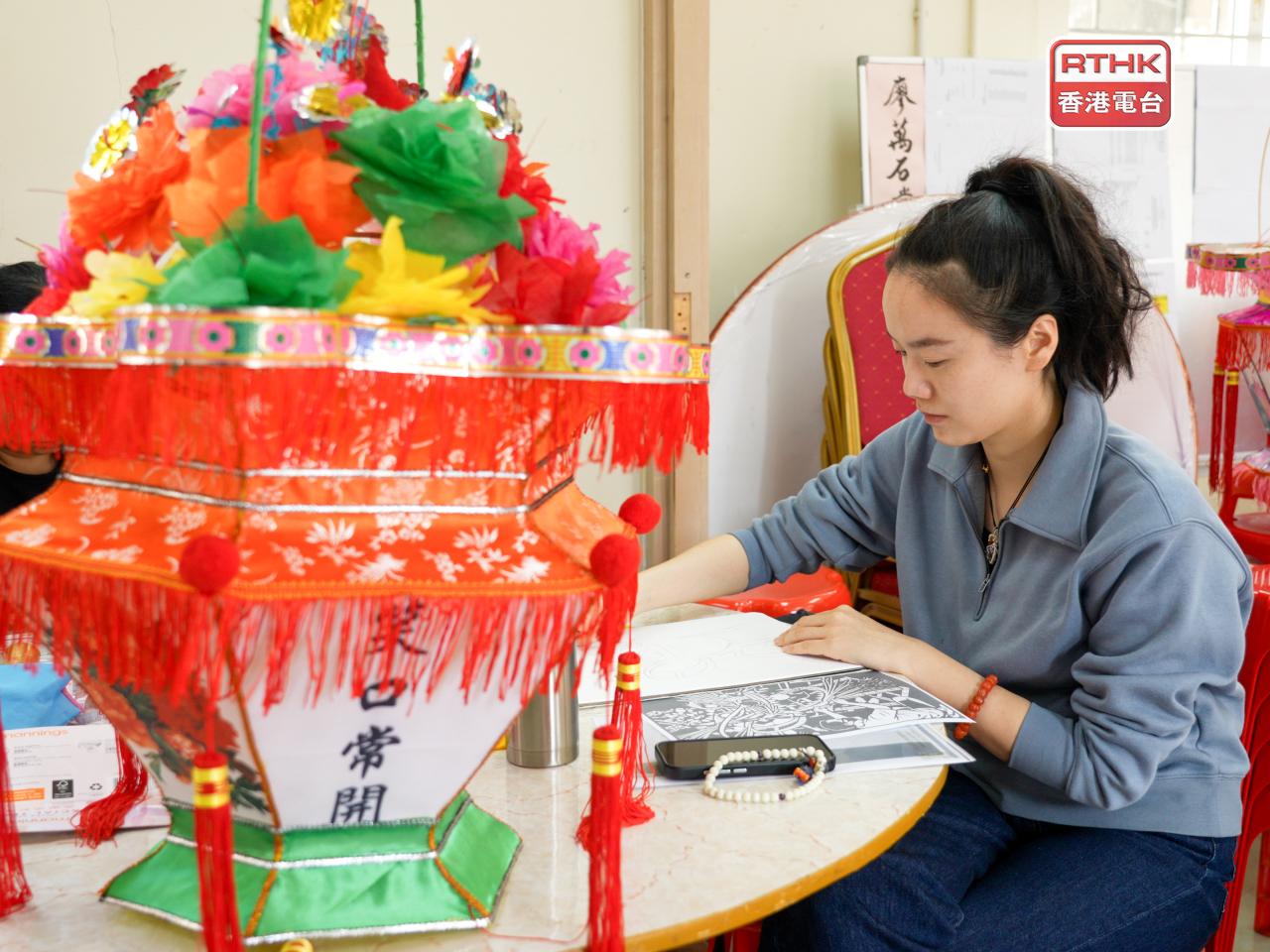
His efforts have sparked renewed interest in the art form. One of his students, Yang Cheng, is a PhD candidate from Jiangsu province currently studying at City University of Hong Kong. She has a strong interest in Hong Kong culture.
“My research began with the preservation of the Incense Tree, which led me into the world of Incense Culture. While studying these scenes across the city, I found paper crafting played a part in many of these festive activities. My focus is to explore ways to promote these Intangible Cultural Heritage skills of Hong Kong through art,” the 27-year-old said.
Together with other collaborators, she plans to integrate paper crafting with digital art and present the combination in exhibitions in Jiangsu and Hong Kong later this year.
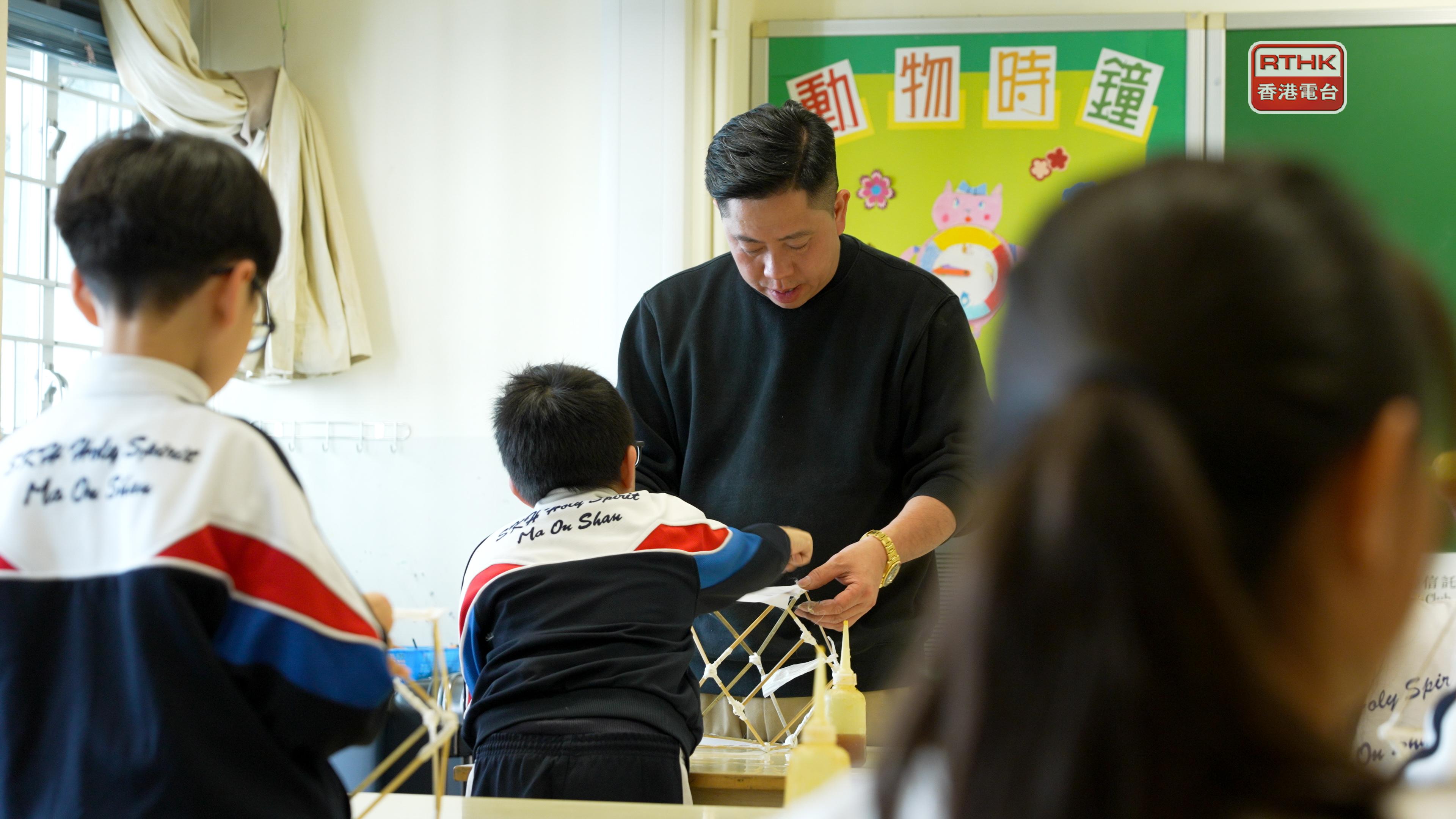
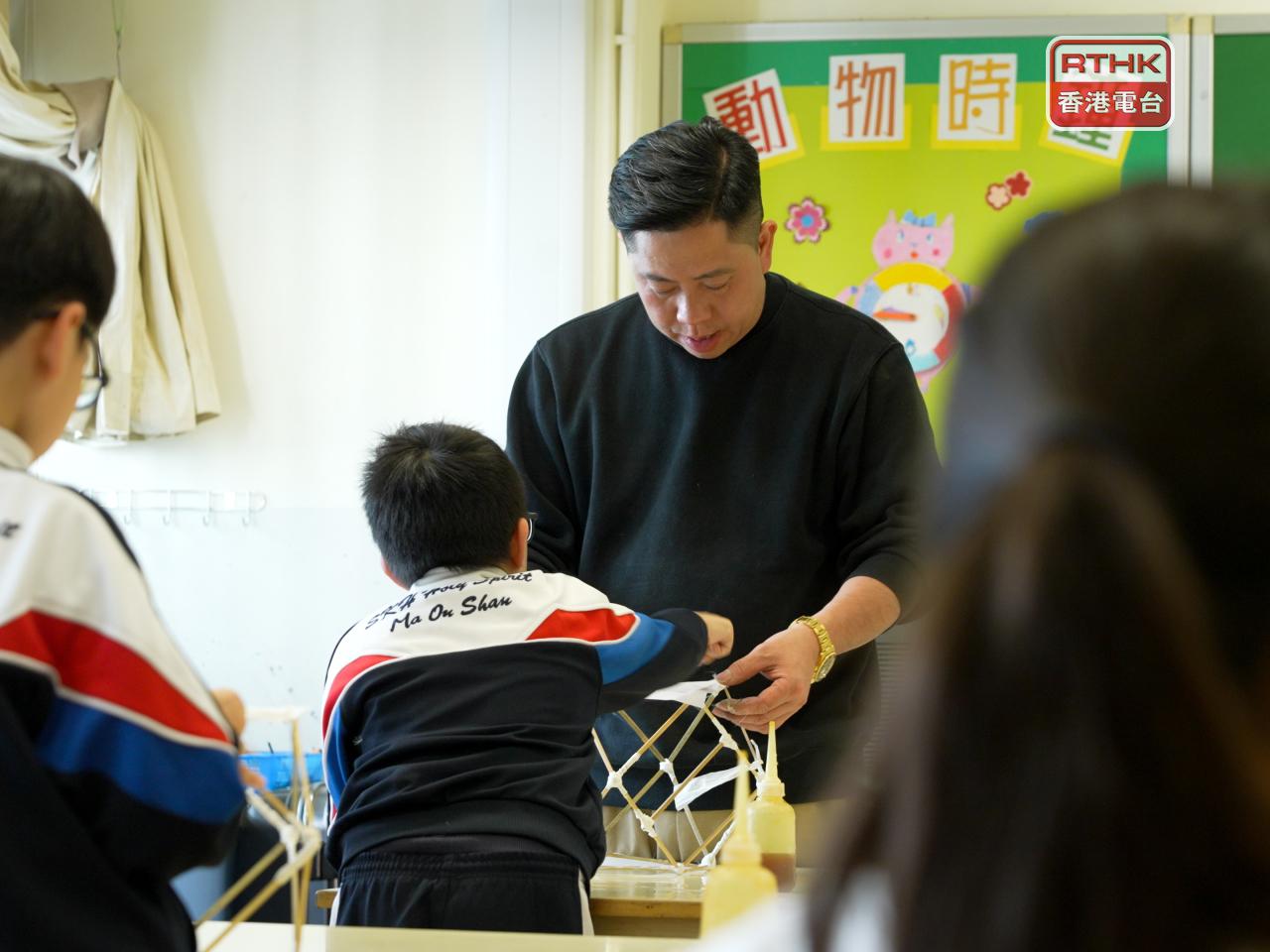
Another master crafter, Hui Ka-hung – who estimates he has taught thousands of students over the past decade, including many schoolchildren – is also showcasing his work at the festival.
His lantern features three giant dragon boats, with each carrying items representing the Chinese New Year, such as gold coins and traditional sweets.
Fascinated by paper-crafted lion heads as a child, Hui spent his youth searching for a mentor, but his early attempts were met with rejection.
At the time when paper crafting was a lucrative trade, Hui said, masters were notoriously reluctant to take on apprentices, fearing that sharing their technique would create future rivals.
“I remember how difficult it was for me to learn this craft. Back then, there were no teachers willing to formally teach you, you had to 'steal' the skills by watching them work, observing and figuring out the skills on your own.”
Now at the age of 48, Hui is running workshops at SKH Ma On Shan Holy Spirit Primary School, where he is passing on his skills to Primary 4 and 5 students.
“Primary students have their own ideas and experiences. Our goal is to bring paper crafting to every corner of Hong Kong.”
“After decades in this trade, I feel these past few years are the best time we’ve ever had. We must cherish the current opportunities and resources to promote this craft,” he said.
The opportunities Hui referred to came up in 2017, when the government added paper crafting technique into the Representative List of the city’s Intangible Cultural Heritage (ICH), recognising it as a high-value art form that requires urgent preservation.
That recognition was supported by the launch of a HK$300 million fund to finance research, documentation and transmission projects related to ICH.
Mo expressed the belief that the craft is here to stay.
“I believe the industry is actually more vibrant than it was ten years ago. Back then, without promotion, it was on the verge of fading away. Now, with more awareness, people are starting to recognise its value again.”
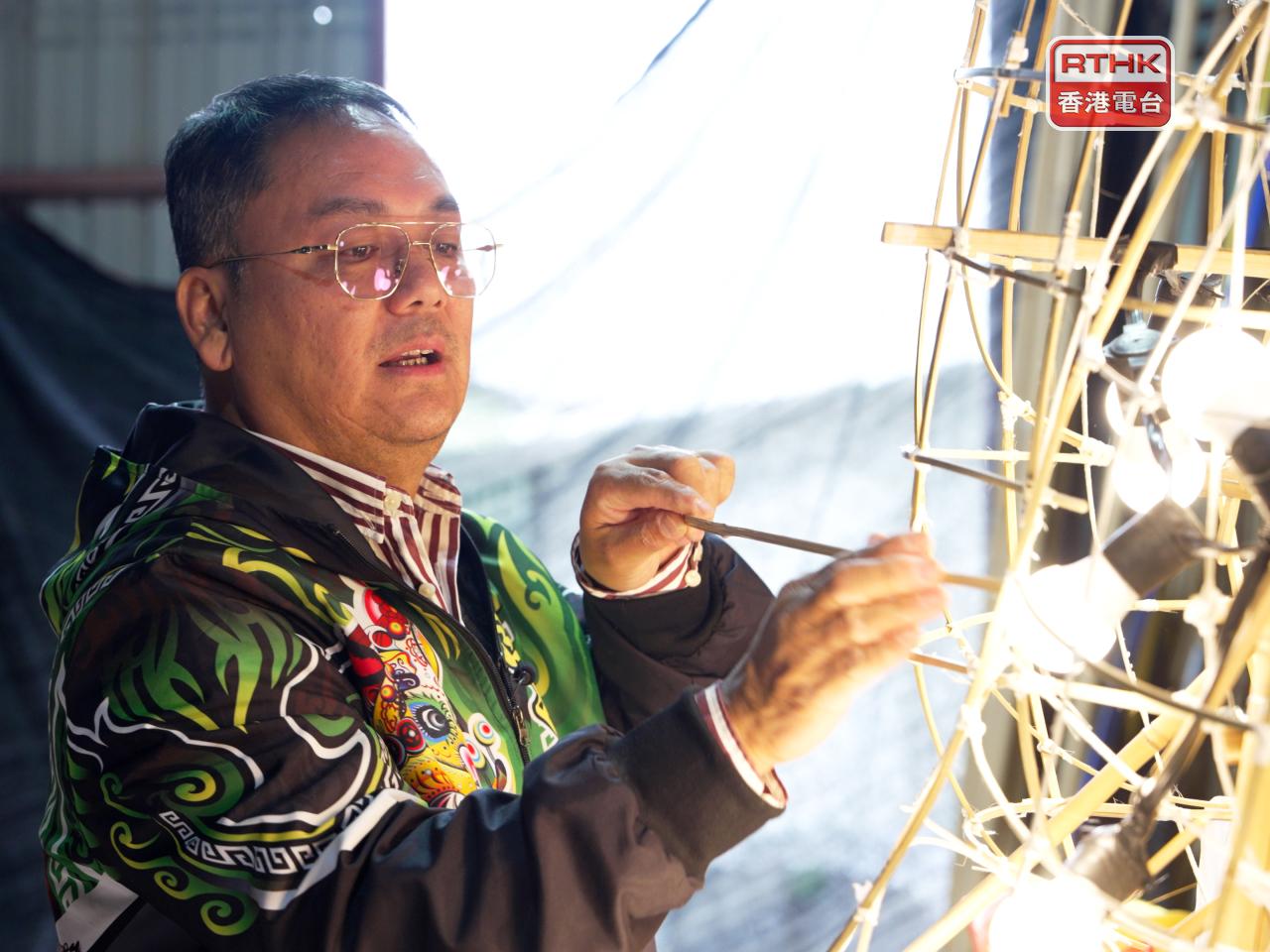
With his “Spirited Horse” glowing brightly against the Hong Kong skyline, Mo said he will continue his work and play his part to ensure paper crafting shines for years to come and has limitless space for creativity.
“As times change, festivals evolve, and people’s demands vary, our creations change too. Because it is an infinite craft, it can never be outdated or old-fashioned."
Edited by Aaron Tam

