


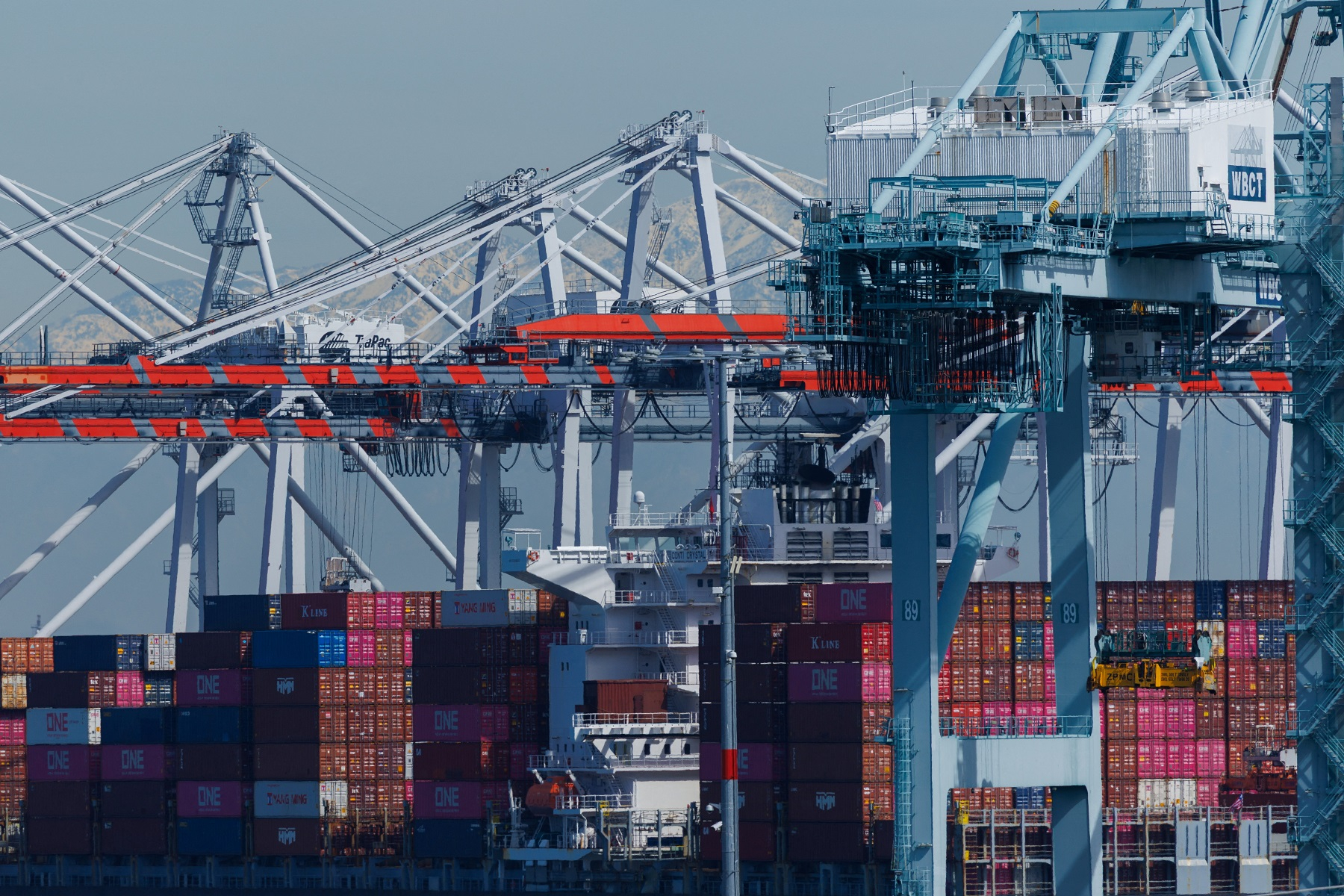
The United States began collecting a temporary new 10 percent global import tariff on Tuesday, but the Trump administration was working to increase it to 15 percent, a White House official said, sowing confusion over President Donald Trump's tariff policies after last week's Supreme Court defeat.
Trump initially signed an order on Friday for a 10 percent tariff to last 150 days to replace broad duties under an emergency law that were struck down by the Supreme Court, but on Saturday, he said he would increase the rate to 15 percent.
On Monday night, before the midnight start of collections, the US Customs and Border Protection agency notified shippers that the rate would be 10 percent.
The White House official told Reuters that Trump has had "no change of heart" in his desire for a 15 percent tariff under Section 122 of the Trade Act of 1974, but offered no details on the timing for that increase.
As of Monday, Trump had not signed a formal presidential order for the increase to 15 percent and CBP can only act on published presidential executive orders and proclamations. CBP's notice referred to his Friday order, saying that aside from products covered by exemptions, imports would "be subject to an additional ad valorem rate of 10 percent."
The move added to confusion surrounding US trade policy, with no explanation offered in the notice for why the lower rate had been used.
"Trump is delivering the State of the Union address tonight, so it's possible we might get a better sense of the next steps on tariffs," Deutsche Bank said in a note.
"Net-net we still think the effective tariff rate will fall this year and that the world post-Scotus will see lower tariffs than the pre-Scotus world," its analysts said, using the acronym for the Supreme Court of the United States.
The new tariff took effect at midnight, while collection of the tariffs annulled by the Supreme Court was halted. They had ranged from 10 percent to as much as 50 percent.
The plaintiffs who prevailed in the Supreme Court tariff case filed motions on Tuesday in federal courts to enforce the ruling and initiate a process for refunds.
The Liberty Justice Centre said it and co-counsel Neal Katyal filed coordinated motions in the US Court of International Trade in New York and the US Court of Appeals for the Federal Circuit in Washington seeking immediate issuance of a mandate to return the case to CIT and to order the government to issue directives to refund the tariffs with interest.
The Supreme Court remanded the case to the lower courts to sort out any refunds.
Reuters has reported that more than US$175 billion in federal revenue was collected from the now-invalid tariffs under the 1977 International Emergency Economic Powers Act, based on an estimate from the Penn-Wharton Budget Model.
The new 10 percent tariff represents a conundrum for the European Union, which agreed to a trade deal with a 15 percent base tariff rate.
European Commission Trade Minister Maros Sefcovic said the bloc faces a "transitional period" over Trump's new temporary tariff, but added US trade officials have reassured him Washington will stand by the agreement.
It remains unclear whether and how companies will be refunded for tariff payments made under the program annulled by the Supreme Court.
The Section 122 law allows the president to impose the new duties for up to 150 days to address "large and serious" balance-of-payments deficits and "fundamental international payments problems."
Trump's tariff order argued that a serious balance-of-payments deficit existed in the form of a US$1.2 trillion annual US goods trade deficit, a current account deficit of 4 percent of GDP and a reversal of the US primary income surplus.
But some economists and trade lawyers argue the US is not on the cusp of a balance-of-payments crisis, making the new duties vulnerable to a legal challenge.
China has urged Washington to abandon its "unilateral tariffs," indicating it was willing to hold another round of trade talks with Washington, the commerce ministry said in a statement on Tuesday. (Reuters)
Edited by Cecil Wong
US starts collecting 10-percent global import tariff
2026-02-25 HKT 07:50
Share this story


