


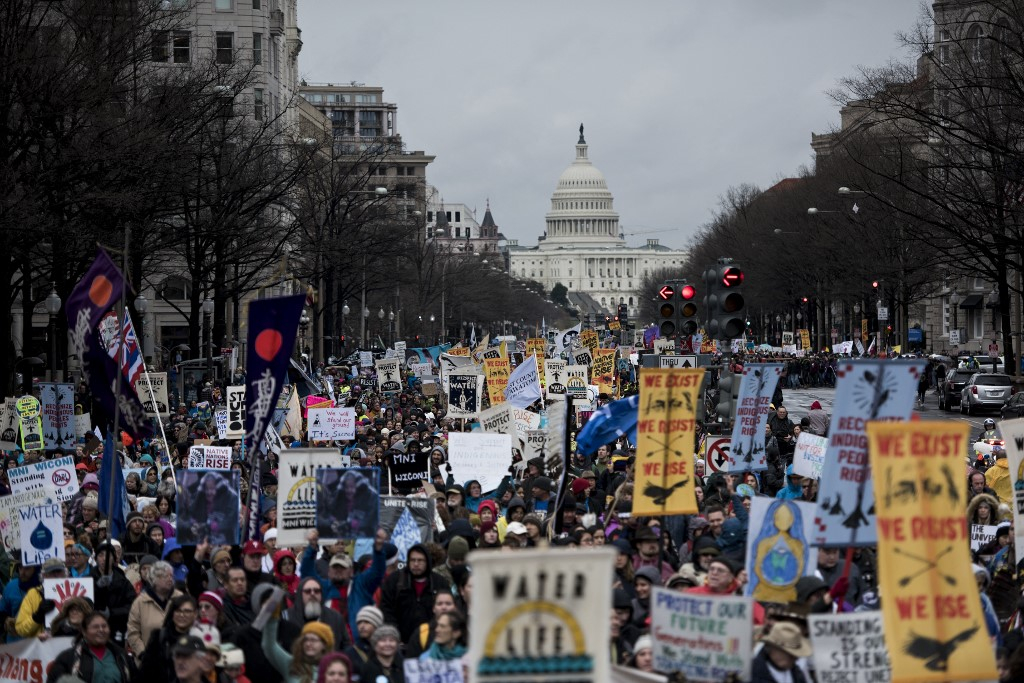
Greenpeace must pay US$345 million in damages to the operator of the US oil pipeline it protested against, a North Dakota court has ordered.
The decision on Friday finalises this phase of the explosive, yearslong case that has pitted the environmental organization against the company Energy Transfer, opening the door to an appeals process in the closely watched legal saga.
The Dallas-based energy conglomerate accused Greenpeace of orchestrating violence and defamation during the controversial construction of the Dakota Access Pipeline nearly a decade ago.
A jury last year took their side, awarding more than US$660 million in damages across three Greenpeace entities, citing charges including trespass, nuisance, conspiracy and deprivation of property access.
Judge James Gion of North Dakota cut those damages in half, determining some damages had been counted twice.
Greenpeace categorically rejects the accusations, denouncing the proceedings as abusive and a means to silence dissent. It has indicated its intention to appeal and has repeatedly stated it cannot pay hundreds of millions of dollars.
Michael Gerrard, director of Columbia Law School's climate change law centre, said the judgment was "devastating" and that "it is very bad not only for Greenpeace, but for the global environmental movement".
"Fossil fuel companies invest billions in new oil and gas while they spread misinformation, lobby against climate policies, and attempt to silence dissent against their destructive business model," Allie Rosenbluth, the US campaign manager of Oil Change International, said in a statement. "They must not be allowed to act with impunity."
At the heart of the North Dakota court battle was the Dakota Access Pipeline, where from 2016 to 2017 the Standing Rock Sioux Tribe led one of the largest anti-fossil-fuel protests in US history.
The demonstrations saw hundreds arrested and injured, drawing the attention of the United Nations, which raised concerns over potential violations of Indigenous sovereignty.
Despite the protests, the pipeline – designed to transport fracked crude oil to refineries and on to global markets – became operational in 2017.
Energy Transfer, however, continued its legal pursuit of Greenpeace. After its federal lawsuit was dismissed, it shifted its legal strategy to the state courts in North Dakota, one of the minority of US states without protections against so-called "Strategic Lawsuits Against Public Participation".
Throughout the yearslong legal fight, Energy Transfer's billionaire CEO Kelcy Warren, a major donor to President Donald Trump, was open about his motivations.
His "primary objective" in suing Greenpeace, he said in interviews, was not just financial compensation but to "send a message". Warren went so far as to say that activists "should be removed from the gene pool". (AFP)
Edited by Thomas McAlinden
Greenpeace faces US$345m bill over pipeline protests
2026-02-28 HKT 20:25
Share this story


