


Oil prices soared and stocks fell in Asia on Monday after US-Israeli strikes on Iran sent investors fleeing the prospect of an extended conflict in the crude-rich Middle East.
In Hong Kong, the benchmark Hang Seng Index opened trading for the week down 324 points, or 1.2 percent, lower at 26,305.
The China enterprises index was 88 points, or one percent, lower at 8,771 while the tech index was 91 points, or 1.8 percent, lower at 5,046.
On the mainland, the benchmark Shanghai Composite Index opened down 11 points, or 0.27 percent, at 4,151.
The Shenzhen Component Index was 167 points, or 1.16 percent, lower at 14,327 while the ChiNext Index, tracking China's Nasdaq-style board of growth enterprises, was down 1.61 percent at 3,257.
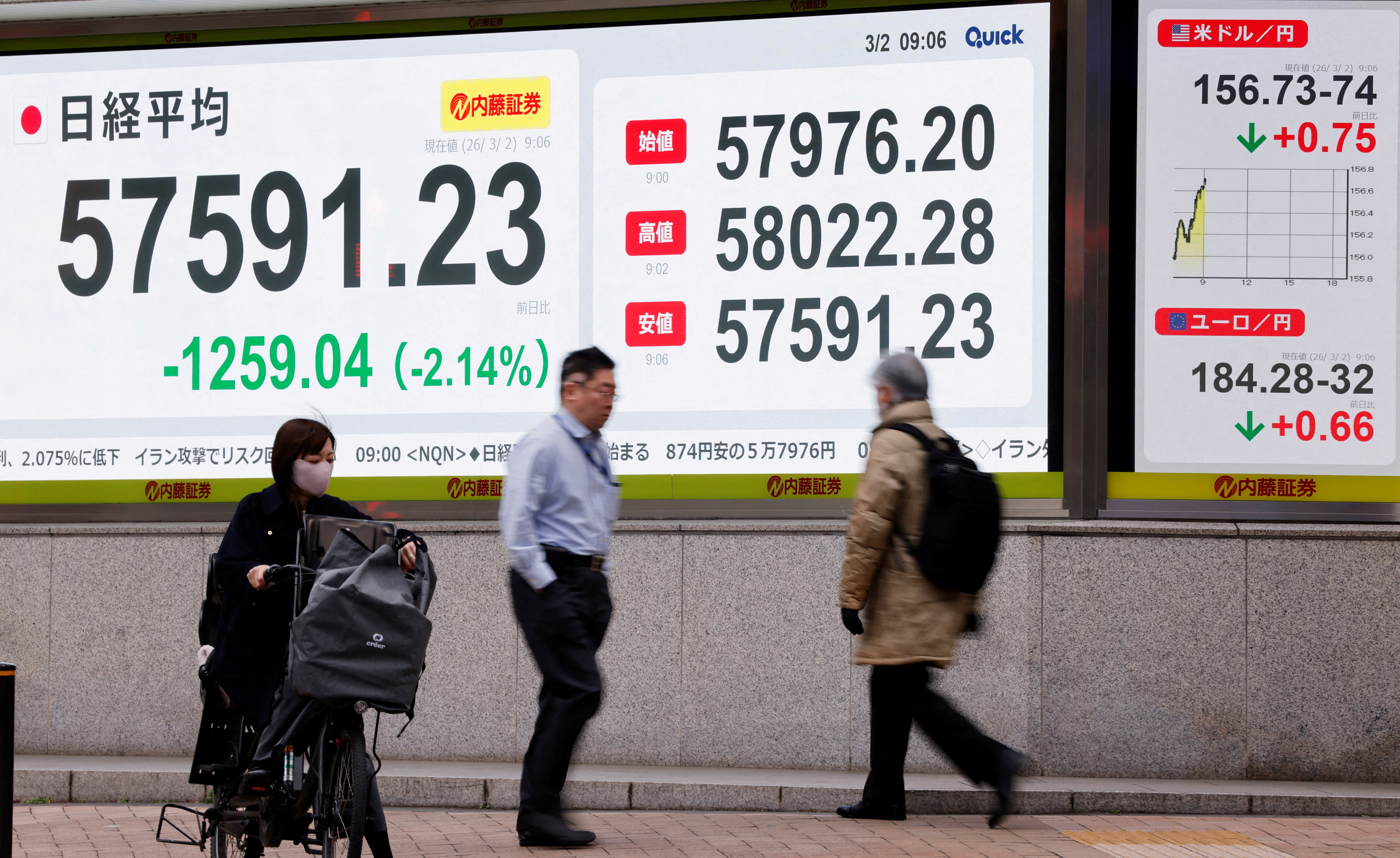
In Japan, the 225-issue Nikkei Stock Average opened down 874 points, or 1.49 percent, at 57,976.
The benchmark fell up to 2.7 percent at one point in morning trade to hit 57,376 before paring losses but was still 896 points down at 57,953 by mid-morning.
The US-Israeli bombings of Iran have also seen the vital Strait of Hormuz – through which around 20 percent of global seaborne oil passes – effectively shut and several ships attacked, fanning supply fears.
Equity markets in Singapore and Wellington were also deep in the red.
US futures were down more than one percent.
However, energy firms rallied, with Australia's Woodside Energy jumping more than five percent and Santos climbing nine percent, while PetroChina added almost four percent in Hong Kong.
Inpex in Japan was up more than 10 percent.
Gold – a key go-to safe haven in times of turmoil – climbed two percent.
While the strikes have ramped up geopolitical worries, traders wound down their initial bets, with crude sitting around five percent higher and stock markets paring losses.
Brent, the international benchmark for crude, had already rallied last week on growing concerns Trump would order an attack as talks aimed at curtailing Iran's nuclear programme stuttered.
"If higher oil prices persist, it raises the risk of stickier headline inflation and can slow the pace at which inflation prints improve," wrote Saxo Markets' Charu Chanana.
"That does not automatically mean policy tightening, but it can make the US Federal Reserve more cautious about cutting quickly, because energy-driven inflation can spill into expectations and broader pricing behaviour over time." (AFP/Xinhua)
Edited by Tony Sabine
HK stocks retreat as war jitters hit region
2026-03-02 HKT 11:26
Share this story


