


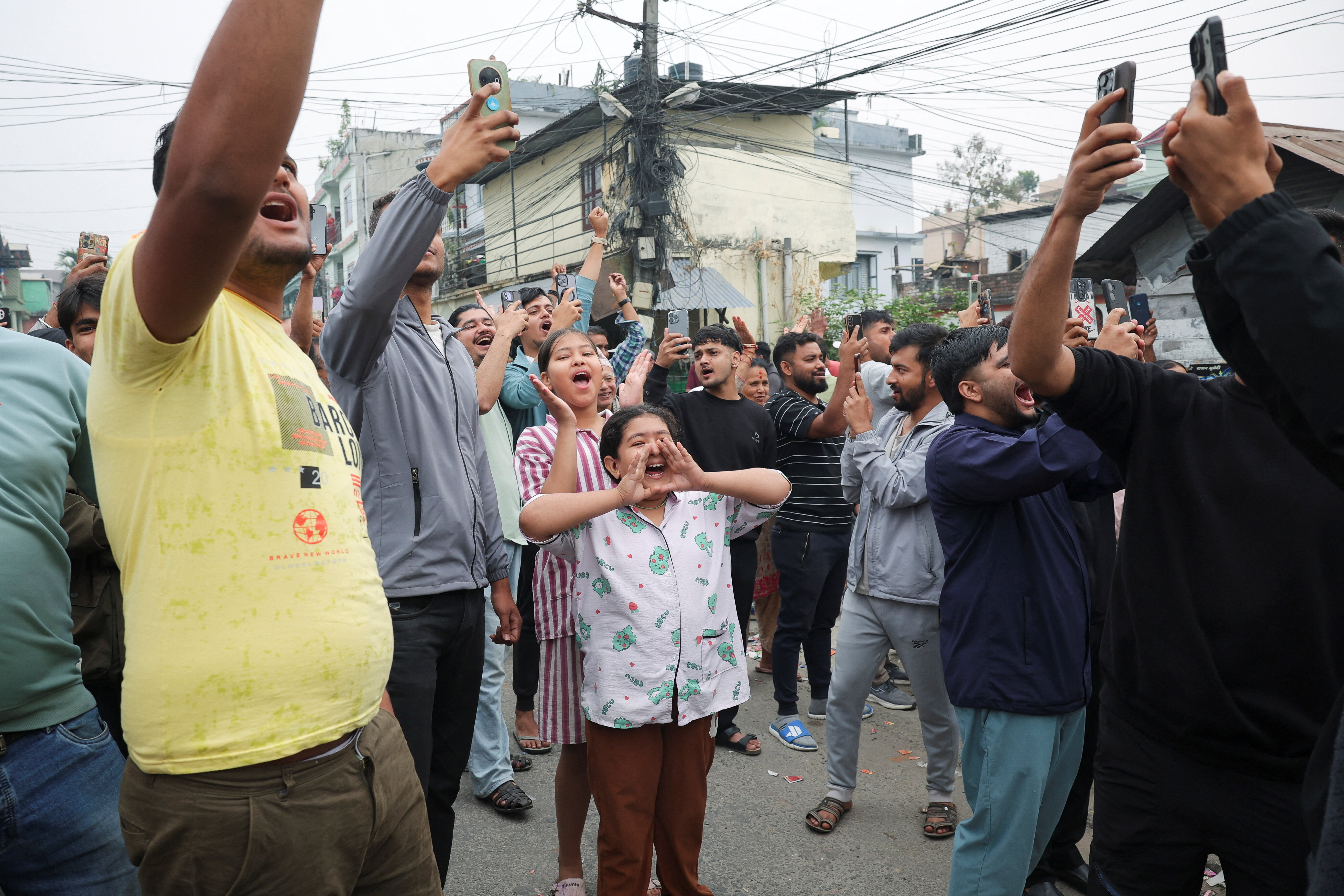
Nepal's centrist party of rapper-turned-politician Balendra Shah looked set to win by a landslide in parliamentary polls, according to Election Commission trends on Saturday, but with counting still far to go.
The high-stakes parliamentary election on Thursday came six months after deadly anti-corruption protests toppled the government, with at least 77 people killed.
The September 2025 youth-led demonstrations, under a loose Gen Z banner, began over a brief social media ban but quickly tapped into broader grievances over corruption and a struggling economy.
According to early trends issued by the Election Commission Saturday, 35-year-old Shah's Rastriya Swatantra Party (RSP) was on track to win a majority in the 275-member House of Representatives, the lower house of parliament.
"Looking at the trend, the Rastriya Swatantra Party has taken the lead in many places and has won several seats," commission spokesman Narayan Prasad Bhattarai said.
If the trends are confirmed by the vote count, 35-year-old Shah's victory over a veteran Marxist leader – and his rise from city mayor to potential prime minister – would mark one of the most dramatic results in recent Nepali politics.
"This is heading to a landslide victory – this reflects the frustration that has been building up," said Chandra Dev Bhatta, a political analyst.
"It is actually the people's revolt against the established political parties.
"The people understand that the new do not really have strong agendas, but it is a punishment to the parties for their decades-long poor governance."
By Saturday morning, on the second day of counting, there were only 34 declared results -- RSP took 27, Nepali Congress won four and the Marxist party of ousted prime minister KP Sharma Oli was trailing with one. (AFP)
Edited by Thomas McAlinden
Rapper Balendra Shah's party leads in Nepal election
2026-03-07 HKT 15:55
Share this story


