


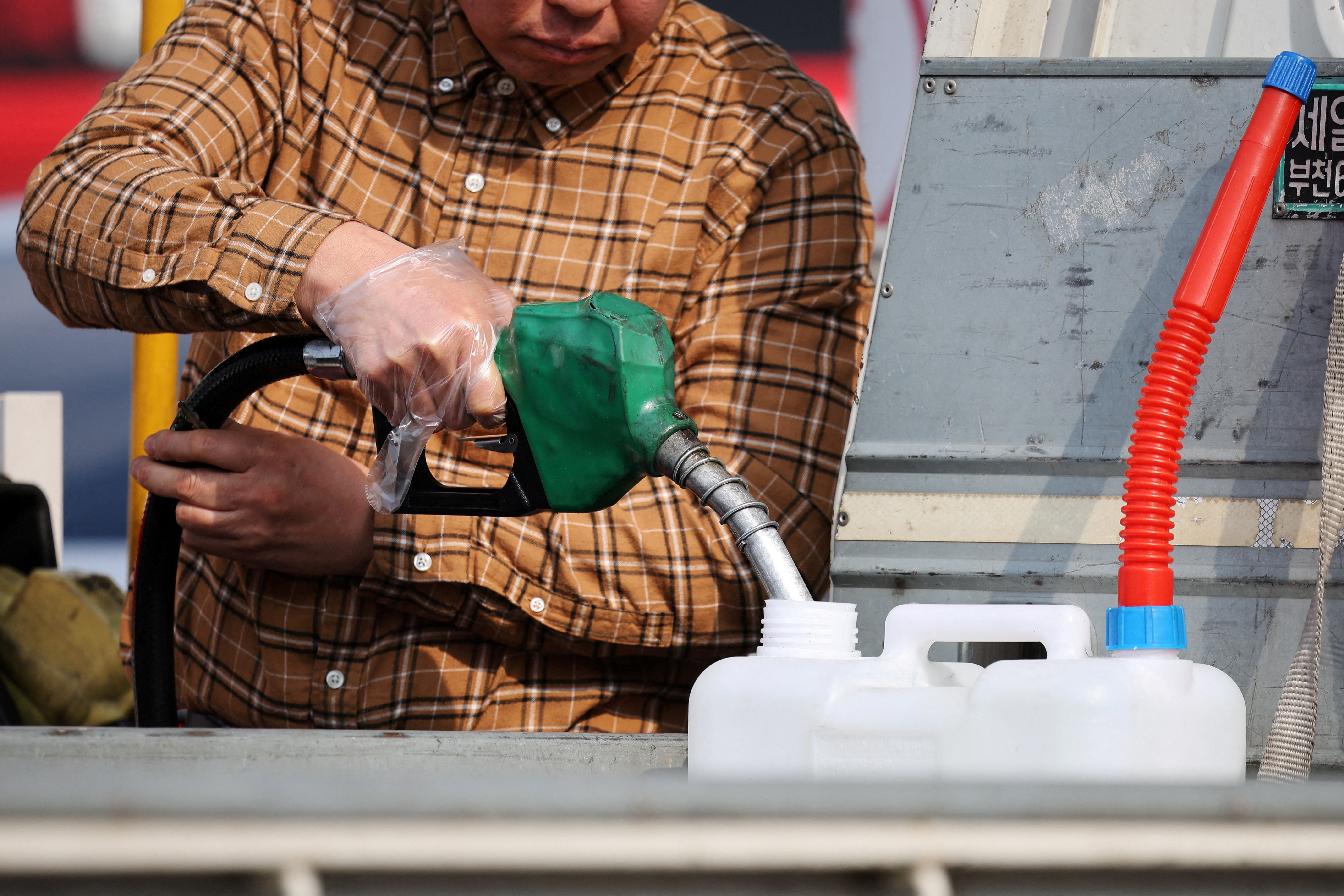
Experts and representatives of the transport trade said rising oil prices, driven by the conflict in the Middle East, are placing significant financial strain on individuals and businesses in Hong Kong.
The spike in global oil prices has begun to reverberate through the local transport industry, driving up fuel costs.
Stanley Chaing, chairman of the Lok Ma Chau China-Hong Kong Freight Association, said the depot pickup price of diesel has more than doubled over the past two weeks, from around HK$4.9 per litre to approximately HK$10.6.
Chaing described the speed and scale of the increase as alarming, noting that the added costs are hitting the industry hard, while self-employed drivers are facing even greater pressure.
"The daily fuel consumption of a light truck and a heavy truck ranges from approximately 50 litres to over 100 litres," he said.
"So maintaining a light truck, the daily fuel cost has increased by HK$200 to HK$300. For a heavy truck, the daily fuel cost increases by about HK$500 to HK$600.
"Especially for individual operators, it's even tougher. They have to pay an extra ten-odd thousand dollars or so each month, which has a certain impact on their livelihoods."
The pain is also being felt by everyday motorists at the pump.
Leung, an insurance industry worker who drives to meet clients across Hong Kong, said his fuel expenses have gone up.
"Of course, the impact is significant because the line of work I'm in requires me to go to many places every day," he said.
The ripple effects are extending to air travel as well, with Hong Kong Airlines announcing it would raise fuel surcharges for most flights from Thursday.
Professor Achim Czerny, from the Department of Logistics and Maritime Studies at Polytechnic University, said airlines often follow one another’s lead on pricing.
But he warned that higher surcharges could hinder the recovery of passenger traffic, which has yet to return to pre-pandemic levels.
"In 2018, we had 75 million passengers at Hong Kong International Airport," he said.
"Last year, only 61 million passengers, so what we would want is quickly recover and get back to the 75 million.
"But of course, now the situation with the oil prices and then the fuel surcharges getting higher, this is not ideal."
He added that while fuel surcharges are itemised separately, passengers ultimately focus on the total ticket price, making any increase a potential deterrent to travel.
Edited by Edmond Fong
'Rising world oil prices hurt HK people, businesses'
2026-03-10 HKT 19:50
Share this story


Achim Czerny speaks to Hailey Yip

