


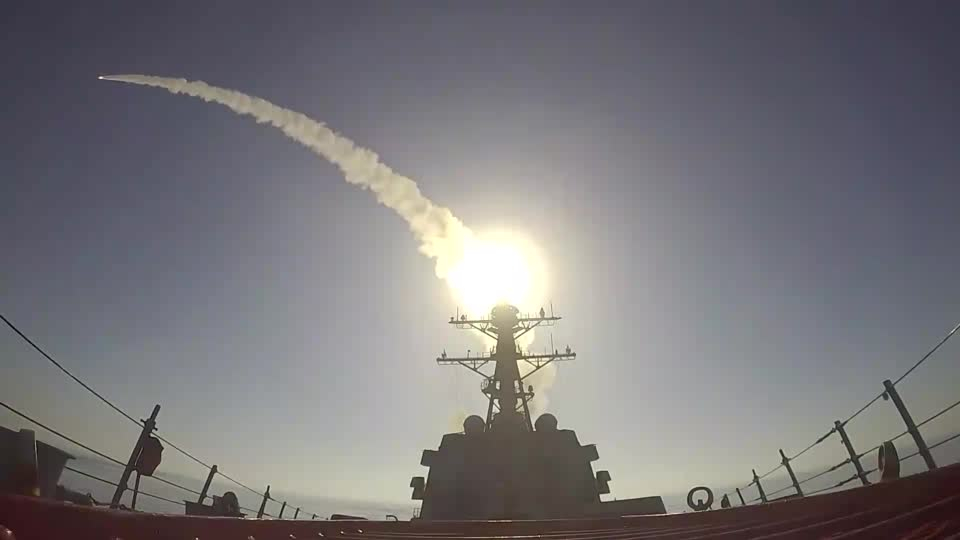
The United States and Israel pounded Iran on Tuesday with what the Pentagon and Iranians on the ground called the most intense airstrikes of the war, despite global markets betting that President Donald Trump will seek to end the conflict soon.
Raising the stakes for the global economy, Iran's Revolutionary Guards said they would block oil shipments from the Gulf unless US and Israeli attacks cease.
But the White House reiterated Trump's threat to hit Iran hard if it tries to stop the flow of energy supplies through the Strait of Hormuz, where the war has effectively halted one-fifth of the world's oil and liquefied natural gas shipments, and repeated his offer for the US Navy to safely escort tankers.
"Today will be yet again, our most intense day of strikes inside Iran: the most fighters, the most bombers, the most strikes, intelligence more refined and better than ever," US Defence Secretary Pete Hegseth told a Pentagon briefing.
Tehran residents reached by Reuters described the war's most intense night of bombardment.
"It was like hell. They were bombing everywhere, every part of Tehran," a resident said by phone, speaking on condition of anonymity for security reasons. "My children are afraid to sleep now."
In Tehran's east, two five-storey residential buildings had been hit on Monday, blasting out floors and walls and leaving a rickety concrete frame. Footage from Iran's Red Crescent showed rescuers there carrying a victim in a body bag. Workers were still recovering bodies at the site on Tuesday when a missile struck a road intersection nearby.
Despite the assault, some senior Iranian officials voiced defiance on Tuesday.
"Certainly, we are not seeking a ceasefire; we believe the aggressor must be struck in the mouth so that they learn a lesson and never again think of attacking dear Iran," Iran's parliament speaker, Mohammad Baqer Qalibaf, posted on X.
Foreign Minister Abbas Araqchi told PBS that Tehran was unlikely to resume negotiations with the US.
And a spokesperson for the Revolutionary Guards said Tehran would not allow "one litre" of Middle Eastern oil to reach the US or its allies while US and Israeli attacks continue.
"We are the ones who will determine the end of the war," the spokesperson said.
Iran's UN Ambassador Amir Saeid Iravani said US and Israeli airstrikes on Iran have destroyed nearly 10,000 civilian sites, including 65 schools and educational institutions and almost 8,000 homes since the war began on February 28.
He also repeated a previous death toll that the strikes had killed more than 1,300 civilians.
Scores have also been killed in Israeli attacks on Lebanon to root out the Iran-backed group Hezbollah, which has fired into Israel in solidarity with Iran.
Iranian strikes on Israel have killed 12 people. Iran has struck US military bases and diplomatic missions in Arab Gulf states but also hit hotels, closed airports and damaged oil infrastructure.
About 140 US military personnel have been wounded since the start of the war, the majority with minor injuries, the Pentagon said on Tuesday. Seven deaths have already been announced. (Reuters)
Edited by Cecil Wong
Iran endures heaviest day of strikes yet
2026-03-11 HKT 07:24
Share this story


RTHK's US correspondent Simon Marks speaks to Janice Lo

