


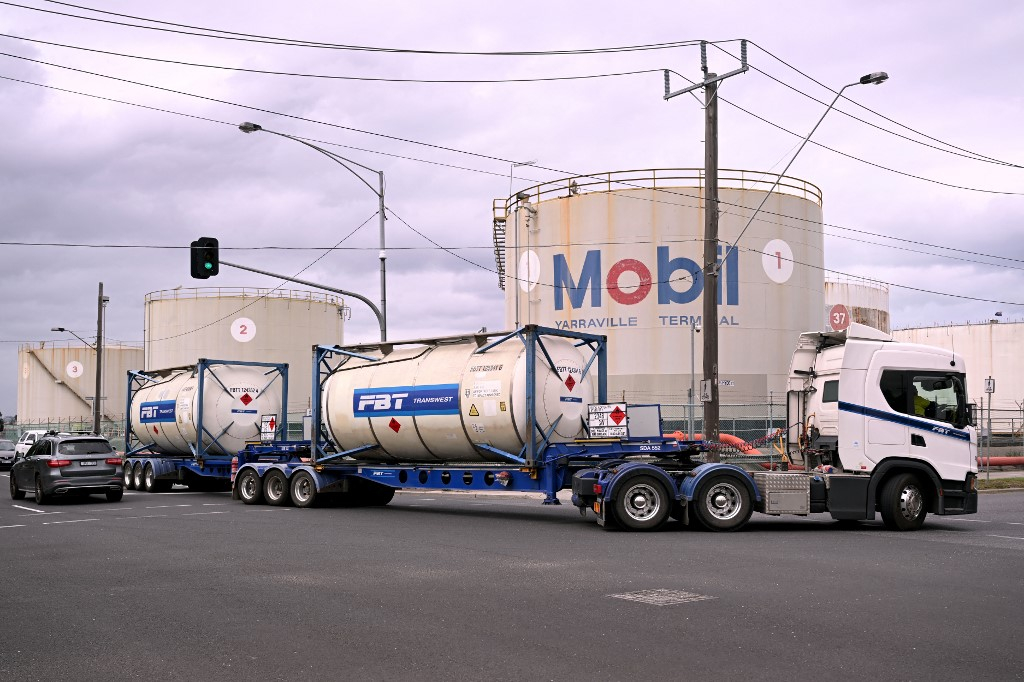
Australia will adjust fuel quality standards to allow higher sulphur levels for around two months in a move that will release 100 million litres into the domestic supply while New Zealand officials said they were considering using decades-old laws restricting vehicle use if fuel supplies dwindled due to the war in the Middle East.
Australia – reliant on oil imports for fuel – has seen petrol prices spike since the outbreak of the war in the Middle East.
In response, Energy Minister Chris Bowen said one of the country's top refiners, Ampol, has agreed to redirect supply to regions experiencing shortages and the wholesale market.
"This will allow around 100 million litres a month of new petrol supply that would otherwise have been exported to be blended instead into Australian domestic supply," he said, with farmers, fishers and regional communities a priority for support.
Oil prices on Thursday topped US$100 a barrel again after Iranian attacks on shipping effectively closed the Strait of Hormuz in response to the US-Israeli strikes that killed Supreme Leader Ayatollah Ali Khamenei.
Australia's government has blamed price-gouging by retailers for rising domestic costs of fuel, and Treasurer Jim Chalmers said that while the country had "enough fuel", there were supply issues, particularly in rural areas.
In New Zealand, Finance Minister Nicola Willis said on Thursday that officials had discussed using legislation introduced to restrict fuel use in the wake of the Iranian revolution in 1979 in response to the crisis.
Under those laws, car owners had to nominate one day per week when they would not use their vehicle and faced hefty fines if caught driving.
They also allowed the government to authorise the sale of coupons to restrict fuel use, and restrict the amount that could be sold. The so-called "carless days" were in effect from July 1979 to May 1980.
In New Zealand, which is heavily dependent on imports for its fuel, the average petrol price has increased by nearly 10 percent since the war began, with diesel up more than 20 percent, according to price monitor Gaspy.
Energy minister Shane Jones said there was about 50 days worth of fuel in or on route to New Zealand.
National airline Air New Zealand also announced Thursday it had cancelled five percent of its flights for the next two months, mainly on domestic routes, due to increasing jet fuel costs.
The International Energy Agency said on Wednesday its member countries would unlock 400 million barrels of oil from their reserves to ease the impact of the Middle East war – the biggest such release ever.
The release was the sixth in the history of the organisation, which was created to co-ordinate responses to major supply disruptions after the 1973 oil crisis. (AFP)
Edited by Thomas McAlinden
Down Under measures set as fuel supply fears bite
2026-03-12 HKT 14:28
Share this story


