


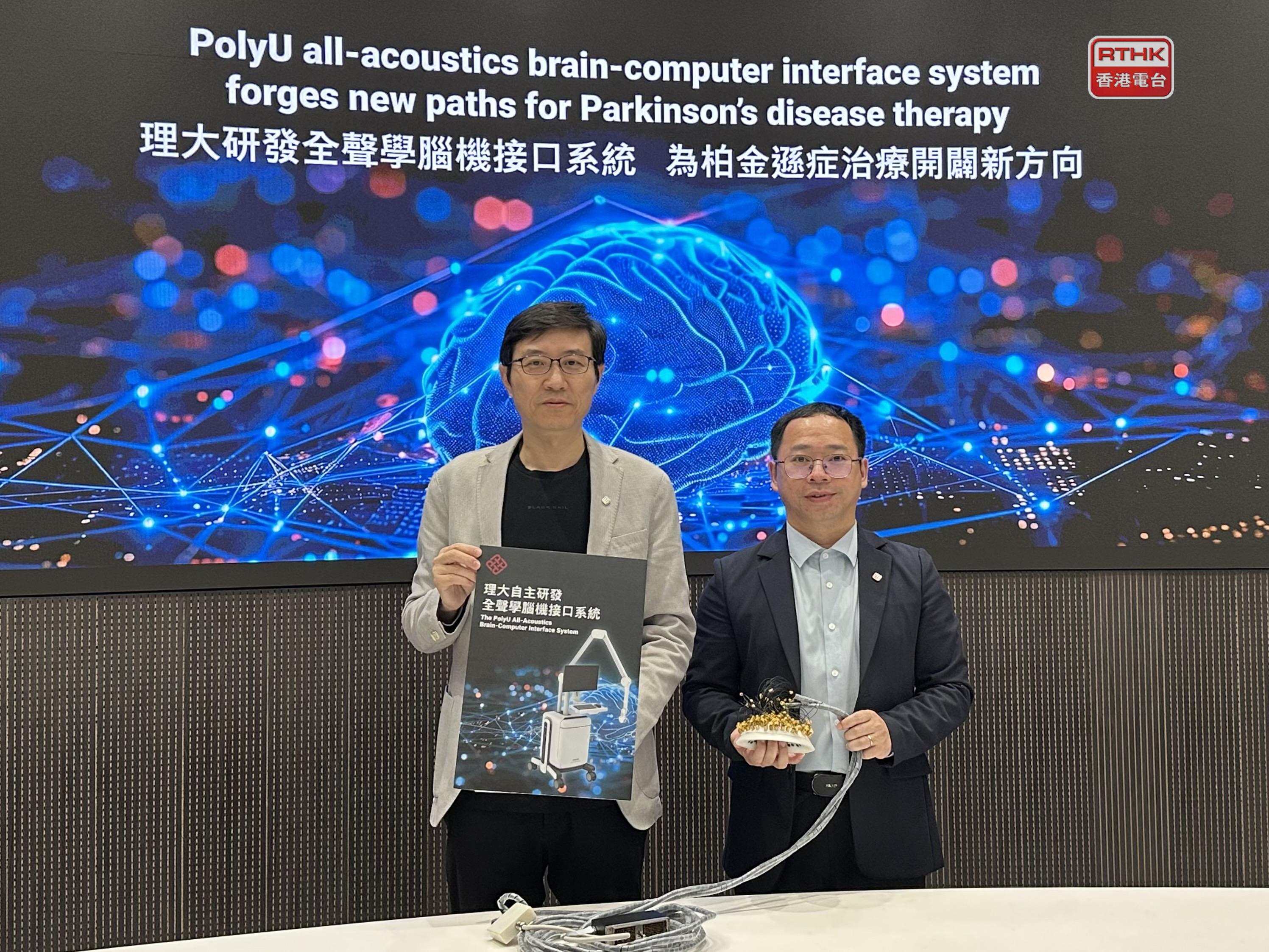
Polytechnic University has developed a new brain-computer interface system using ultrasound to alleviate Parkinson's disease symptoms in a non-invasive manner.
The technology – created by a research team led by Sun Lei from the university's department of biomedical engineering in collaboration with Huashan Hospital in Shanghai and Zhujiang Hospital in Guangdong – aims to offer a new non-invasive treatment option that targets Parkinsonian motor symptoms without invasive surgery or drugs.
Sun said the technology could significantly improve the symptoms of Parkinson’s – which is primarily caused by the excessive loss of certain brain cells during ageing – by modulating the function of existing cells through ultrasound.
“Compared to other major modalities like electrical and magnetic, they either lack the specificity or focusing ability, or their focusing ability is pretty poor or they cannot penetrate pretty deep,” he said.
“So ultrasound [waves] seem to be the only energy type that can actually penetrate deep [into] the brain," Sun said, adding that they allowed the treatment process to be focused and non-invasive.
Existing methods, he said, also come with surgical risks and hardware limitations to their effectiveness but that this non-invasive technology allows doctors to easily stimulate brain cells in a precise manner.
With testing on mice proving that the technology improves physical abilities, Sun said the team's plans include clinical trials with 100 patients at partner hospitals to assess safety and efficacy for regulatory approval.
Beyond Parkinson’s disease, Sun said preclinical data also supports its application in treatment for depression, epilepsy, weight control and sleep disorders.
He said the scope of this technology might be expanded to treat these diseases in the future.
Sun said the country’s 15th Five-Year Plan had identified brain-computer interfaces as one of the fresh growth drivers for the economy and that this technology supports the country’s strategic development.
Edited by Thomas McAlinden
New interface system a brainwave in Parkinson's fight
2026-03-12 HKT 15:51
Share this story


