


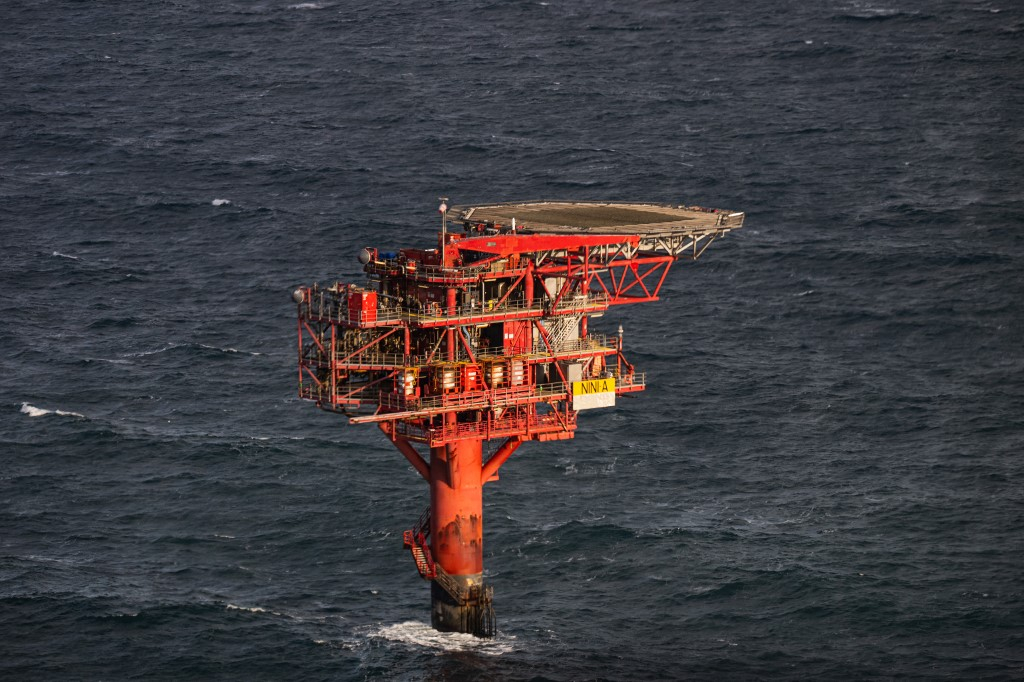
US stocks fell on Thursday, as Iranian strikes on two oil tankers sent crude prices surging toward US$100 per barrel, further exacerbating inflation fears and sending investors fleeing equity markets.
All three major US stock indexes slid more than 1.5 percent in a broad selloff, with everything but energy and some defensive stocks suffering steep percentage losses.
The S&P 500 notched its biggest three-day percentage drop in a month.
Iran's Supreme Leader Ayatollah Mojtaba Khamenei vowed to keep the crucial Strait of Hormuz shut, and the International Energy Agency (IEA) warned the war on Iran was creating the largest-ever oil supply disruption, feeding fears of mounting inflation pressures.
The price of Brent crude surged 9.2 percent to US$100.46 a barrel, while its US equivalent, West Texas Intermediate, climbed 9.7 percent to US$95.73 a barrel.
"There’s a realisation that a resolution to the Middle East conflict is being pushed further out," said Ryan Detrick, chief market strategist at Carson Group in Omaha.
"It’s a sell first, ask questions later type of mentality. There hasn't been safe sector outside of energy."
The US Federal Reserve convenes on March 17, and while recent inflation data suggest price growth is under control, the 13-day-old war on Iran and the resulting spike is crude prices have yet to filter through the data.
While the central bank is widely expected to leave its key interest rate unchanged, its updated summary of economic projections will be scrutinised for adjusted inflation estimates.
"Under the surface of soaring crude prices is the realisation that the likelihood of Fed cuts later this year is quickly dwindling," Detrick added.
In light of recent credit quality concerns, Swiss private equity firm Partners Group warned private credit default rates could double in the next few years.
Morgan Stanley limited redemptions at one of its private credit funds, while JPMorgan Chase reduced the value of some loans to private credit funds on Thursday. Their shares slid 4.1 percent and 1.6 percent, respectively.
Federal Reserve Vice Chair for Supervision Michelle Bowman outlined regulatory changes that would relax requirements for the amount of cash banks must set aside for potential losses, in a move seen as a victory for Wall Street lenders.
The Dow Jones Industrial Average fell 739 points, or 1.6 percent, to 46,677, the S&P 500 lost 103 points, or 1.5 percent, to 6,672 and the Nasdaq Composite lost 404 points, or 1.8 percent, to 22,311.
Among the 11 major sectors of the S&P 500, energy was the biggest gainer, rising 1.0 percent, while industrials slid 2.5 percent, notched the steepest percentage loss. (Reuters)
Edited by Cecil Wong
Wall St falls as soaring oil prices prompt selloff
2026-03-13 HKT 07:35
Share this story


