


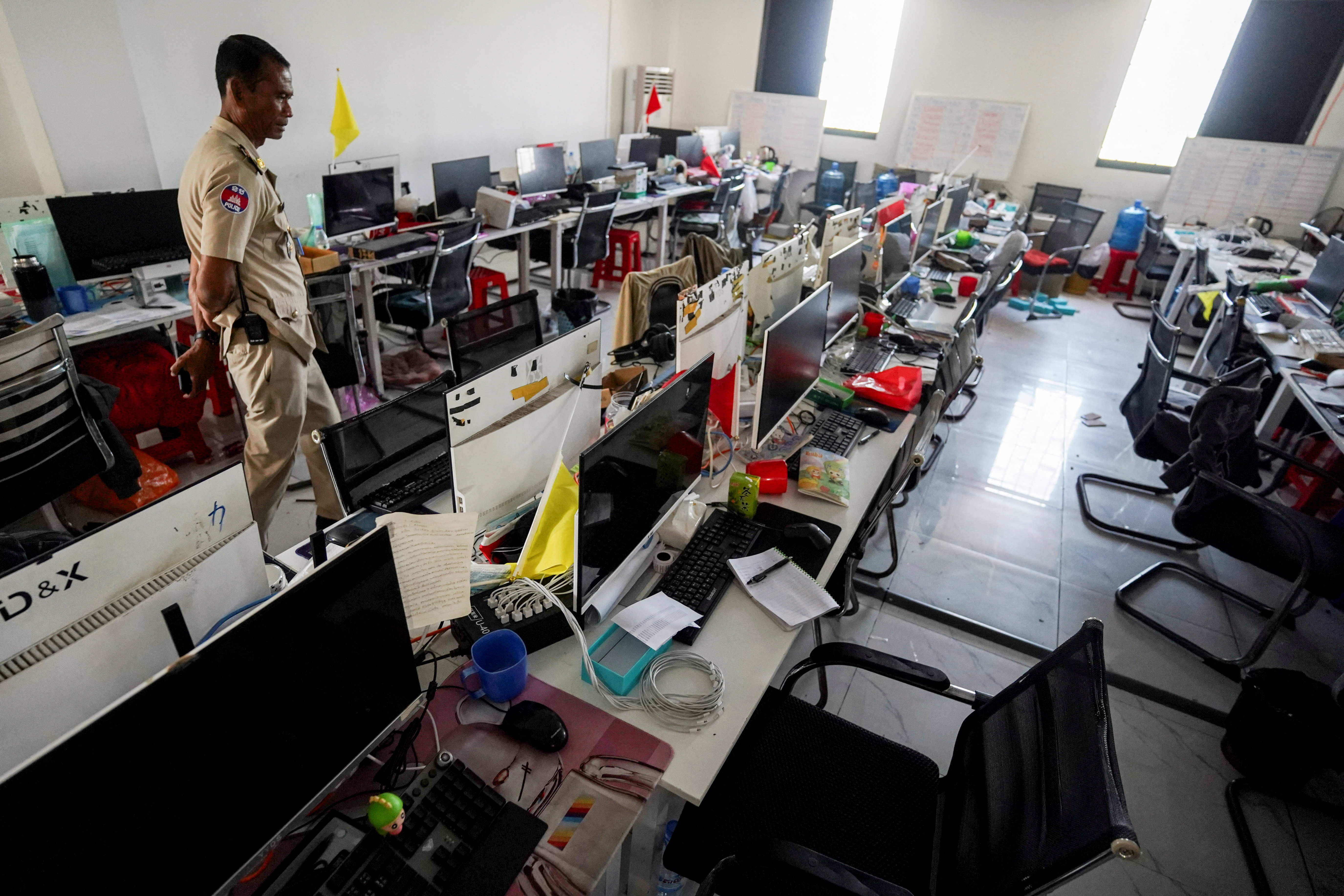
Cambodia has approved a draft law that will hand down harsh sentences against fraudsters running cyberscam operations, a minister said on Friday.
Cambodia has emerged as a hotspot for crime syndicates running a multibillion-dollar fraud industry that sees scammers lure internet users globally into fake romantic relationships and cryptocurrency investments.
Largely concentrated in Southeast Asia, the global cyberscam industry has reached "industrial proportions", with estimates of its annual revenues as high as US$64 billion, according to the UN Office on Drugs and Crime.
Some of the hundreds of thousands of people carrying out scams in the region are trafficked and held against their will, while others work voluntarily.
The draft law – which aims to stamp out transnational cyberscam operations – was approved during a cabinet meeting chaired by Prime Minister Hun Manet, Information Minister Neth Pheaktra said, adding the draft bill, which will be sent to parliament soon for approval, would "eliminate online scams from Cambodian territory".
Lawmakers from the ruling party dominate both houses of parliament, so the draft law is expected to pass easily.
"Cambodia is not a paradise or a safe haven for criminals," Neth Pheaktra said, adding that the government's crackdown on scammers would continue.
Ringleaders of cyberscam centres will face between five and 10 years imprisonment and a fine of up to US$245,996 under the new law.
They will face 10 to 20 years and a fine of up to US$491,992 if their operations are found to involve violence, torture, confinement, human trafficking or forced labour.
Cyberscam bosses will face 15 to 30 years or life imprisonment if their activities lead to one or more deaths.
For lower-level fraudsters, cyberscamming is punishable by five to 10 years in prison and a fine of up to US$245,996 if it is committed by an organised group and with many victims.
Last month, Hun Manet said in an interview that scam centres were destroying his country's economy and giving the nation a bad name, vowing to "clean this out".
A 2024 report by the United States Institute of Peace estimated the return on cyberscamming in Cambodia to exceed US$12.5 billion annually – half the country's formal GDP – but Hun Manet denied the country was dependent on scams.
Chhay Sinarith, senior minister on the government's anti-cyberscam commission, said this week that his country hoped to close all online scam centres by the end of April.
Since a crackdown began in July, authorities have shut down around 250 scam sites and 91 casinos, he said, adding that more than 200,000 people have fled scam sites and left Cambodia and that the country has deported around 10,000 foreign nationals. (AFP)
Edited by Tony Sabine
Cambodian law set over 'industrial proportions' scams
2026-03-13 HKT 16:52
Share this story


