


Mainland and Hong Kong stocks ended lower on Friday, tracking broad weakness in regional peers, as the US-Israeli attacks on Iran approached the two-week mark with no end in sight.
The benchmark Hang Seng Index ended down 251 points, or 0.98 percent, at 25,465.
The China enterprises index was down 28 points, or 0.32 percent, at 8,671 while the tech index was 49 points, or 0.99 percent, at 4,978.
On the mainland, the benchmark Shanghai Composite Index ended down 33 points, or 0.81 percent, at 4,095.
The Shenzhen Component Index was 94 points, or 0.65 percent, lower at 14,280 while the ChiNext Index, tracking China's Nasdaq-style board of growth enterprises, lost seven points, or 0.22 percent, to close at 3,310.
"We believe this is further evidence that Chinese equities offer a viable diversification option for global investors," said James Wang, head of China strategy at UBS Investment Bank Research.
He said China's higher oil inventory reserves and relatively low exposure to oil in its total energy usage should offer some downside protection to A-shares.
"Global volatility rose amid Iran conflict, while Chinese equities showed relative resilience and outperformed," analysts at Morgan Stanley said in a note.
"We continue to prefer the A-share market over offshore listings... and recommend a stock-picking approach rather than index positioning," they said, reiterating their preference for sectors with a strong focus on real assets and hardcore tech or innovation.
Separately, developments around Sino-US relations remained a key market focus.
Vice Premier He Lifeng will travel to Paris from March 14 to 17 and hold trade talks with US officials, the Commerce Ministry said on Friday.
Investors also await China's February credit lending data and activity indicators, such as retail sales, for clues to domestic economic health.
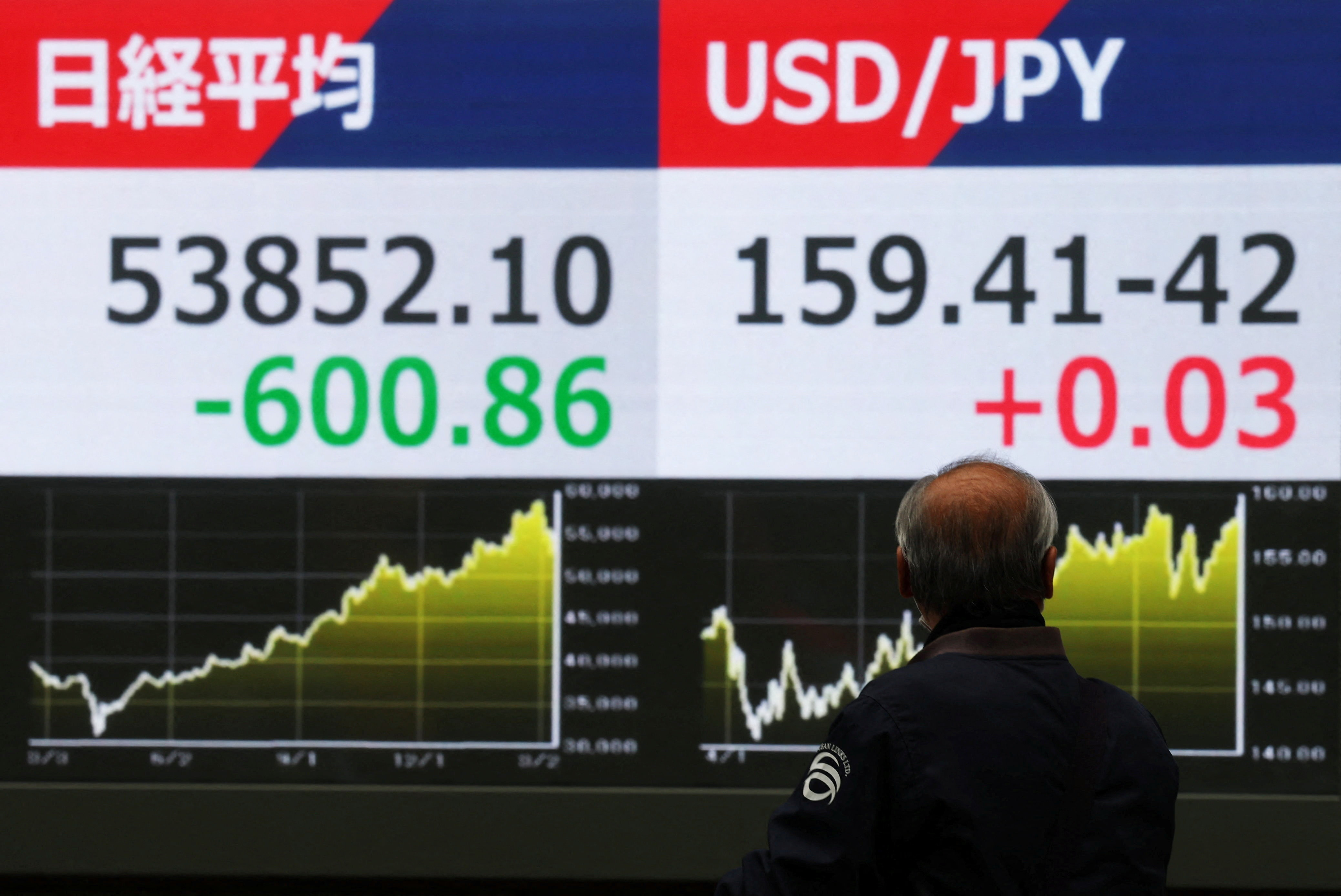
In Tokyo, the Nikkei dropped 633 points, or 1.2 percent, to close at 53,819 to post a second consecutive weekly decline of 3.2 percent, after sliding up to 2.1 percent earlier in the session.
The index has lost 8.5 percent since its February 27 close, before the US-Israeli attacks on Iran began.
The broader Topix eased almost 21 points, or 0.6 percent, to 3,629.
In Seoul, the Kospi closed down 96 points, or 1.72 percent, at 5,487.
It ended the week 1.75 percent down, after dropping 10.6 percent last week – its steepest weekly drop since March 2020. (Reuters/Xinhua)
Edited by Tony Sabine
HK stocks track regional weakness in retreat
2026-03-13 HKT 17:14
Share this story


