


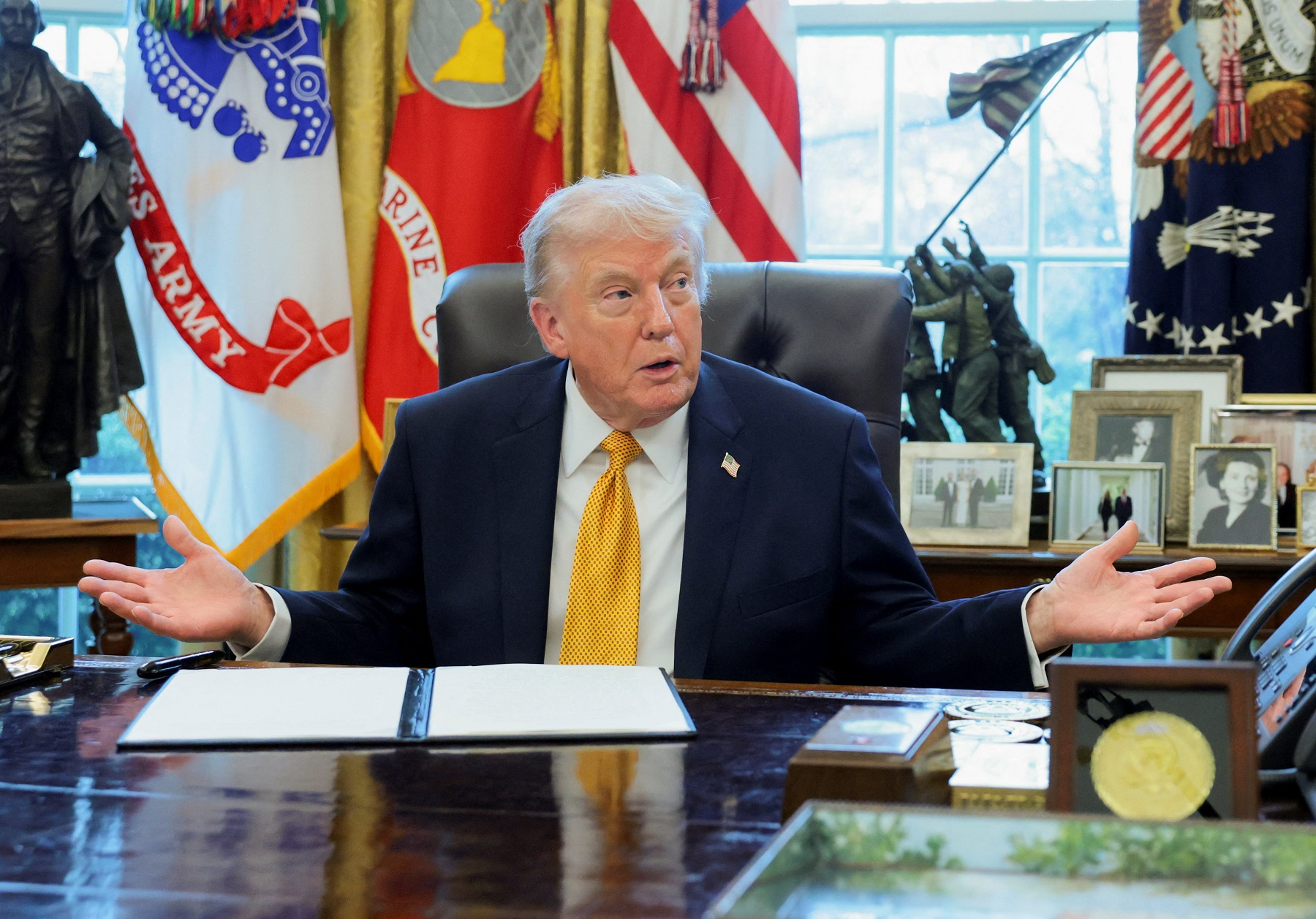
US President Donald Trump on Monday said he had asked China to delay his summit with President Xi Jinping by around a month while he deals with the war in the Middle East.
Trump had been due to visit Beijing from March 31 to April 2 to reset ties and extend a US-China trade truce, but the trip has been upended by the Iran conflict.
"Because of the war I want to be here, I have to be here, I feel. And so we've requested that we delay it a month or so," Trump told reporters at the White House when asked about the China trip.
The US leader insisted that he had a "very good relationship" with China and was not trying to play games by postponing the highly anticipated trip.
"There's no tricks to it either, it's not like 'oh gee, I'm waiting.' It's very simple. We got a war going on. I think it's important that I be here," added Trump.
Trump had first suggested the summit could be delayed in an interview with the Financial Times on Sunday, in which he said a decision could depend on whether China would help reopen the Strait of Hormuz.
"We'd like to know before (the summit)," Trump told the FT.
China and the United States had both earlier Monday hailed what they called "constructive" discussions in Paris over the weekend that were widely seen as setting the stage for the summit.
State media described the talks from Sunday to Monday as "candid, in-depth and constructive."
Vice Premier He Lifeng said the exchange would inject "greater certainty and stability" into bilateral trade ties and the global economy, according to Xinhua.
Beijing said earlier on Monday it was in talks with Washington over the visit by Trump, who has also pressed Nato allies to help reopen the Strait of Hormuz.
The waterway, critical to oil transportation, has been effectively closed by Iran in retaliation over the US and Israeli war against Tehran.
"Head-of-state diplomacy plays an irreplaceable strategic guiding role in China-US relations," Foreign Ministry spokesman Lin Jian told a press conference.
The Paris talks follow a turbulent year in ties between the world's two largest economies since Trump returned to power. The United States announced new trade investigations last week on excess industrial capacity and forced labour respectively, targeting 60 economies including China and other key partners.
The prospect has fuelled the possibility of further tariffs after the Supreme Court struck down Trump's global duties.
Beijing said on Monday that it "lodged representations" and urged Washington to "correct its erroneous" trade practices.
Trade negotiator Li Chenggang also reiterated on Monday that China firmly opposed such "unilateral" probes. (AFP)
Edited by Cecil Wong
Trump asks China to delay Xi summit as Iran war rages
2026-03-17 HKT 07:55
Share this story


