


China said on Tuesday it had "noted" clarifications from the United States about the reasons for a possible delay to US President Donald Trump's planned trip.
Trump, who was expected to visit Beijing at the end of March, said on Monday he had asked Beijing to delay his summit with President Xi Jinping by around a month due to the Middle East situation.
"Because of the war I want to be here, I have to be here, I feel. And so we've requested that we delay it a month or so," Trump said at the White House when asked about the China trip.
Trump insisted that he maintained a "very good relationship" with China and was not trying to play games by postponing the highly anticipated trip to the rival superpower.
Previously, Trump suggested his visit could depend on whether China helped Washington to reopen the Strait of Hormuz, the vital maritime waterway that has been effectively closed by Iran in retaliation for US and Israeli strikes.
China acknowledged Trump's request on Tuesday, in a statement rejecting any connection to the issues surrounding Hormuz.
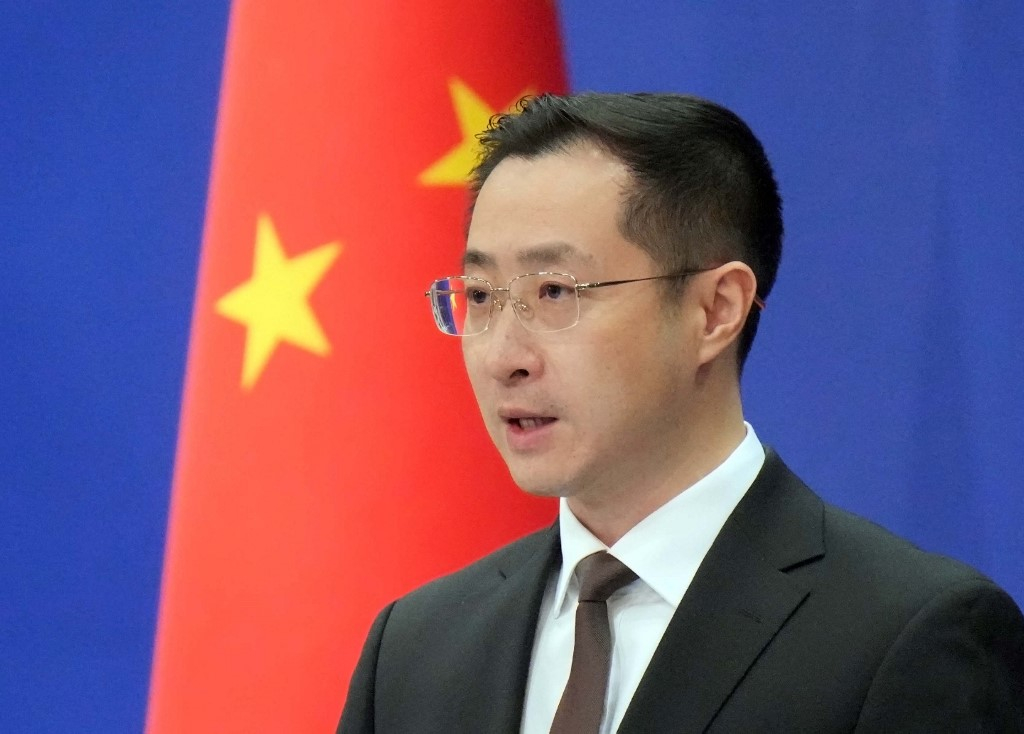
"We have noted that the US side has publicly clarified these false reports by the media, stating that the relevant reports are completely wrong, and emphasised that the visit has nothing to do with the issue of the open navigation of the Strait of Hormuz," Foreign Ministry spokesman Lin Jian said during a news briefing on Tuesday.
"Both China and the US are maintaining communications on Trump's visit to China," he added.
US Treasury Secretary Scott Bessent also said on Monday Trump's reported demand for China to help reopen the waterway was a "false narrative".
"The postponement, if it happens, would be because the commander-in-chief of the United States military believes that he should stay in the United States while this war is being prosecuted," he said.
Any delay would not have anything to do with China's stance on the Strait of Hormuz, through which China gets 45 percent of its oil imports, Bessent said, adding that China's aid in unblocking the strait "would obviously be in their interest".
About a fifth of global oil supplies normally pass through the Strait of Hormuz, and its closure has sent oil prices soaring above US$100 a barrel. (AFP & Reuters)
Edited by Edmond Fong
'US clarifies reasons for possible Trump trip delay'
2026-03-17 HKT 18:44
Share this story


