


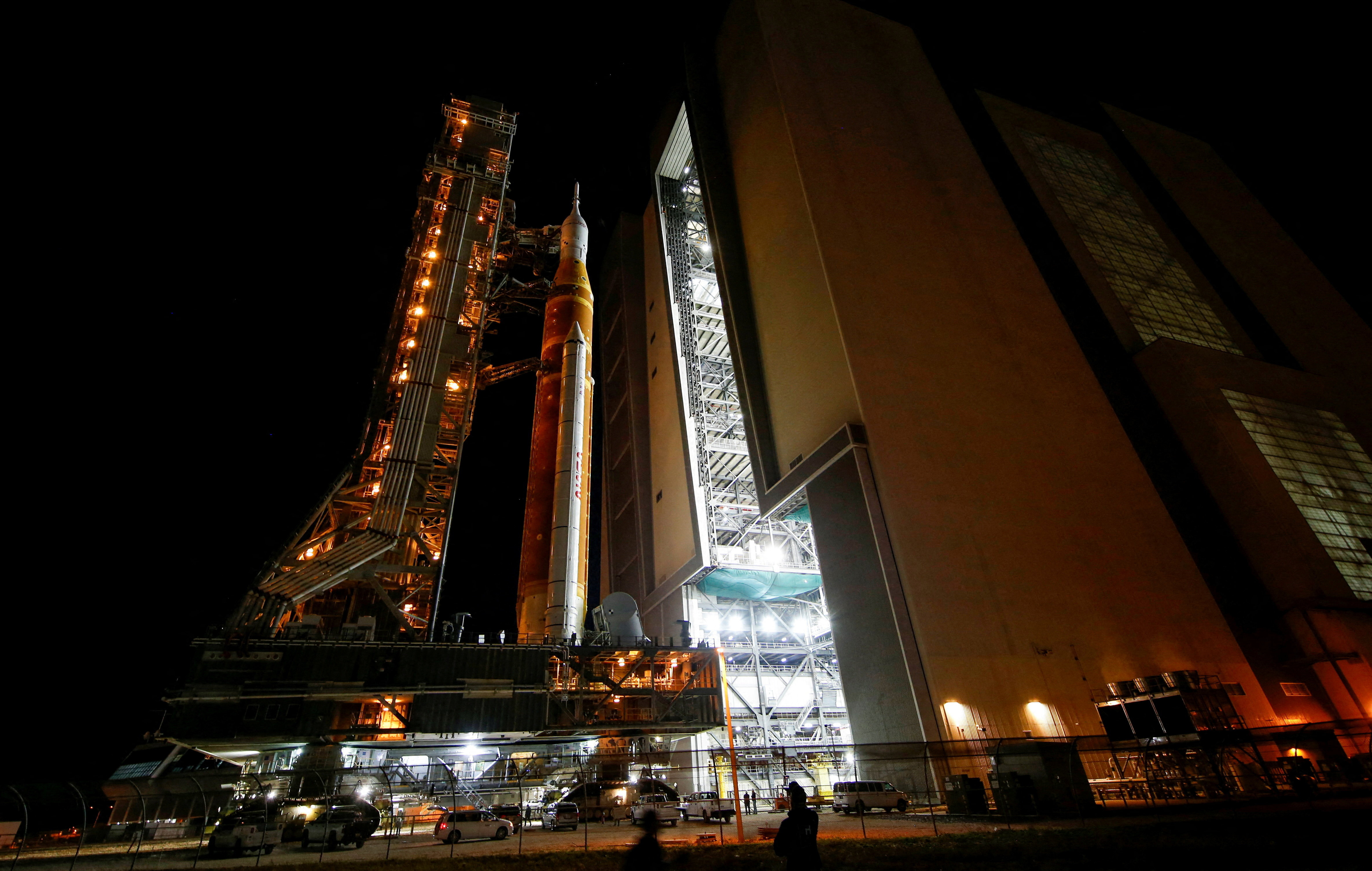
Nasa has begun returning its towering Space Launch System (SLS) rocket and Orion spacecraft to its Florida launch pad ahead of a planned flyby of the moon after completing necessary repairs.
Artemis engineers began the manoeuvre, which can take up to 12 hours, on Thursday after which the US space agency would begin final preparations before the opening of its next launch window on April 1.
The immense orange and white SLS rocket and the Orion vessel were to be slowly wheeled out of the Vehicle Assembly Building at the Kennedy Space Centre in Florida, and painstakingly moved 6.5 kilometres to launch pad 39B.
If the tests are satisfactory, three Americans and one Canadian will head to the moon as soon as early April to fly around Earth's satellite.
The mission, to last about 10 days, would be a huge step towards Americans once again setting foot on the lunar surface, a goal announced by US President Donald Trump in his first term.
But that ambition has been plagued by delays.
Late last month Nasa detected an issue with helium flow and decided to roll the Artemis 2 stack – which weighs almost five million kilogrammes – back into the vehicle assembly building at the Kennedy Space Centre, to investigate the technical issues and make any necessary repairs.
That took a March launch out of the question.
Before that setback, Nasa had found technical problems, including a liquid hydrogen leak that cut short a so-called wet dress rehearsal for the launch.
The agency is now hopeful the first crewed flyby in more than half a century can get off the ground in early April.
The first opportunity is April 1, and several more follow in the subsequent days.
The Artemis 2 astronaut crew entered quarantine on Wednesday in Houston in preparation for the journey. (AFP)
Edited by Tony Sabine
Nasa moves into launch mode for moon flyby
2026-03-20 HKT 12:29
Share this story


