


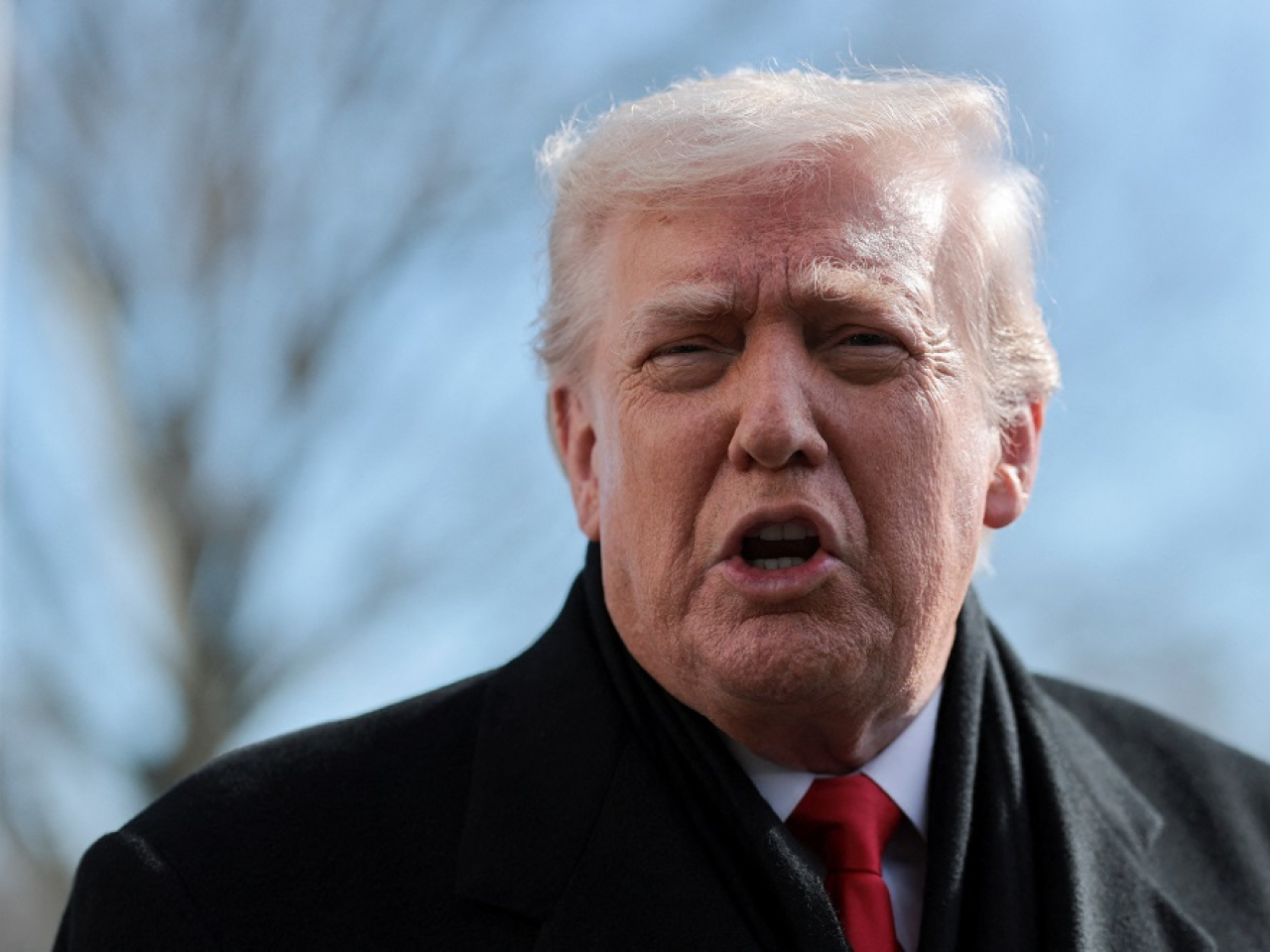
US President Donald Trump warned Iran on Thursday to engage in talks to end the Middle East war "before it is too late", after Tehran publicly spurned US overtures to resolve the nearly four-week conflict.
Trump's warning came as Israel said it had killed the commander of the Iranian Revolutionary Guards' navy, calling him "directly responsible" for throttling the Strait of Hormuz since the war's outbreak.
Hopes for a negotiated end to the US-Israeli war with Iran, which has engulfed much of the region, rose after Washington was said to have put a peace plan to Tehran, only for the Islamic republic to deny the sides were speaking.
But Pakistan confirmed Thursday it was indeed facilitating "US-Iran indirect talks" by relaying messages -- and that a 15-point American plan was being "deliberated upon" by Tehran.
"They better get serious soon, before it is too late, because once that happens, there is NO TURNING BACK, and it won't be pretty!" Trump warned on social media, saying Iran had been "militarily obliterated, with zero chance of a comeback".
Iran's foreign minister flatly denied Wednesday that "negotiations" had been engaged with Trump's administration -- but did concede messages were being exchanged through "friendly countries".
"We seek an end to the war on our own terms," Abbas Araghchi said on state TV.
Islamabad has been touted as a go-between, given its longstanding ties with both neighbouring Iran and the United States, as well as its network of regional contacts.
Pakistan's Foreign Minister Ishaq Dar said "brotherly countries" Turkey, Egypt and others, were also supporting the process -- while the Gulf Cooperation Council said it wanted to be involved in any talks.
Under near-daily bombardment since February 28, Iran was hit by a new wave of Israeli strikes Thursday -- one of which Israel said had "blown up and eliminated" the Guards' naval commander, Alireza Tangsiri, and several senior officers.
Defence Minister Israel Katz blamed Tangsiri for throttling the vital Hormuz shipping lane -- which Iran is blocking to all but "non-hostile" vessels, with Malaysia for instance saying its tankers were being allowed passage.
Elsewhere, the Israeli army was conducting what it called "wide-scale" strikes targeting Iranian infrastructure.
Local media reported attacks in the central cities of Isfahan and Shiraz, in Bandar Abbas in the south and Tabriz in the northwest -- but also Mashhad and Birjand, towards the Afghan border in an area largely spared until now.
Iran, in turn, kept up retaliatory attacks on several parts of Israel, where falling shrapnel from intercepted missiles wounded seven people.
And fresh violence flared in the Gulf, with two killed by debris from an Iranian ballistic missile intercepted near Abu Dhabi, and drones fired at both Saudi Arabia and Kuwait. (AFP)
Edited by Priscilla Ng
Trump presses Iran for talks "before it is too late"
2026-03-26 HKT 22:30
Share this story


