


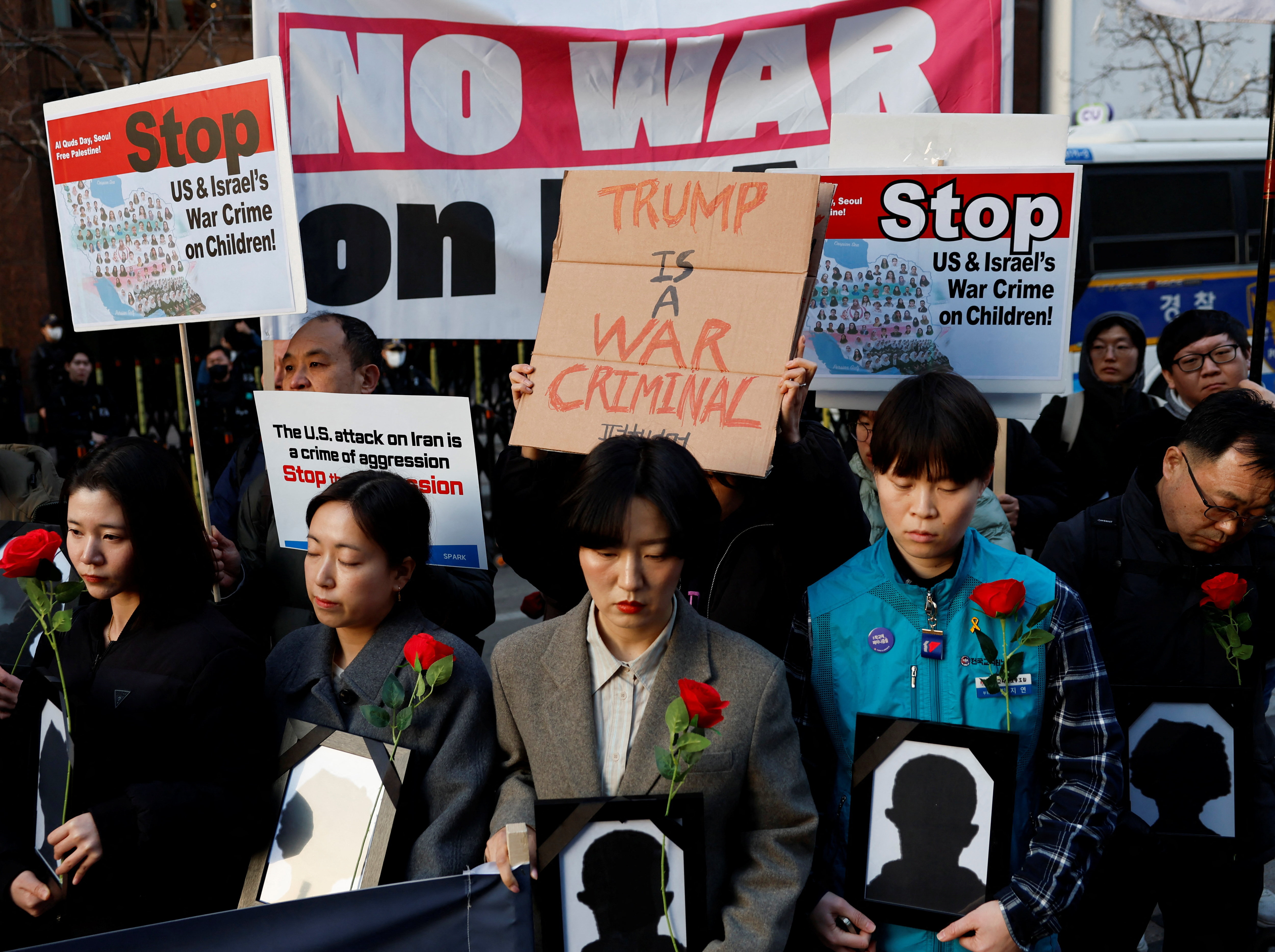
The deadly bombing of an Iranian school at the start of the current US-Israeli attacks spurred "visceral horror", the UN rights chief said on Friday, urging Washington to conclude its probe and demanding justice "for the terrible harm done".
Speaking at the start of an urgent debate in the UN Human Rights Council focused on the February 28 strike on an Iranian elementary school in Minab on the first day of the US-Israeli attacks on Iran, Volker Turk said that "whatever differences countries have, we can all agree they will not be solved by killing schoolchildren".
"The images of bombed-out classrooms and grieving parents showed clearly who pays the highest price for war: civilians with no power in the decisions that led to conflict," he said.
A US Tomahawk cruise missile hit the school due to a targeting mistake, according to the preliminary findings of a US military investigation reported by The New York Times newspaper.
US President Donald Trump initially suggested that Iran itself may have been responsible – despite Iran not having Tomahawk missiles.
The UN rights chief stressed that "the onus is on those who carried out the attack to investigate it promptly, impartially, transparently and thoroughly".
"There must be justice for the terrible harm done."
In a video address to the UN council, Abbas Araghchi slammed the "calculated, phased assault" on an elementary school "in the city of Minab, south of Iran, where more than 175 students and teachers were slaughtered in cold blood".
Araghchi stressed that "at a time when the American-Israeli aggressors, in their own assertions, possess the most advanced technologies, and the highest-precision military and data systems, no one can believe that the attack on the school was anything other than deliberate and intentional".
The strike, he said, "was a war crime and a crime against humanity, one that demands unequivocal condemnation by all and unambiguous accountability for the culprits".
"This atrocity cannot be justified, cannot be concealed, and must not be met with silence and indifference," Araghchi said.
The attack, he insisted, "was not a mere 'incident' nor a 'miscalculation'."
"The United States' contradictory remarks aimed at justifying their crime could not, in any manner, elude their responsibility." (AFP)
Edited by Tony Sabine
UN demands justice for US strike on primary school
2026-03-27 HKT 18:33
Share this story


