


Oil prices extended gains on Monday, with Brent headed for a record monthly rise, after Yemeni Houthis launched their first attacks on Israel over the weekend, widening the US-Israel war with Iran in the Middle East.
Brent crude futures jumped US$3.09, or 2.7 percent, to US$115.66 a barrel by 2353 GMT after settling 4.2 percent higher on Friday.
US West Texas Intermediate was at US$102.56 a barrel, up US$2.92, or 2.93 percent, following a 5.5 percent gain in the previous session.
Brent has soared 59 percent this month, the steepest monthly jump, exceeding gains seen during the 1990 Gulf War, after the Iran conflict effectively closed the Strait of Hormuz, a conduit for a fifth of the world's oil and gas supplies.
The war, launched on February 28 with US and Israeli strikes on Iran, has spread across the Middle East, with Yemen's Iran-aligned Houthis on Saturday launching their first attacks on Israel since the start of the conflict, raising concern about shipping lanes around the Arabian Peninsula and the Red Sea.
"The conflict is no longer concentrated in the Persian Gulf and around the Strait of Hormuz, but now extends into the Red Sea and the Bab el-Mandeb — one of the world's most crucial chokepoints for crude and refined product flows," JP Morgan analysts led by Natasha Kaneva said in a note.
Saudi crude exports re-directed from the Strait of Hormuz to the Yanbu port in the Red Sea reached 4.658 million barrels per day last week, data from analytics firm Kpler showed.
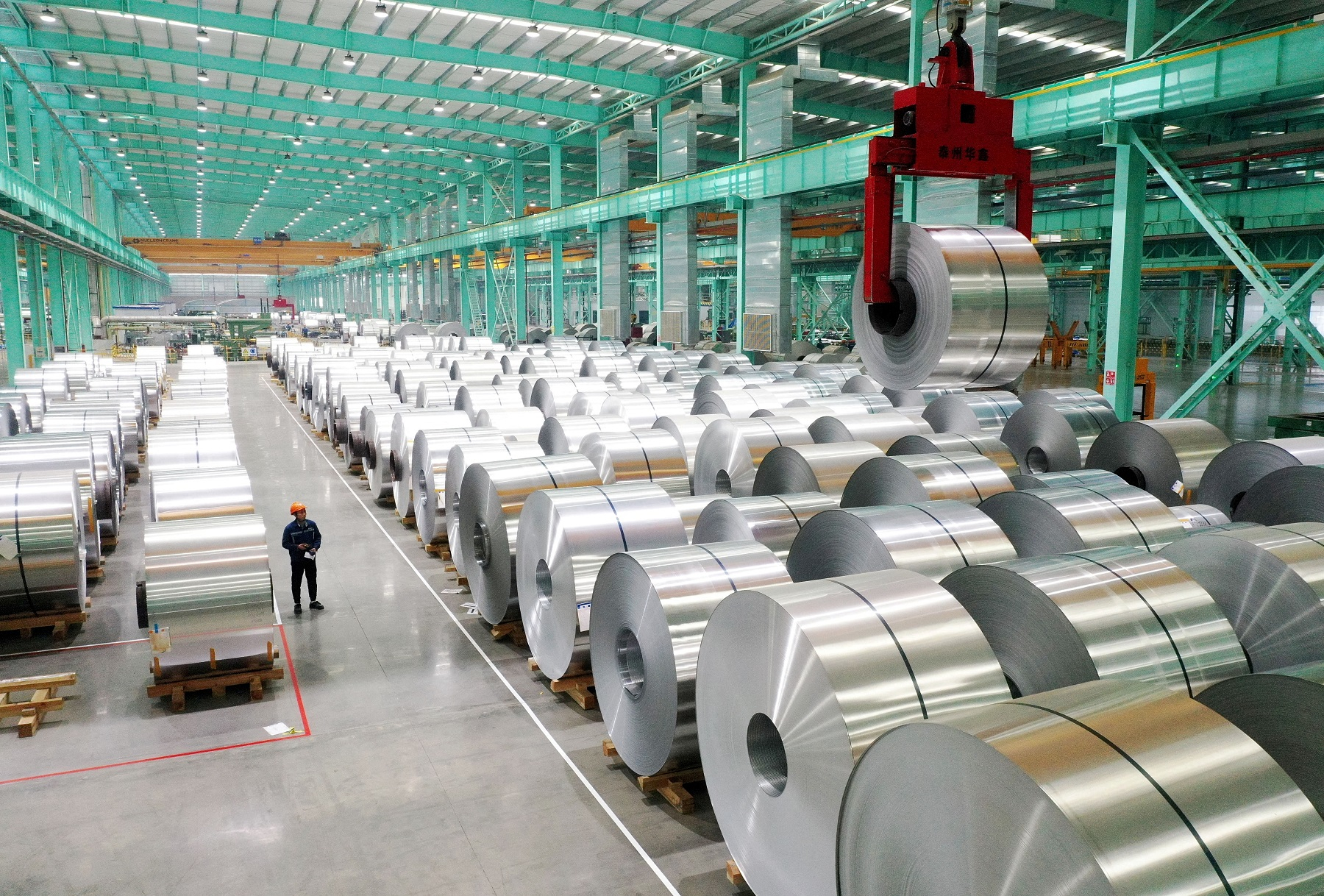
Meanwhile, aluminium prices on the London Metal Exchange jumped 6 percent to close in on four-year highs on Monday after the Middle East's two largest producers of the metal sustained damage from Iranian attacks over the weekend.
Benchmark LME three-month aluminium rose to US$3,492 per metric ton, the highest since March 19, at the start of trading as Gulf smelters Emirates Global Aluminium and Aluminium Bahrain assess damage to their facilities from the strikes.
A break above US$3,546.50 from March 12 would open the way to peaks last seen during the depth of the Covid era in 2022.
Aluminium Bahrain, which runs one of the world's largest smelters, said on Sunday it was assessing the damage following Iranian strikes on the facility.
Two employees at Aluminium Bahrain were hurt in Saturday's attack, the state-controlled company said, while regional peer Emirates Global Aluminium's site sustained significant damage from missile and drone strikes the same day.
Most Gulf aluminium producers, which account for about 9 percent of global supply, have been unable to ship to world markets via their normal channels since the US-Israeli war on Iran began due to Tehran's effective closure of the Strait of Hormuz.
EGA is the Middle East's largest producer of the metal and Alba operates the world's largest single-site smelter.
Shares in Australian-listed alumina producers also rallied, with Rio Tinto up more than 2 percent and South32 up almost 7 percent. (Reuters)
Edited by Cecil Wong
Oil, aluminium prices jump as war escalates
2026-03-30 HKT 08:48
Share this story


