


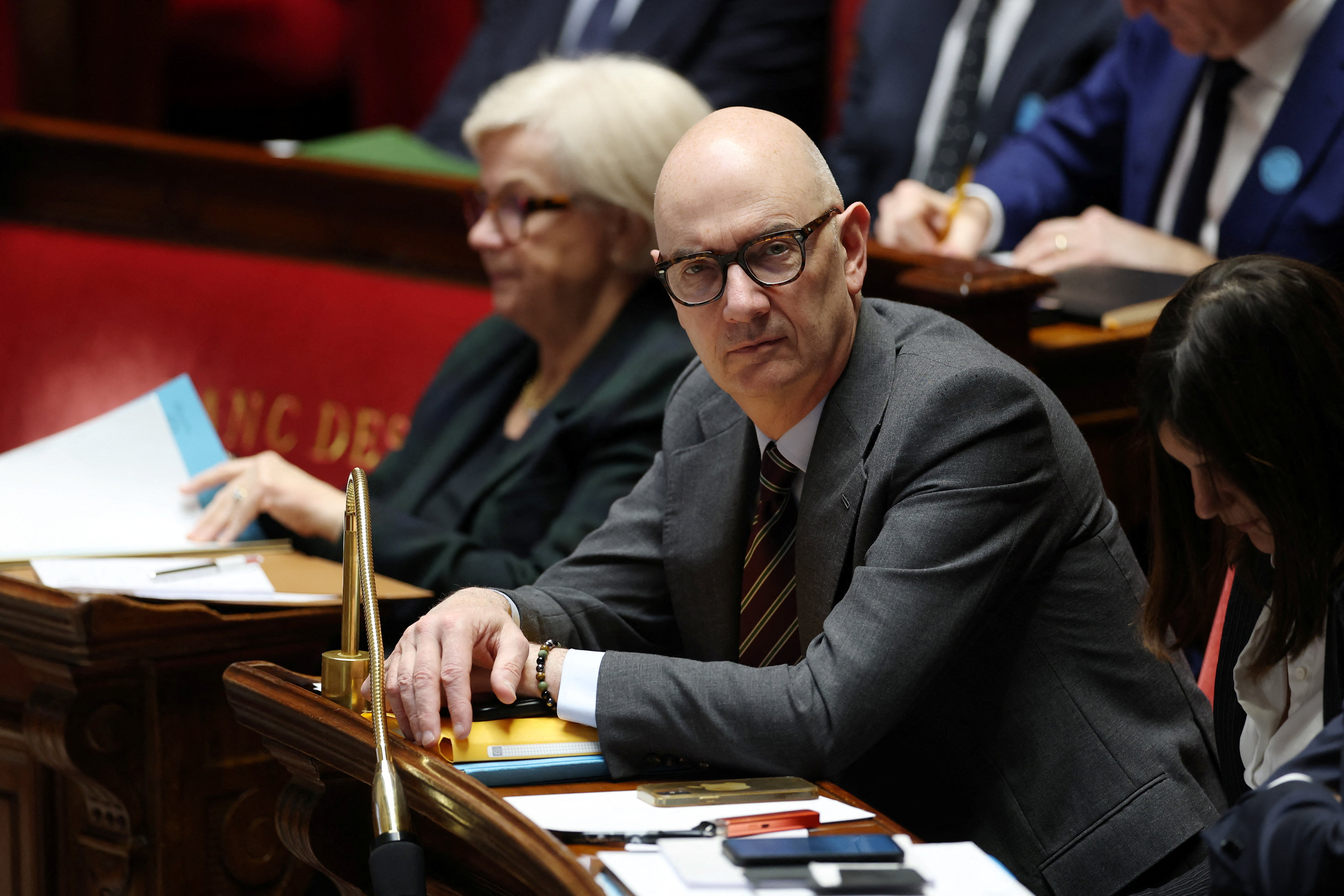
Ministers from the G7 will hold talks on Monday to unpack the economic consequences of the conflict in the Middle East, the French government said, as oil and gas prices continue to soar.
French Finance Minister Roland Lescure said the G7 meeting, to be held via videoconference, would include energy and finance ministers as well as central bank chiefs and the heads of other international agencies.
"There are already differences in the responses largely linked to differences in exposure to the crisis," Lescure has said, stressing that Asia was particularly exposed to the turmoil.
"That is one of the reasons why we wanted to convene a G7 of finance, energy and central banks," he said.
He added that the idea was to exchange views on the impact on financial markets and the economy, later telling local media it would be the first time in half a century the G7 was using this format.
The G7, an informal grouping of the US, Canada, Britain, France, Germany, Italy and Japan, helps shape policy debates in the world's wealthiest nations.
The United States has sought support from the group to help halt Iran's blockade of the Strait of Hormuz shipping route.
After a meeting last week, G7 foreign ministers said it was an "absolute necessity" for Iran to re-establish free passage through the strait and called for an end to attacks on civilian infrastructure.
Under increasing pressure, many governments have rolled out measures to limit the impact of supply difficulties and soaring energy prices.
But a lack of clarity over US aims, along with uncertainty over the potential length of the conflict and the spread of hostilities, has left governments scrambling for coherent responses. (AFP)
Edited by Tony Sabine
G7 to hold talks over conflict fallout on economies
2026-03-30 HKT 12:48
Share this story


