


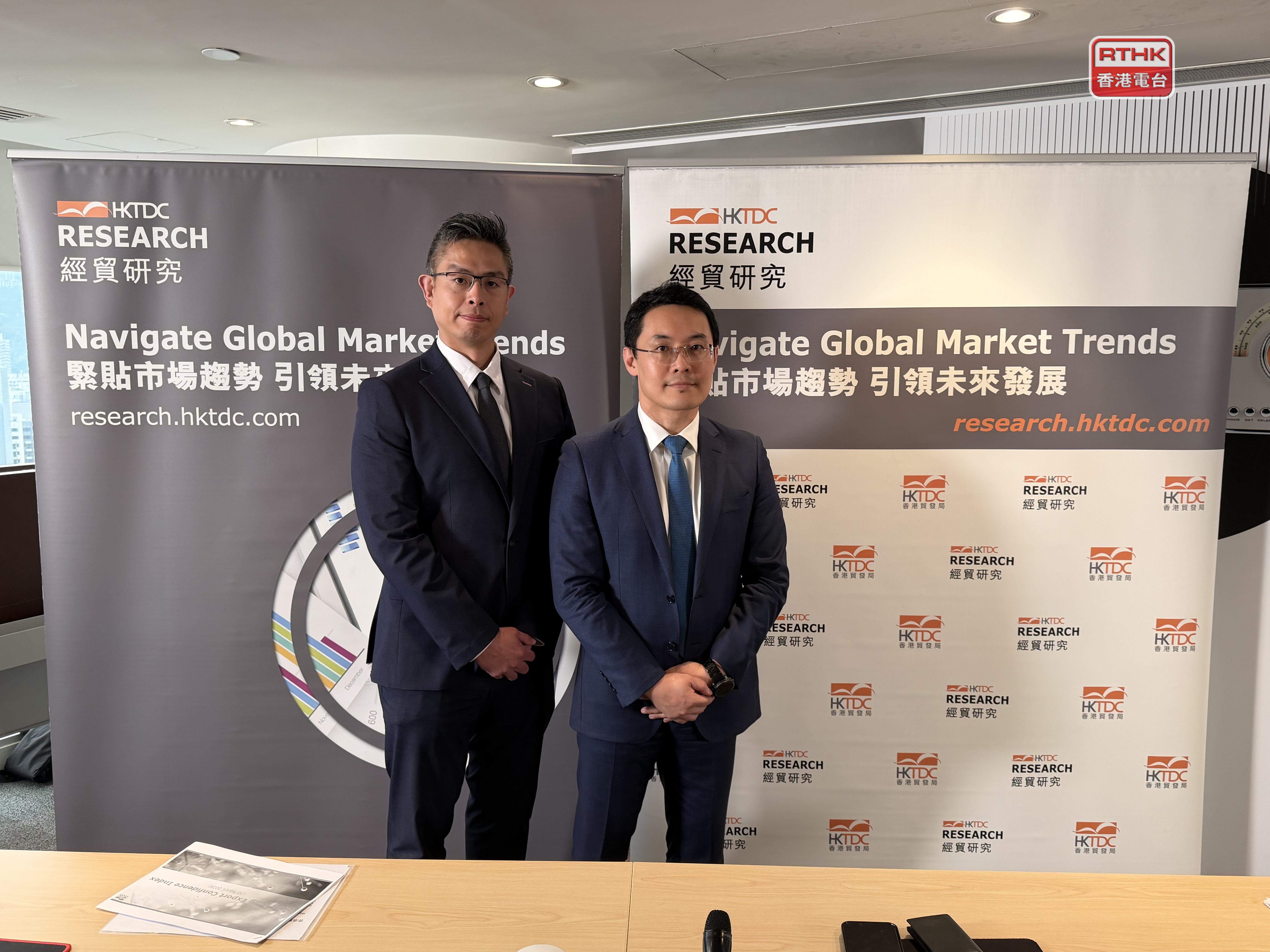
The Trade Development Council (TDC) on Tuesday said sentiment among local exporters declined in the first quarter of this year despite them seeing strong business, as ongoing global trade uncertainties clouded the outlook.
The remarks came as the council released its latest Export Confidence Index, which showed that the gauge measuring exporter sentiment stood at 46.5 between January and March, down by 4.9 points from the previous quarter.
Meanwhile, the Expectation Index, which factors in aspects such as sales and new orders as well as costs for the upcoming quarter, stood at 46.9, down by 5 points on a quarterly basis.
It is the first time since the second quarter of last year that both indices have dipped below the key 50 level, which separates expansion from contraction.
At a press conference, the council's director of research, Bruce Pang, put the latest declines partly down to the Lunar New Year holiday in February, which affected trade.
He added that the falls also came as traders took a "wait-and-see" approach ahead of a key ruling by the US Supreme Court on February 20 which struck down the emergency tariffs previously imposed by the Donald Trump administration.
Looking ahead, Pang said despite the uncertainties over the Iran war, local exporters still have reasons to be "cautiously optimistic".
"Luckily, the latest survey indicated that the cost pressure showed early signs of easing and that helped to buffer the potential disruptions from the oil prices, etc," he said.
"So far, the disruptions mainly come from the supply side, in terms of shipments by air or by other means. But from the demand side, we still think that the global demand remains quite strong for this year, which paves the way for Hong Kong traders to have a good year ahead," he added.
"It really depends on how long the war would continue."
Pang also said that "impressive rallies" were seen in the jewellery and garment sectors, supported by robust sales and sizeable new orders, though electronics-related products saw weakened sentiment among traders.
He added that local exporters' continuous "diversification" strategy to expand into various markets, including Asean, also helped them to be more prepared for potential shocks.
Edited by Thomas McAlinden
HK sees decline in exporter sentiment in Q1: TDC
2026-03-31 HKT 18:11
Share this story


TDC Director of Research Bruce Pang speaks to Chloe Feng

