


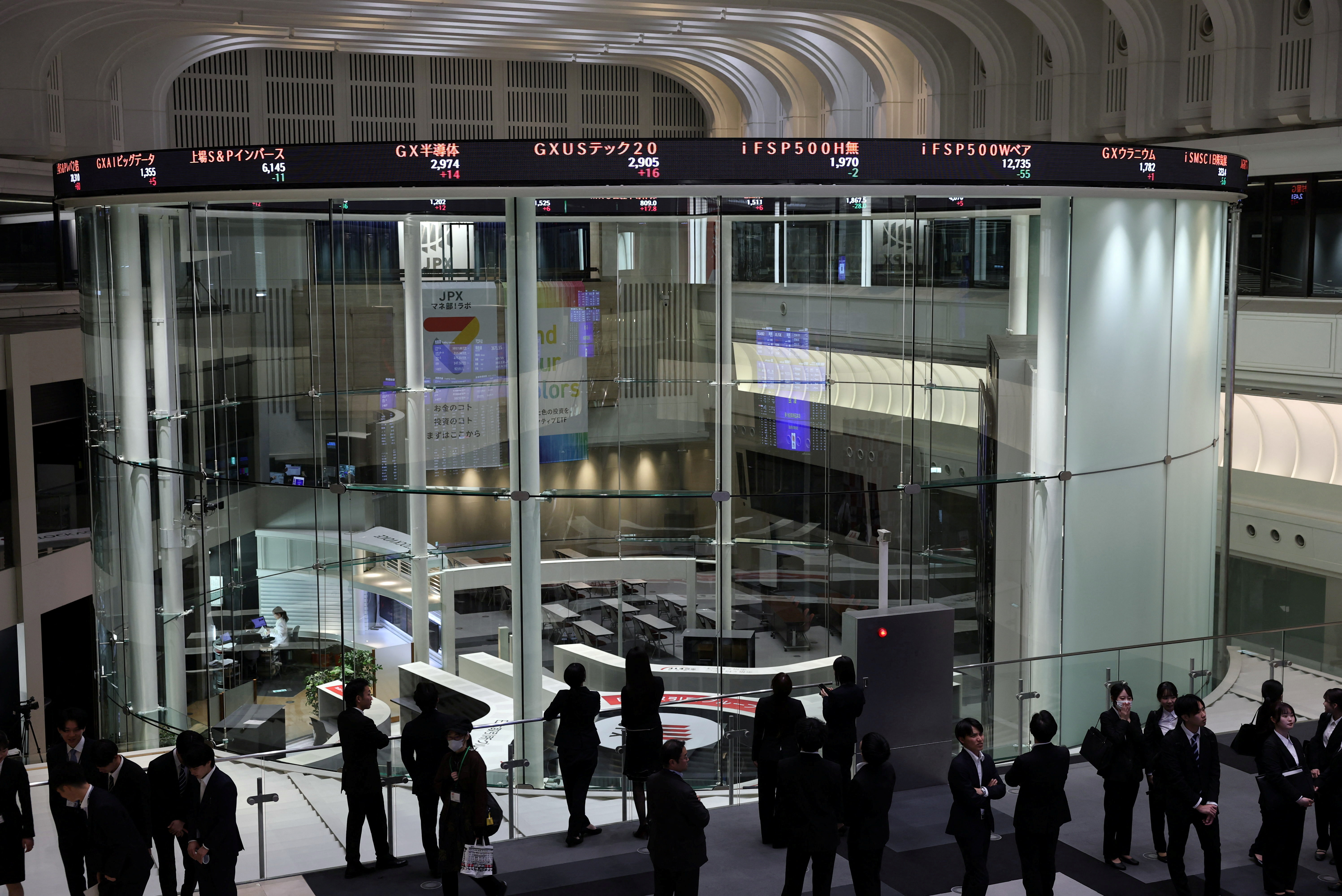
Asian stocks wavered on Tuesday as oil prices perched near US$110 per barrel amid the prospect of an escalation in the conflict in the Middle East and the looming deadline for a deal to be reached kept nervy investors on the sidelines.
On the mainland, the benchmark Shanghai Composite Index opened up four points, or 0.1 percent, at 3,884 on Tuesday.
The Shenzhen Component Index was 40 points, or 0.3 percent, higher at 13,392 while the ChiNext Index, tracking China's Nasdaq-style board of growth enterprises, was up 0.42 percent at 3,162.
While investors have pinned their hopes on a resolution to the war, the talks so far have yielded no progress, with US President Donald Trump imposing a deadline of Tuesday 8pm Eastern Time, or 8am on Wednesday Hong Kong time, for a deal to be reached.
That has left markets biding time with the US dollar holding onto its gains and oil prices rising.
Brent crude futures rose 0.4 percent to $110 a barrel while US West Texas Intermediate crude futures climbed 0.8 percent to US$113.
A record-breaking quarterly profit forecast from chipmaker Samsung Electronics helped lift investor mood a bit but markets remained focused on the Iran war.
MSCI's broadest index of Asia-Pacific shares outside Japan was 0.4 percent higher. The 225-issue Nikkei Stock Average opened up 157 points, or 0.3 percent, at 53,571. However, the benchmark made a U-turn and plunged into negative territory soon after, hitting 53.205 at one point before noon with losses of 207 points.
In Seoul, the Korea Composite Stock Price Index opened up 101 points, or 1.87 percent, at 5,552. Like the Nikkei, the Kospi too turned down and was at 5,450 at one points before midday.
US stock futures slipped 0.55 percent while European futures pointed to a higher open after being closed for holidays on Friday and Monday.
"We are back on a Trump imposed countdown clock and there's no way to predict with any confidence what will happen," Kyle Rodda, senior markets analyst at Capital.com, said.
"The more intrepid traders might make a bet one way or the other. Others will look to hedge risk or stay out entirely. But there's not much market participants can really do but wait and see."
"Any follow-through on threats to target Iran’s power infrastructure would mark a significant escalation, raising the risk of retaliatory action that could further disrupt Gulf energy facilities," said Vasu Menon, managing director of investment strategy at OCBC in Singapore.
The conflict has spurred worries about stagflation – high inflation with weak or slow growth – upending the global rates outlook, with traders no longer pricing in any rate cuts from the US Federal Reserve this year.
Data on Monday showed US services sector growth slowed in March, while prices paid by businesses for inputs increased by the most in more than 13 years, an early indication that the prolonged war with Iran was boosting inflationary pressure.
US inflation data is due this week but for now investor attention will be on Trump's war deadline and whether a deal is agreed. (Reuters & Xinhua)
Edited by Robert Kemp
Jitters plague regional markets amid escalation fears
2026-04-07 HKT 10:35
Share this story


