


Iran showed no sign of accepting Donald Trump's ultimatum to open the Strait of Hormuz by the end of Tuesday, and the US president said "a whole civilization will die tonight" unless Tehran reached a last-minute deal.
China, meanwhile, again called for an immediate end to the military operations and return to dialogue and negotiation.
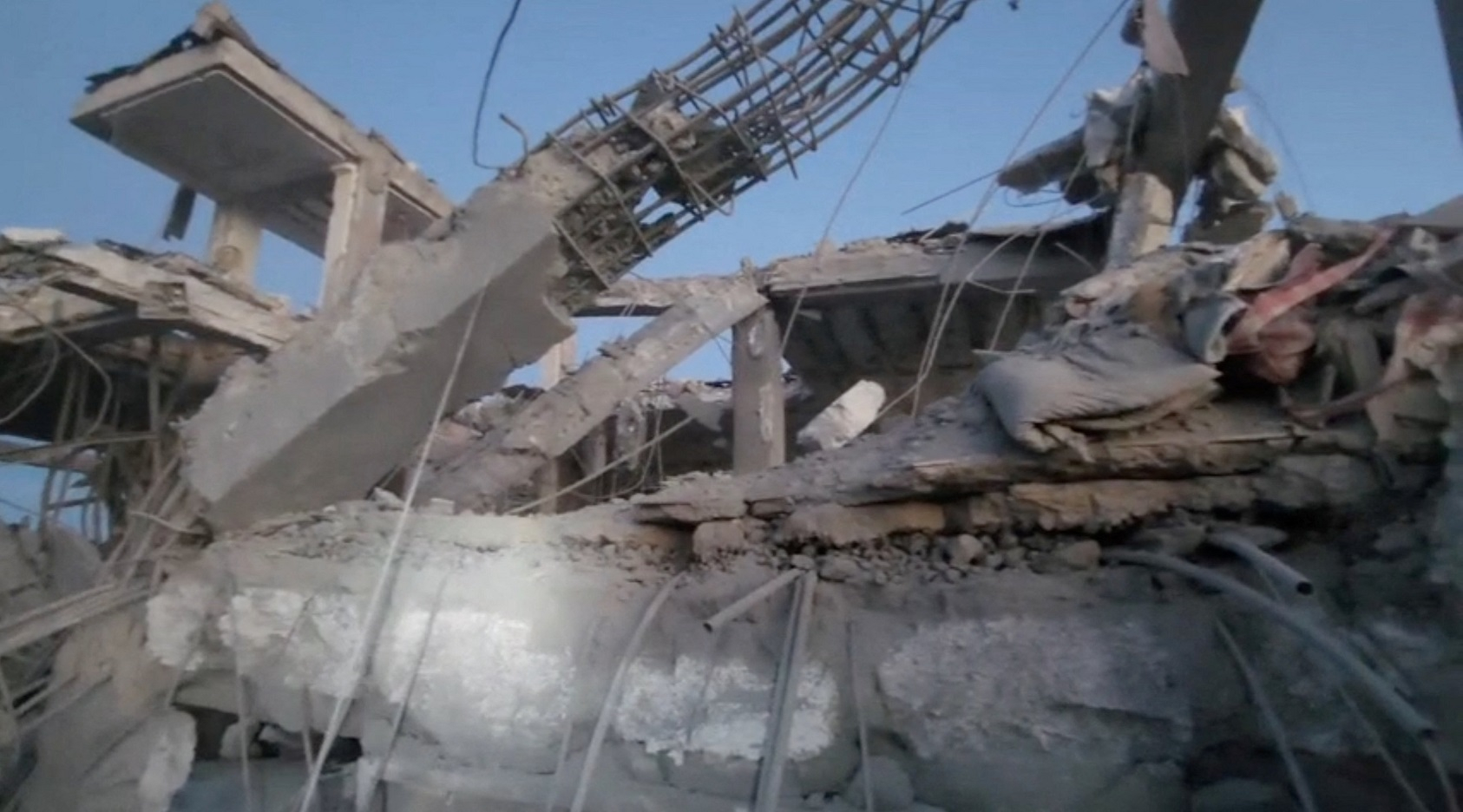
As the clock ticked down on Trump's deadline, strikes on Iran intensified throughout the day, hitting railway and road bridges, an airport and a petrochemical plant and knocking out power lines, according to Iranian media.
Explosions were reported on Kharg Island, home to Iran's oil export terminal, which Trump has openly mused about destroying or seizing.
Iran responded by declaring it would no longer hold back from hitting its Gulf neighbours' infrastructure, and claimed to have carried out fresh strikes on a ship in the Gulf and Saudi industrial facilities linked to US firms.
"A whole civilization will die tonight, never to be brought back again. I don’t want that to happen, but it probably will," Trump wrote on his Truth Social website.
"However, now that we have Complete and Total Regime Change, where different, smarter, and less radicalized minds prevail, maybe something revolutionarily wonderful can happen, WHO KNOWS? We will find out tonight, one of the most important moments in the long and complex history of the World."
Trump has given Iran until 8pm in Washington (midnight GMT and 3.30am in Tehran) to end its blockade of Gulf oil, saying he will otherwise destroy every bridge and power plant in Iran within four hours.
Iran and the US continue to exchange messages through Pakistan, a senior Iranian source told Reuters on Tuesday, but Tehran will not show flexibility as long as Washington continues to demand its "surrender under pressure".
The senior Iranian source, who asked not to be named, said Qatar on Monday had conveyed Tehran's message to the US and regional countries that if Washington attacks Iran's power plants, "the entire region and Saudi Arabia will fall into complete darkness with Iran's retaliatory strikes".
Among the reports of strikes inside Iran throughout the day were attacks on railway bridges, a highway bridge, a petrochemical plant and an airport.
Power was knocked out in parts of Karaj just west of Tehran by a strike on transmission lines and a substation.
Israel warned Iranians in a Persian-language social media post to stay away from trains, saying anyone near railways would be in danger.
A synagogue in Tehran was destroyed overnight by what Iran described as Israeli air strikes. Footage in Iranian media showed Hebrew texts scattered in the debris.
Iran's Revolutionary Guards said in a statement that Tehran's response to the attacks on its infrastructure would "deprive America and its allies in the region of oil and gas for years".
"America's regional partners should know that up to today we have shown great restraint for the sake of good neighbourliness and have had some consideration in choosing targets for retaliation," it said. "But all these considerations have since been removed."
Tehran and Washington have exchanged proposals, with Pakistan acting as the main go-between. But there has been no sign of compromise, with both sides claiming to have won the war and demanding concessions to end it.
Iran's ambassador to Pakistan said on Tuesday "positive and productive endeavours" by Islamabad to mediate an end to the war were "approaching a critical, sensitive stage", but gave no further details.
In Beijing, Foreign Ministry spokeswoman Mao Ning said the situation in the Middle East continues to worsen and the military conflict is still escalating, hitting the world economy and energy security and drawing deep concerns from the international community.
"Reaching a ceasefire and resuming dialogue as soon as possible is what the international community hopes to see," she said.
"The use of force does not bring peace. Political settlement is the right way forward. The root cause of the conflict is the US-Israeli launch of military attacks against Iran in violation of international law.
"We hope relevant parties will seize the opportunity for peace, bridge differences through dialogue and put an early end to the conflict. China stands ready to play a constructive role for this end." (Reuters/Xinhua)
Edited by Edmond Fong
Trump steps up rhetoric against Iran as deadline nears
2026-04-07 HKT 21:57
Share this story


