


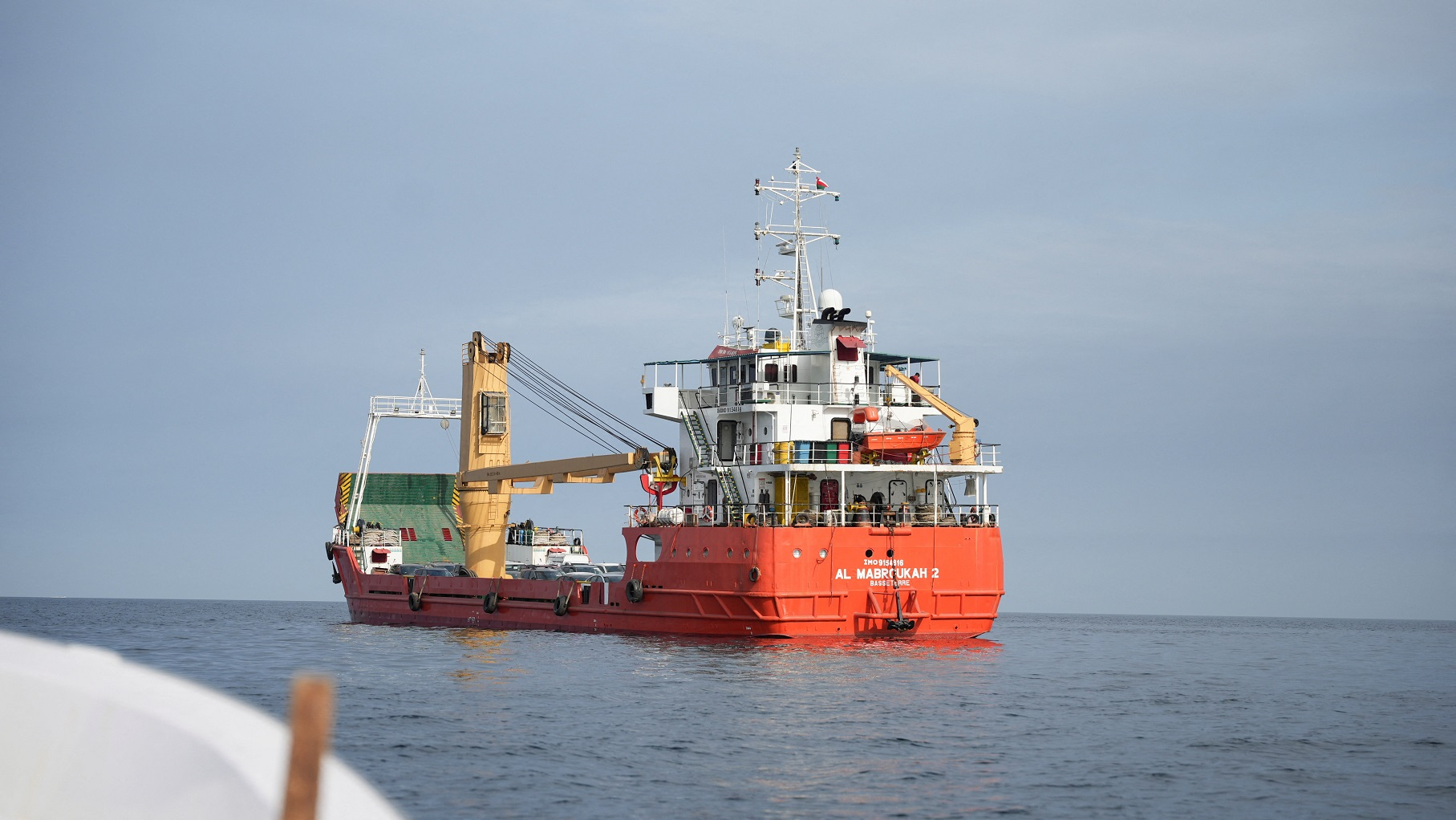
US President Donald Trump said American forces would destroy any Iranian "fast attack ships" that approach Washington's naval blockade of Iranian ports that came into effect on Monday.
"What we have not hit are their small number of, what they call, 'fast attack ships,' because we did not consider them much of a threat," Trump wrote in a post on Truth Social.
"Warning: If any of these ships come anywhere close to our BLOCKADE, they will be immediately ELIMINATED, using the same system of kill that we use against the drug dealers on boats at Sea," Trump said, referring to air strikes on alleged narcotics boats off the coast of Venezuela.
"It is quick and brutal."
The move sets the stage for a showdown as Iran has responded with threats against ports in the Persian Gulf and the Gulf of Oman.
An Iranian military spokesperson called any US restrictions on international shipping "piracy," warning that if Iranian ports were threatened, no port in the Gulf or Gulf of Oman would be secure.
Any military vessels approaching the Strait of Hormuz would violate the ceasefire, Iran's Revolutionary Guards said.
Trump announced a blockade after weekend peace talks with Tehran in Pakistan ended without an agreement.
"Any vessel entering or departing the blockaded area without authorisation is subject to interception, diversion, and capture," according to a note sent by the US Central Command to seafarers.
The blockade "encompasses the entirety of the Iranian coastline to include but not limited to ports and oil terminals", the note said, adding that humanitarian shipments including food, medical supplies and other essential goods would be permitted, subject to inspection.
Nato allies including Britain and France said they would not be drawn into the conflict by taking part in the blockade, stressing instead the need to reopen the crucial waterway, through which about one-fifth of the world's oil normally passes.
Germany’s foreign minister, Johann Wadephul, told reporters in Berlin it is "urgently necessary to... ensure that the Strait of Hormuz, which is, after all, an international maritime route, remains free and open".
Wadephul said keeping the strait open "is required by international law, and it must be observed by all; making this a reality must be the goal of us all."
The head of the United Nations maritime agency said no country had a legal right to block shipping in the Strait of Hormuz.
"In accordance to international law, no countries have the right to prohibit the right of innocent passage or the freedom of navigation through international straits that are used for international transit," said Arsenio Dominguez, Secretary General of the International Maritime Organization.
"De-escalation is what is going to start helping us to address the crisis and to bring shipping back to the way that we used to operate," he added.
The shipping trade expressed concern.
"The US announcing plans to blockade the Strait of Hormuz brings more uncertainty to the situation. Transits through the strait have picked up in recent days but remain well below pre-crisis levels," ship broker Clarksons said in a note. (Agencies)
Edited by Edmond Fong
Trump talks tough as blockade comes into effect
2026-04-13 HKT 23:11
Share this story


Jamie Clarke reports

