


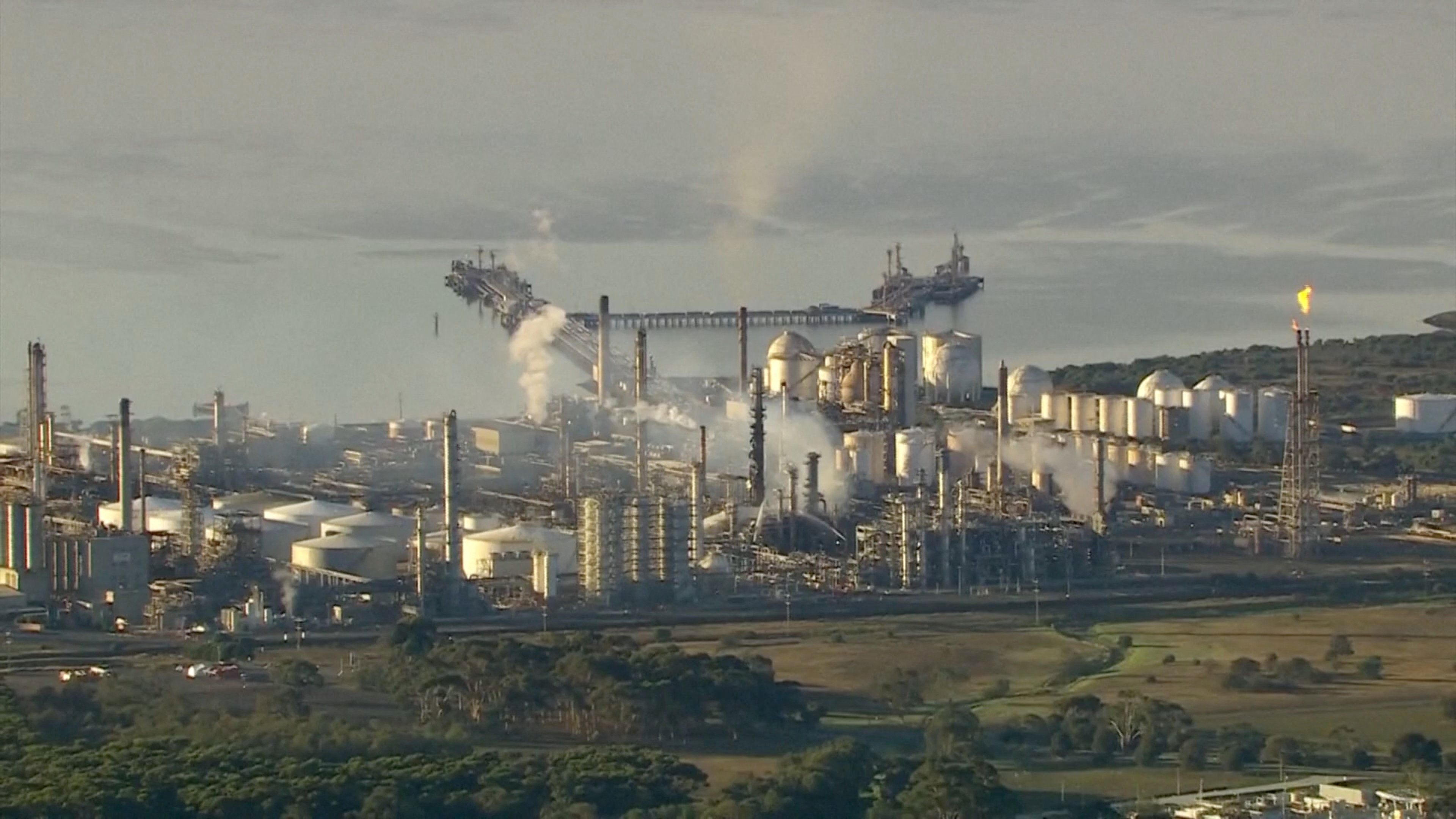
A fire at the largest of Australia's two oil refineries has hit petrol production, company and government officials said on Thursday, just as the nation faces pressure to shore up fuel security with the Iran war disrupting global supply.
State fire authorities said the blaze, which broke out at a 120,000 barrels-per day refinery run by Viva Energy on Wednesday night, had been brought "under control" at noon local time on Thursday.
The fire came at a bad time for Australia as it depends on imports for 80 percent of its fuel needs and has been racing to replace supply disrupted by the Middle East conflict, which has driven up energy prices worldwide.
"This is not a positive development, but obviously there's a long way to go in terms of working out just what the impact is," Energy Minister Chris Bowen told Channel Nine.
Viva Energy's refinery supplies over half of the fuel in Australia's second most populous state, Victoria, and a tenth of the country's total demand.
The company said it expects output of petrol and aviation gasoline will be affected, but it will meet fuel demand through imports.
The plant is still producing jet fuel and diesel but at reduced levels for safety reasons, Bowen said.
“I would expect we'd see a price hike depending on the scale of the damage, and secondly, it reinforces the challenges we have in terms of sovereign and resilient capabilities here,” Australian Strategic Policy Institute analyst John Coyne said.
The incident comes after Prime Minister Anthony Albanese met his Malaysian counterpart, Anwar Ibrahim on Thursday, securing a pledge that state energy firm Petronas would prioritise Australia for supply once Malaysia's domestic requirements are met.
At a joint press conference, Albanese said his government had secured an additional 100 million litres of diesel from two shipments, one from Brunei and one from South Korea.
No injuries were reported from the fire at the refinery located about an hour's drive from Melbourne.
The cause of the blaze and the extent of the damage was not immediately clear. (Reuters)
Edited by Tony Sabine
Refinery fire fuels Australia's oil supply woes
2026-04-16 HKT 13:25
Share this story


