


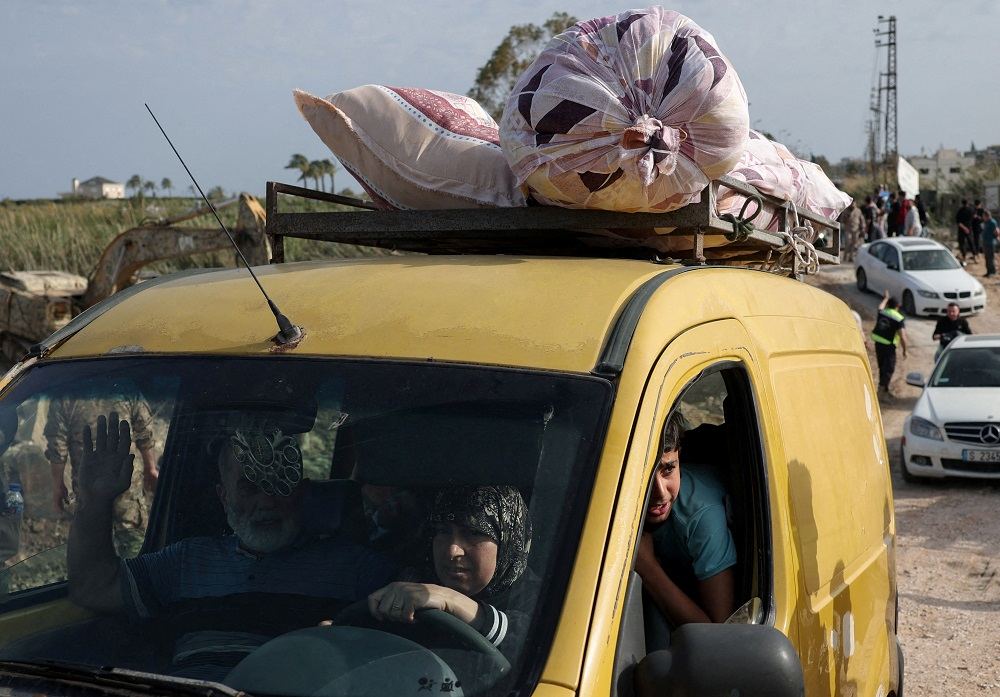
Thousands of displaced Lebanese civilians took to the road on Friday, hoping a 10-day ceasefire with Israel would allow them to return to their homes in southern Beirut and the country's war-torn south.
Roads heading south from the capital were clogged with traffic, despite Israel's defence minister warning that its operation against Hezbollah was not yet complete and that civilians may have to evacuate once again.
Minutes before the ceasefire came into effect at midnight, a series of Israeli strikes in the southern city of Tyre killed at least 13 people and destroyed six residential buildings, a city official said.
For some returnees, the short, temporary truce between Israel and the Lebanese government, brokered under pressure from US President Donald Trump, was a new source of hope.
"Our feelings are indescribable, pride and victory," 37-year-old Amani Atrash said from her car seat on a road leading to a bridge into southern Lebanon, adding that she hoped the truce would be extended.
Under the terms of the ceasefire, Israel reserves the right to continue targeting Hezbollah to prevent "planned, imminent, or ongoing attacks", and it says it will maintain a 10-kilometre security zone along the border in southern Lebanon.
Israeli defence minister Israel Katz said the area stretching from this security zone north to the Litani River had not yet been "cleared of terrorists and weapons" and that if diplomatic pressure did not achieve that goal, then military action could resume.
"If the fighting resumes, those residents who return to the security zone will have to be evacuated to allow completion of the mission," he said.
According to details of the truce deal released by the US State Department, Lebanon "with international support... will take meaningful steps to prevent Hezbollah" from undertaking hostile acts against Israeli targets.
Lebanon's President Jospeh Aoun, who had been resisting US pressure to talk directly to Israel's Prime Minister Benjamin Netanyahu before the ceasefire was in place, said nonetheless that direct negotiations with Israel were "crucial".
Beirut's goal, he said in a statement, was to "consolidate a ceasefire, secure the withdrawal of Israeli forces from the occupied southern territories, recover prisoners, and address outstanding border disputes". (AFP)
Edited by Thomas McAlinden
Lebanese civilians head home despite warning on truce
2026-04-17 HKT 22:01
Share this story


