


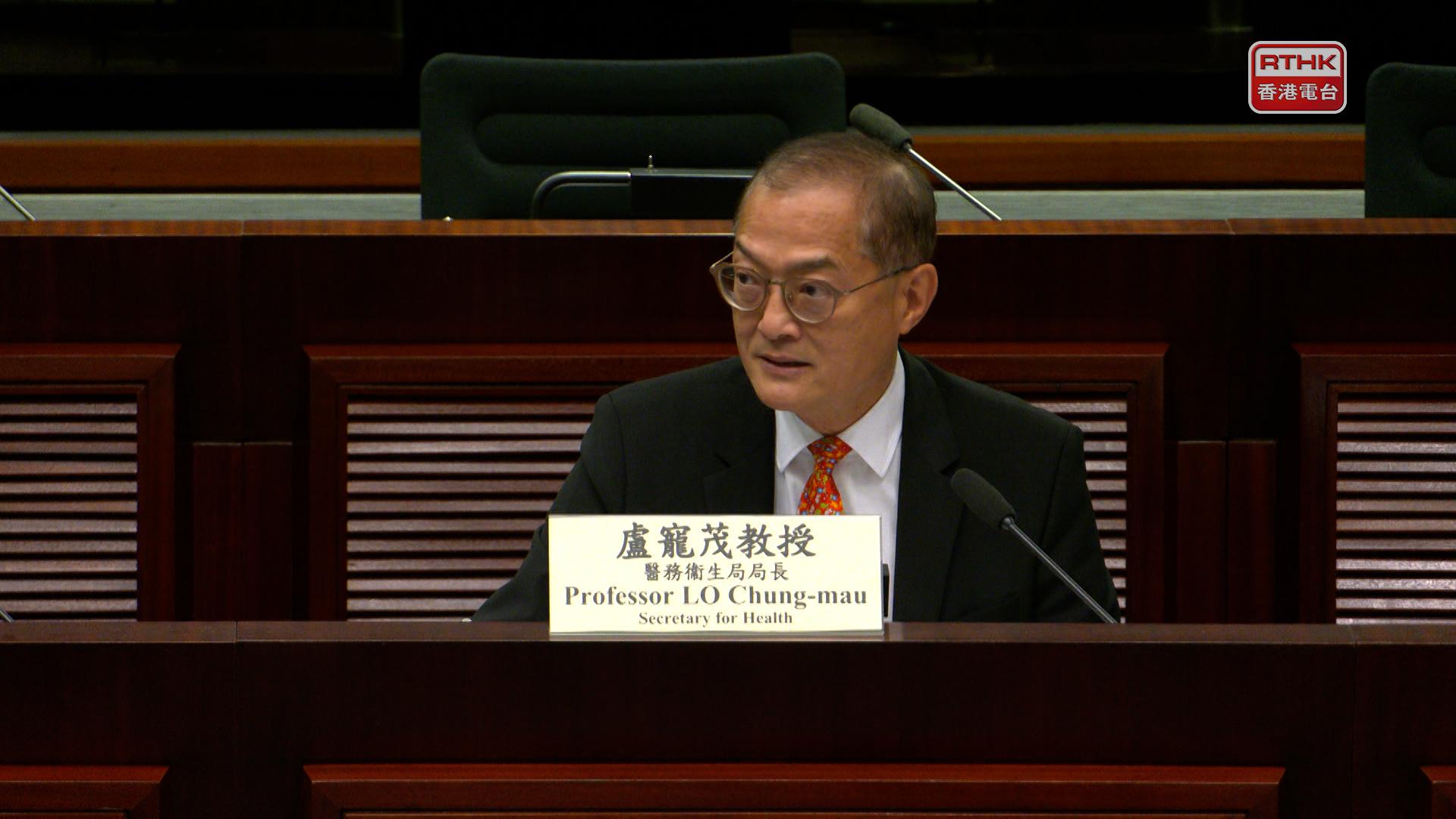
Secretary for Health Lo Chung-mau defended the city’s major public healthcare fee reform on Friday over concerns that it is placing a huge financial burden on chronic patients and the middle class.
He was speaking while updating lawmakers on the changes that began at the start of the year.
At a panel meeting, lawmaker Chan Hoi-yan stressed that it is unfair for specialist patients to also endure fee increases, noting these individuals often have "no choice" but to seek public care for chronic conditions.
Following the reform, all specialist clinic patients have to pay HK$250 per visit, while previously they just needed to pay HK$135 for the first attendance and HK$80 for subsequent follow-up visits.
Her Legislative Council colleague Adrian Ho argued that middle-class families now had to bear the burden of increased fees while not being eligible for waivers.
In response, Lo said public healthcare subsidies had only fallen slightly after the reform – and that the rate was still 95 percent.
Lo said he believed specialist fees had been set at a low level in the past and stressed that many eligible patients are paying less or nothing at all following the institution of the reform.
"These include some 220,000 people who have been approved for medical fee waivers," he said.
"In the past, this figure was just 14,000. Over the past three months, about 391,000 people have already benefited from the expanded waiver mechanism.
“These individuals previously had to pay, but treatment is now free for them. They represent the most in-need, lowest-income groups in our society. We actually have helped a significant number of people."
The total number of people who are eligible for medical fee waivers has increased to about two million, up from the previous 900,000, Lo added.
He also noted that between January and March, accident and emergency departments of public hospitals saw significantly fewer non-critical cases.
Patients classified as semi-urgent or non-urgent fell by 15 percent and 22 percent, respectively, compared to the same period last year.
This shift allowed the average waiting time for urgent patients to drop from 24 minutes to 20 minutes, Lo said.
He also rejected calls to automate the new HK$10,000 cap on public healthcare fees.
Under the reforms, patients who spend more than HK$10,000 a year can have further charges waived, but they had to apply for the relief rather than receiving it automatically.
Lo said that while the application process is a simple one and does not involve a means test, it remains a necessary gatekeeping measure.
He said that removing the application requirement could lead to abuse, with some patients potentially occupying hospital beds longer without having actual clinical needs.
Edited by Tony Sabine
391,000 most in need getting free healthcare: govt
2026-05-08 HKT 14:10
Share this story


