


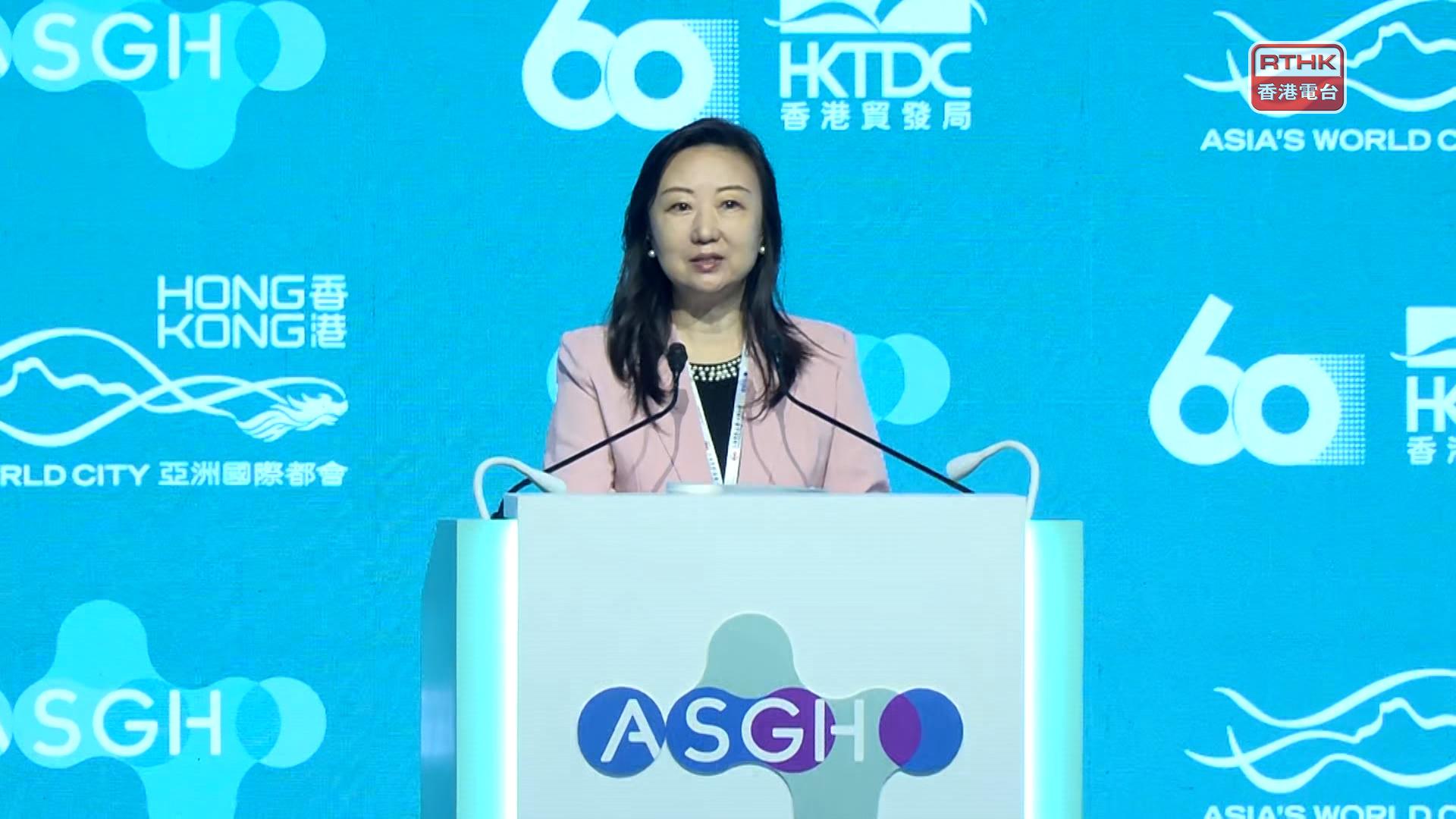


Chief Executive John Lee on Monday said Hong Kong's status as a leading hub for scientific innovation is "unrivalled" in Asia as the city rolls out a series of measures to transform into a global medical innovation centre.
The remarks came as he delivered a speech at the sixth edition of the Asia Summit on Global Health in Wan Chai at a time when an outbreak of hantavirus aboard a cruise ship, presently anchored off Spain's Canary Islands, led to at least three deaths.
Lee noted it's essential to further expand the city's clinical trial capabilities to let more biomedical research and development products reach patients – in the face of a rising global health crisis and threats.
"We also face the pressing realities of ageing populations," he said.
"There is the silent crisis of anti-microbial resistance, and there are persistent inequities in healthcare assets, both regional and global.
"That makes the theme of this year's summit, 'Fuelling Healthcare Breakthroughs', particularly relevant."
Lee said the SAR has been tweaking its systems to make them faster and better in approving "innovative new drugs", including the "primary evaluation" approach that was implemented in phases since March.
Primary evaluation refers to approving drugs based on their clinical trial data, without the need to rely on registration approvals from other regulatory authorities.
"That marks a milestone in our transition to a fully independent drug evaluation framework. We aim for full implementation by 2030," Lee said.
"I'm also pleased to announce that the Hong Kong centre for medical products regulation will be established by this year's end, putting Hong Kong on the map as a trusted hub for regulatory excellence."
The centre is expected to handle drug reviews after it's officially established, with the goal of becoming a leading global regulatory authority.
Another aim is for it to independently approve all new drugs by 2030.
Lee also said the government-owned Greater Bay Area International Clinical Trial Institute, located in the Hetao Shenzhen Hong Kong Science and Technology Innovation Cooperation Zone, has been collaborating with its Shenzhen counterpart to coordinate on cross-border clinical trials, serving potentially 87 million people in the Greater Bay Area.
Also at the event was Li Wei, deputy director general of the office of Hong Kong, Macao and Taiwan affairs of the National Health Commission, who spoke on behalf of the commission's vice minister Zeng Yixin.
Li called on the SAR to jointly carry out monitoring for infectious diseases, especially unknown ones in Asia and the globe.
Secretary for Health Lo Chung-mau said the city is fully aligned with the national 15th Five-Year Plan's call for a health-first development strategy.
He added the city has already strengthened its measures against potential future pandemics, citing lessons learned from the past Covid-19 pandemic.
"Although the World Health Organisation assesses that the risk of this [hantavirus] outbreak developing into a global pandemic is low, the world is already having its hair standing on end," Lo said.
"And people are already crying out 'Not again'. We cannot resist the feeling of deja vu that, just few years ago, the world was gripped by the crisis of Covid-19 pandemic that disrupted every facet of our societies," he said.
"Building on the lessons learned from the Covid-19 pandemic, Hong Kong has strengthened our preparedness for the next pandemic.
"For example, to enhance our multi-source surveillance system, we've regularised the territory-wide sewage surveillance programme for Covid-19 and expanded it to cover other pathogens, including seasonal influenza, polio and more to come."
The two-day event is being attended by medical professionals and government officials as well as representatives of multinational pharmaceutical and health tech enterprises, investors and entrepreneurs.
It also features some 90 high-profile speakers from more than 15 countries and regions, with panel discussions on artificial intelligence, the country's 15th Five-Year Plan and the silver economy.
Edited by Tony Sabine
Shot in arm set for HK in medical innovation hub race
2026-05-11 HKT 17:27
Share this story


