


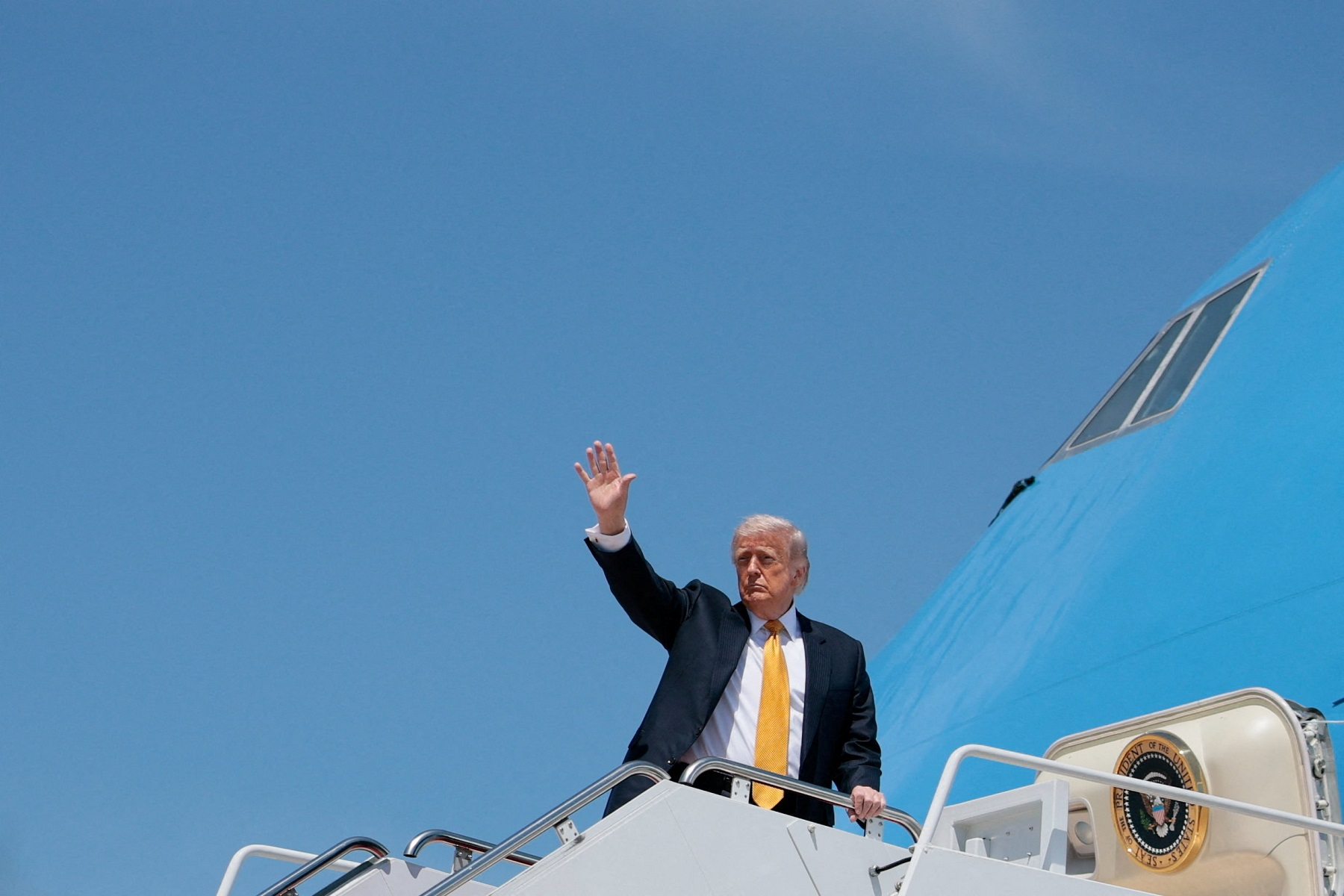
US President Donald Trump said on Tuesday he does not think he will need China's help to end the war with Iran, even after he warned that the truce in the Middle East war was on the brink of collapse.
Ahead of a high-stakes summit in Beijing, Trump said he did not think he would need to enlist President Xi Jinping to resolve the conflict, which has continued to bottle up maritime traffic that normally provides one-fifth of the world's oil supply.
"I don't think we need any help with Iran. We'll win it one way or the other, peacefully or otherwise," he told reporters.
More than one month after a tenuous ceasefire took effect, the two sides have made no progress on an agreement that would end hostilities.
Iran, meanwhile, has appeared to firm up its control over the Strait of Hormuz, cutting deals with Iraq and Pakistan to ship oil and liquefied natural gas from the region, according to sources with knowledge of the matter. Other countries are exploring similar deals, sources said, in a move that could normalise Tehran's control of the waterway on a more permanent basis.
The Trump administration said on Tuesday that senior US and Chinese officials had agreed last month that no country should be able to charge tolls on traffic through the region, in an effort to project consensus on the issue ahead of the summit.
Trump is due to discuss the war with Xi this week, and is widely expected to encourage China to convince Tehran to make a deal with Washington to end the conflict.
US demands include ending Iran's nuclear program and lifting its chokehold on the strait. Iran has responded with demands of its own, including compensation for war damage, an end to the US blockade, and an end to the war on all fronts, including Lebanon, where US ally Israel is fighting Iran-backed Hezbollah militants. Trump dismissed those positions as "garbage" on Monday.
Iran has remained defiant, with the country's chief negotiator saying on Tuesday that Washington must accept Tehran's latest peace plan or face failure.
"There is no alternative but to accept the rights of the Iranian people as laid out in the 14-point proposal. Any other approach will be completely inconclusive; nothing but one failure after another," Mohammad Bagher Ghalibaf said in a post on X.
"The longer they drag their feet, the more American taxpayers will pay for it."
The Pentagon said on Tuesday that the cost of the war had climbed to nearly US$29 billion – about $4 billion higher than an estimate offered two weeks ago. An official told lawmakers the new cost included updated repair and replacement of equipment and operational costs.
The war also has driven up gasoline prices across the US, where consumer prices rose at a brisk clip for a second straight month in April, resulting in the largest annual increase in inflation in nearly three years.
Brent crude oil futures extended gains, climbing to more than US$107 a barrel, as the deadlock left the Strait of Hormuz largely closed.
US Central Command said the aircraft carrier Abraham Lincoln was in the Arabian Sea enforcing the US blockade, where it had redirected 65 commercial vessels and disabled four others. (Agencies)
Edited by Cecil Wong
Trump 'doesn't need China's help' to end Iran war
2026-05-13 HKT 07:18
Share this story


Jamie Clarke reports

