



The United States on Wednesday renewed an offer of US$100 million in aid for Cuba, pressuring its long-time nemesis to cooperate as it weathers an economic crisis and US sanctions.
Secretary of State Marco Rubio, speaking last week in Rome, said that Cuba had rejected an offer of US$100 million in assistance, an assertion denied by the government in Havana.
The State Department on Wednesday publicly renewed the proposal, which comes after the United States piled new sanctions against key parts of Cuba's state-controlled economy.
"The regime refuses to allow the United States to provide this assistance to the Cuban people, who are in desperate need of assistance due to the failures of Cuba's corrupt regime," the State Department said.
"The decision rests with the Cuban regime to accept our offer of assistance or deny critical (life)-saving aid and ultimately be accountable to the Cuban people for standing in the way of critical assistance," it said.
It said that the support would include direct humanitarian assistance from the United States and funding for "fast and free" internet access.
The United States, the statement said, was working to promote "meaningful reforms" in Cuba.
US President Donald Trump's administration already provided US$6 million in humanitarian aid to Cuba but channelled it through the charity of the Catholic Church, which has long played a go-between role for the two countries.
After Rubio's initial comments, Foreign Minister Bruno Rodriguez said the offer was a "lie" that "no one here knows anything about."
"Will it be a donation, a deception or a dirty deal to curtail our independence? Wouldn't it be easier to lift the fuel blockade?" Rodriguez wrote on X.
Rubio, a Cuban-American who vociferously opposed the communist system founded by Fidel Castro, has been widely reported to be in contact with segments of the Cuban elite in hopes of stirring change.
Trump has publicly mused about taking over the island, which has been under a US embargo almost continuously since Castro's 1959 revolution.
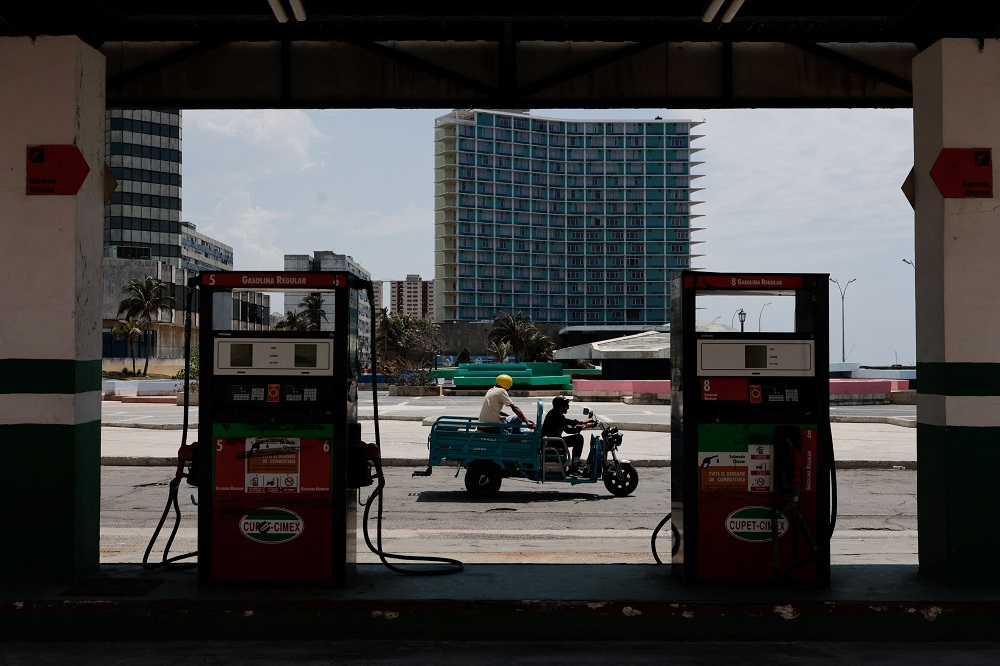
Cuba's economic woes intensified in January after the United States deposed Venezuela's leftist leader Nicolas Maduro, whose government had been providing around half of the island's fuel needs.
Last week the United States imposed sanctions on a Cuban military conglomerate that controls nearly 40 percent of the economy, after Trump signed an order to punish any foreign banks that transact with US-blacklisted entities. (AFP)
Edited by Cecil Wong
US renews offer of US$100mn to Cuba for cooperation
2026-05-14 HKT 07:24
Share this story


