


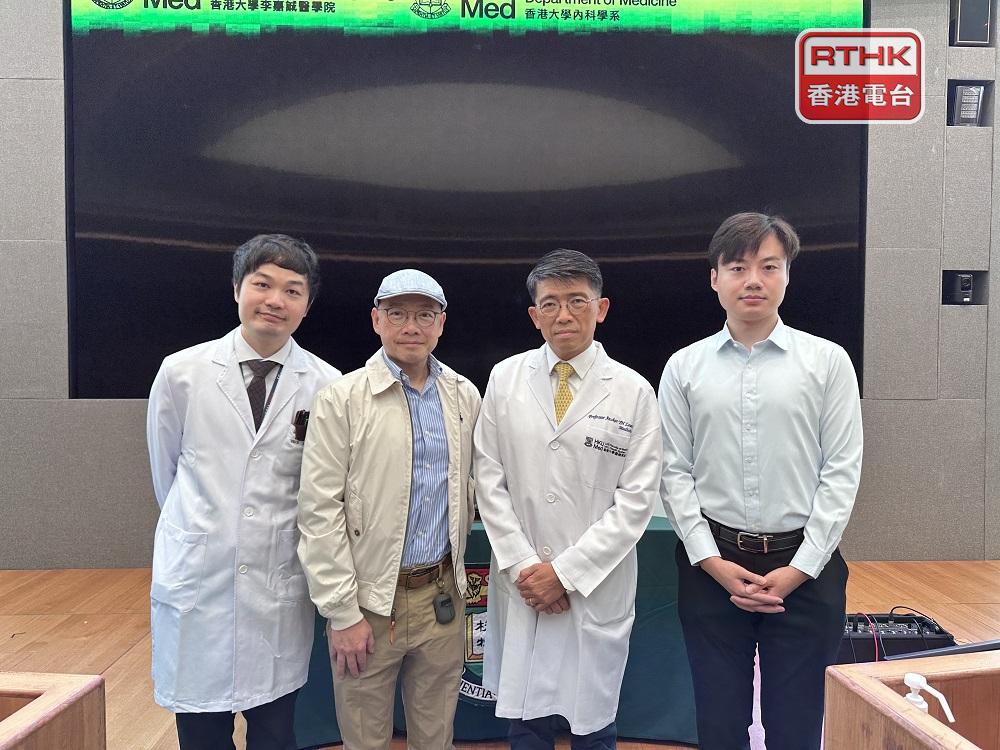
Researchers from the University of Hong Kong say they have developed a combination therapy that could help patients with an aggressive form of leukaemia achieve remission and become eligible for life-saving bone marrow transplants.
The treatment, called QUIZOM, uses two drugs to target a common genetic mutation known as FLT3 which is found in about 30 percent of acute myeloid leukaemia cases.
Patients with this mutation face a high risk of the cancer returning after treatment.
In a clinical trial involving 40 patients aged 23 to 81 whose cancer no longer responded to chemotherapy, the new combination led to composite complete remission in approximately 83 percent of cases.
It also reduced the risk of relapse and helped 13 patients proceed to bone marrow transplantation.
Anskar Leung, chair professor at the university’s department of medicine, said the therapy works by blocking cancer cell growth while also activating the patient’s own immune system to fight the disease.
“When we first started it, we didn't expect any change in the immune system but we did a lot of laboratory studies and showed that if you combine the two drugs together, you actually activate the immune system,” said Leung, who led the study.
“We also identified, based on the omics studies and single-cell transcriptomics, that the T cells of these patients, particularly the responders, they actually show an immune activation.
“So it's a phenomena that we kind of identified through this research, and we had a bit of laboratory data to show that this kind of immune activation is important in clearing out the leukaemic cells.”
He described this as a dual benefit, similar to getting chemotherapy and immunotherapy at the same time.
The combination has completed a phase 2 clinical trial, with plans for a third round.
Edited by Thomas McAlinden
HKU develops two-drug therapy for leukaemia
2026-05-20 HKT 12:09
Share this story


HKU's Professor Anskar Leung speaks to Hailey Yip

