


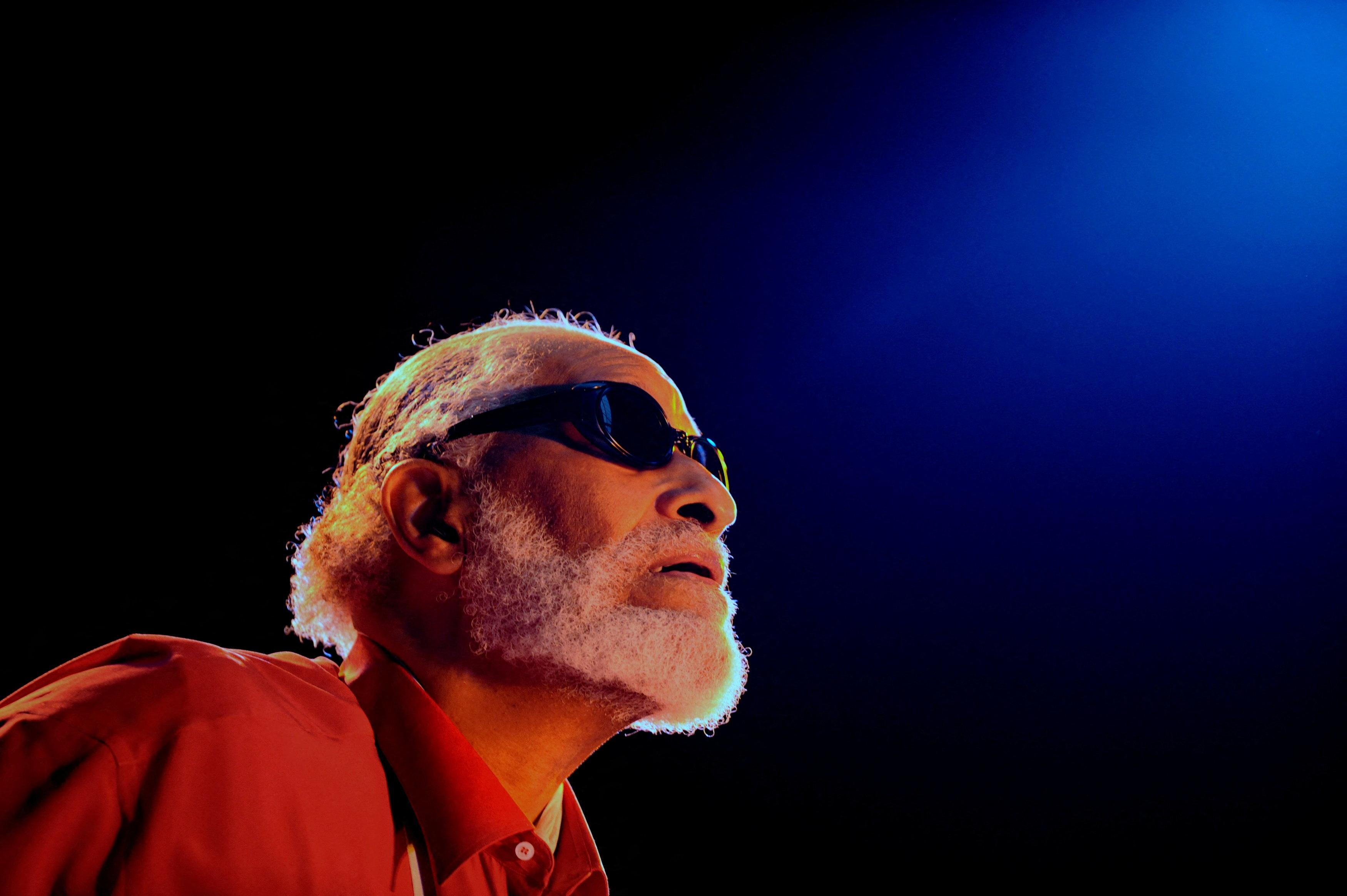
Sonny Rollins, the "Saxophone Colossus" whose hard-charging yet flowingly meditative works made him the last in a golden era of jazz greats, died on Monday. He was 95.
"It is with deep sorrow and profound love that we announce the passing of Sonny Rollins," a post to his social media page said, adding that he "died this afternoon at his home in Woodstock, NY."
A constantly evolving creative force, Rollins found in jazz a means of social and spiritual commentary, with his tenor sax expressing the hopes of African Americans in the civil rights movement, the grief of the United States after the September 11 attacks, and the mystical path he found on extended retreats in India and Japan.
The Harlem-born Rollins — recognisable in his later years for a shock of white hair — was one of a handful of saxophone players who defined the instrument, a pantheon that includes Charlie Parker, Coleman Hawkins and John Coltrane, with whom he had an affectionate but complicated relationship.
But unlike so many artists from jazz's defining post-World War II period, Rollins lived a long life, remastering his work well into his 80s even as respiratory issues limited his performances.
In an interview with AFP, Rollins credited his longevity to yoga — which helped him to concentrate and stay off drugs and alcohol — but mostly to his creative thirst.
"I'm still alive because I'm still learning," Rollins said in the 2016 interview.
Among major saxophonists, Rollins' style was among the most biting — a heavy delivery that often struck rather than soothed the listener — yet he paradoxically was intricate and holistic about composing, describing music as a path to find universal truths.
He was dubbed the "Saxophone Colossus" after the title of his seminal 1956 album, in which he brought a new power to the instrument as he came to define hard bop — a jazz that was intense and stripped back the genre's structural confines.
The most enduring image of Rollins comes from the early 1960s when, needing a break from his rising fame, he would practice on the Williamsburg Bridge that connects Brooklyn and Manhattan's bustling Lower East Side, playing for nearly every waking hour over three years, even in the cold.
The very public sabbatical produced one of his best-known albums, 1962's "The Bridge," and has led to proposals to rename the Williamsburg Bridge in Rollins' honour.
Rollins also crossed over to a non-jazz audience with occasional forays into rock, most notably his appearances on The Rolling Stones' 1981 album "Tattoo You." (AFP)
Edited by Tony Sabine
Sonny Rollins, last jazz 'colossus,' dead at 95
2026-05-26 HKT 11:43
Share this story


