


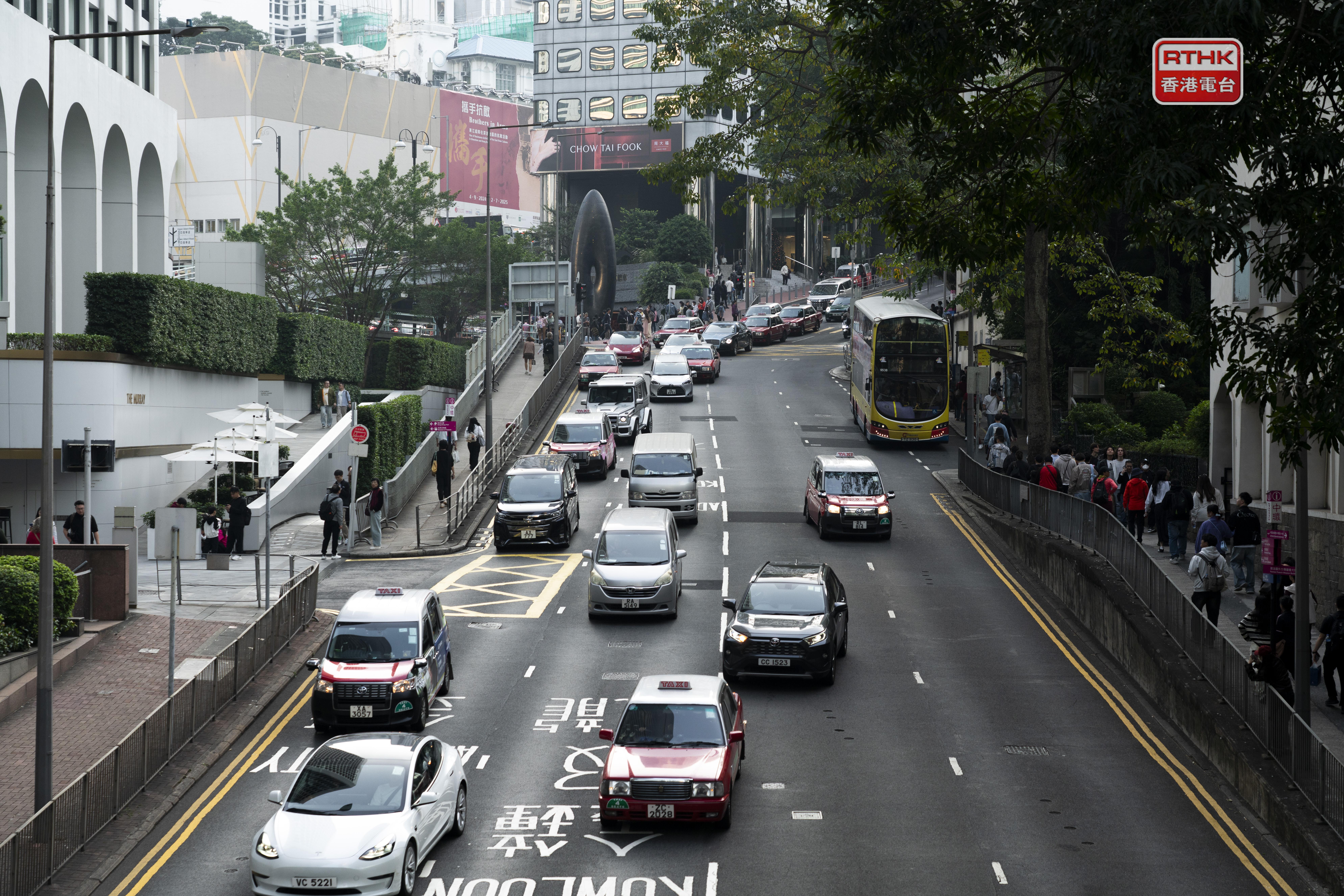
A think tank said on Wednesday that the government should provide more details on how often it plans to adjust a quota system for ride-hailing permits to offer the market greater transparency.
Authorities have proposed rolling out up to 10,000 permits in the first phase.
Assistant research director Jason Leung from the Our Hong Kong Foundation described it as "a prudent quota, but a tight one", given the city's 18,000 licensed taxis.
Leung also said the government should offer the public more information about the quota review system.
"To make that review clause credible, it should pre-commit to specific and measurable figures," he said.
"For instance, if citywide peak-hour booking success rates drop below a defined threshold, or if average waiting times exceed a set benchmark, at which point the quota is automatically, or there's a mechanism for it to be raised.
"So a regular, perhaps quarterly review, guided by objective metrics, would give passengers and platforms the confidence that the 10,000 number is not a completely unchangeable one, that it can be adjusted in the future based on real-life metrics."
The government has proposed a HK$1.2 million annual licence fee for platform operators, which Leung said is not a significant amount for larger operators offering hundreds of thousands of trips each month.
"It can be easily absorbed into operational costs, so it's not a barrier to a major operator.
"But if you are talking about smaller operators or new entrants to the market, it could be potentially burdensome, especially for emerging platforms with limited revenues."
He said the government could set up a tiered or revenue-linked fee structure to allow smaller platforms to operate.
On top of monitoring operational data to be shared by platforms, Leung said authorities should track the metrics of taxi in evaluating how they perform, so as to better assess whether ride-hailing services and cabbies co-exist.
Edited by Edmond Fong
Calls for greater transparency in permit-quota review
2026-05-27 HKT 18:51
Share this story


Jason Leung speaks to Janice Lo

