


US President Donald Trump on Wednesday dismissed a report that Iran and Oman would manage shipping through the Strait of Hormuz as part of a deal to end the war, in a sign that any potential agreement remained elusive.
Trump's comments came after Iranian state TV reported that it had obtained an unofficial draft of an agreement that would restore commercial shipping through the strategic waterway to prewar levels within a month, with Iran and Oman jointly managing traffic. That framework also would have the United States lift its blockade of Iranian ports and withdraw military forces from Iran's vicinity.
Trump said no single country would have control over the waterway, and appeared to threaten Oman, a country with which the United States has decades-long military and economic ties.
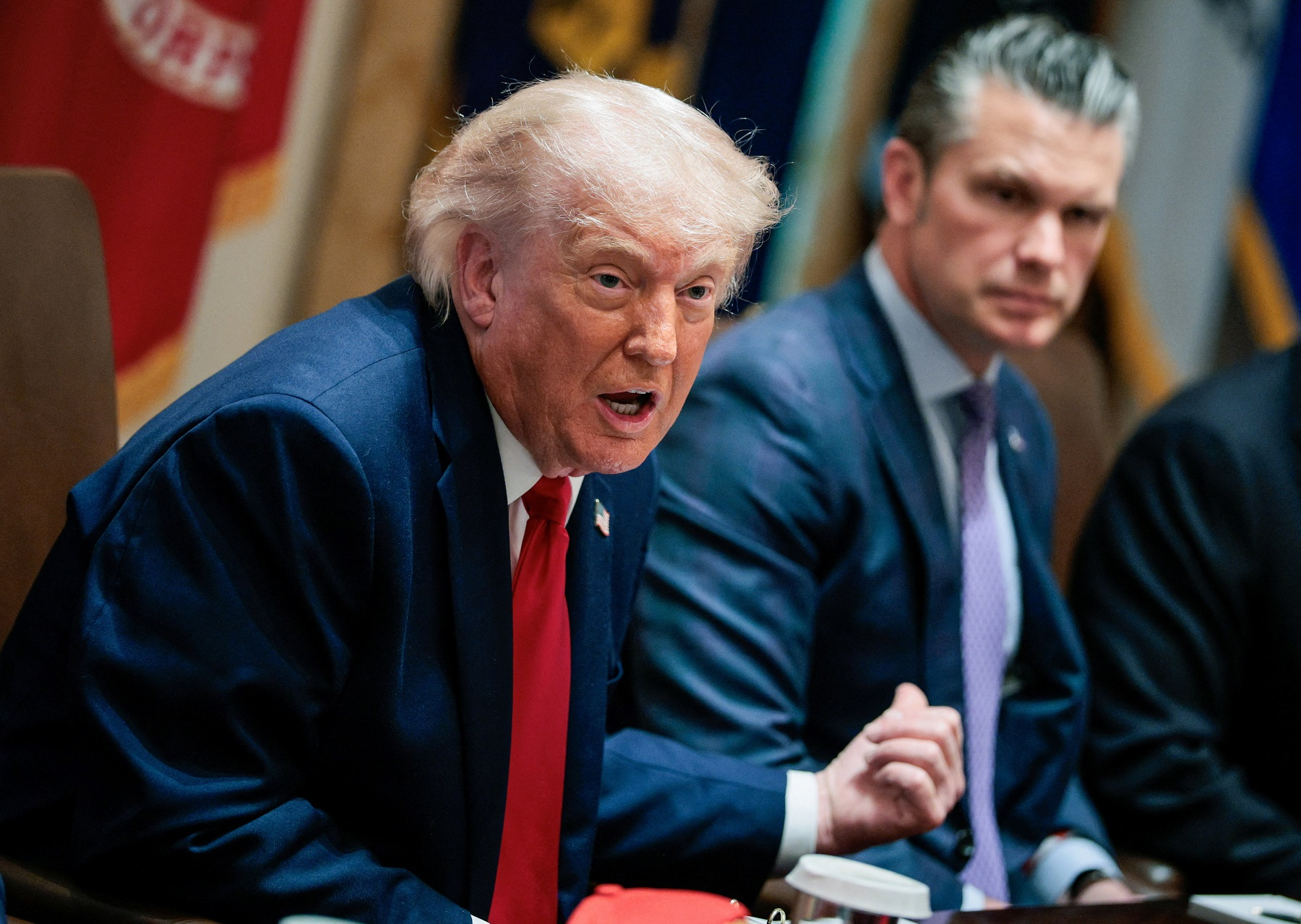
"Nobody's going to control (the strait)," Trump said at a cabinet meeting attended by reporters. "It's international waters and Oman will behave just like everybody else or we'll have to blow them up. They understand that, they'll be fine."
The White House and Oman's embassy in Washington did not immediately respond to a request for comment.
Ebrahim Azizi, head of the Iranian parliament's national security committee, said Trump’s “rhetoric” would not force Iran to back away from its demands to enrich uranium, wield authority over the strait and see sanctions against it lifted.
"It is obvious Trump, seeking a way out of this strategic deadlock, alternates between issuing threats and appealing for an agreement," Azizi said in a post on X.
The dueling statements showed that the two countries remain far apart even after suggestions from the White House in recent days that an initial deal to end the war could be imminent.
The three-month-old war has killed thousands and sent global energy prices sharply higher since it began on February 28 with US and Israeli strikes. Trump has repeatedly said that a deal is close at hand since a ceasefire took effect in early April.
The strait, which handled a fifth of the world's oil and liquefied natural gas traffic before the war, the dismantling of Iran's nuclear capacity and ongoing sanctions are the sticking points in talks seeking to end the three-month-long conflict.
The waterway is covered by international law that guarantees foreign vessels the right to pass through.
"We'll watch over it, but nobody's going to control it – that's part of the negotiation that we have," Trump said.
Trump has also asked Saudi Arabia, Qatar, Pakistan, Türkiye, Egypt and Jordan to join the Abraham Accords normalising relations with Israel as part of a deal to end the war, which they have declined to do.
He brought up the issue again at the cabinet meeting. "I'm not sure we should make the deal if they don't sign, if you want to know the truth," Trump said.
Iranian state TV said the draft deal would also have the United States withdraw military forces from the immediate vicinity, though it said the issue of US troops in the region needed further discussion. The White House dismissed the report as a "complete fabrication." Tehran did not comment.
The Iranian TV report did not mention Iran's nuclear program, which the US wants disbanded. Iranian sources have said talks on the nuclear issue will come in a second round of negotiations. Iran says its nuclear program is for peaceful purposes only.
"The bottom line is Iran's never going to have a nuclear weapon," US Secretary of State Marco Rubio said at the cabinet meeting. (Reuters)
Edited by Cecil Wong
Trump appears to threaten Oman over Hormuz report
2026-05-28 HKT 07:13
Share this story


Azam Khan reports

