


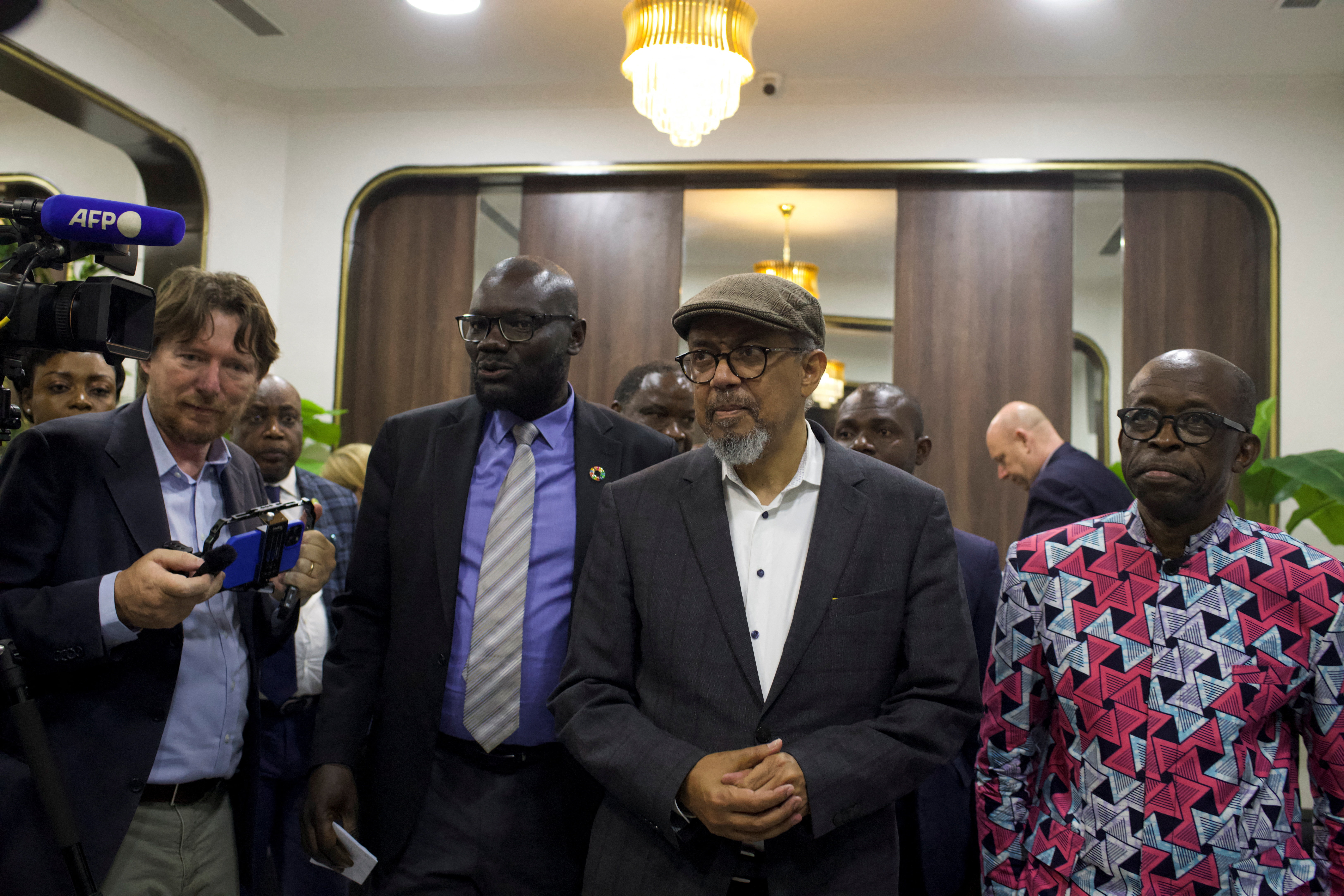
The UN health chief, who is in the Democratic Republic of the Congo to help fight an Ebola outbreak, was due on Friday to meet the African country's authorities before heading Saturday to the violence-hit region at the centre of the crisis.
World Health Organization head Tedros Adhanom Ghebreyesus arrived in the capital, Kinsasha, late on Thursday, two weeks after the outbreak of the highly contagious haemorrhagic fever was declared.
He had been due to travel Friday to Ituri, a remote northeastern province that is the epicentre of the 17th Ebola outbreak in the Democratic Republic of the Congo (DRC), but the trip has been pushed back by a day.
There have been at least 1,077 suspected cases since the outbreak was declared on May 15, including 246 deaths, the Africa Centres for Disease Control and Prevention said on Thursday.
But the true reach of the outbreak, which is thought to have been circulating before it was detected, is likely much wider, the WHO has warned.
The DRC has limited capacity to conduct laboratory tests to confirm the transmission of cases.
Congolese and international health authorities have struggled to curb the spread of the virus, which is already present in three provinces and in neighbouring Uganda, where seven confirmed infections, including one death, have been recorded.
The DRC, a vast nation of more than 100 million people, is one of the poorest countries in the world and for more than three decades has been plagued by conflict from myriad armed groups in its mineral-rich east.
Ebola, which is passed on through close contact and bodily fluids, has killed more than 15,000 people in Africa over the past 50 years.
The deadliest outbreak in the DRC claimed nearly 2,300 lives out of 3,500 cases between 2018 and 2020.
"That thing can be stopped," Tedros said on his arrival on Thursday after assuring the Congolese people earlier in a message on X: "I want you to know that you are not alone."
Tedros was speaking as WHO on Friday announced the first recovery of a confirmed Ebola patient in the DRC.
"The DRC has said that on May 27, a patient recovered and left the hospital and has been discharged into the community," the WHO's Anais Legand said, adding it was "the first one". (AFP)
Edited by Thomas McAlinden
World health chief on way to Ebola epicentre area
2026-05-29 HKT 18:32
Share this story


