


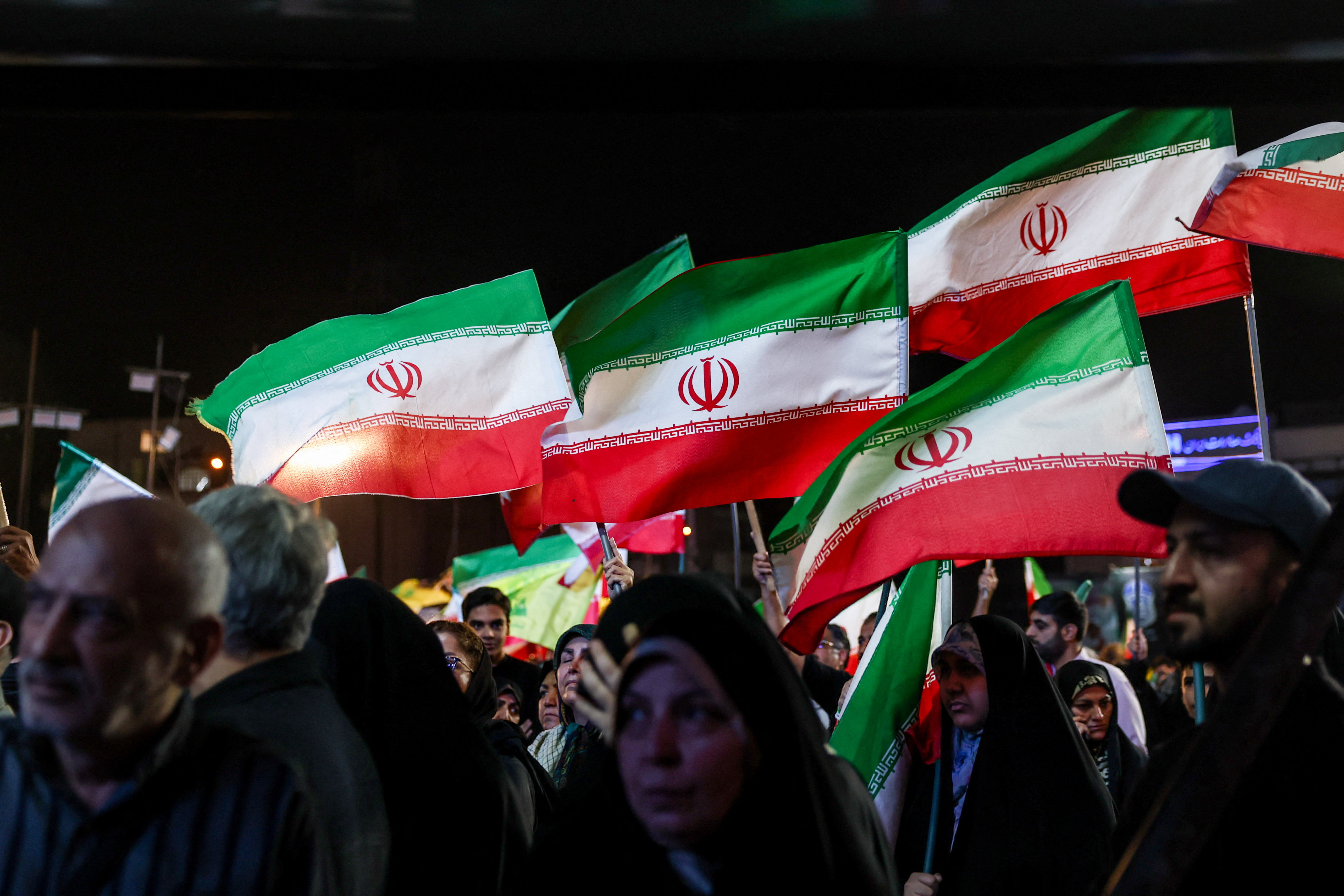
US President Donald Trump will only make a peace deal with Iran if it meets all of his conditions, a White House official told reporters on Friday, as questions swirled about the state of negotiations to end the war.
The White House had indicated Trump was close to a decision on a potential deal, even as Tehran insisted there was still "no final agreement" on ending the Middle East conflict.
An Iranian state media report also rebutted several key elements of Trump's characterization of the deal, with sources calling his remarks a "mixture of truth and lies."
US sources had told AFP the deal was waiting on Trump's sign-off following weeks of halting negotiations over a conflict that has engulfed the Middle East and shaken the global economy.
Trump attended a two-hour meeting in the White House Situation Room on Friday but did not reach a decision.
"President Trump will only make a deal that is good for America and satisfies his red lines," a White House official said afterwards.
"Iran can never possess a nuclear weapon," the official added.
Trump had announced the meeting in a lengthy social media post, reiterating long-held demands that Iran agree never to develop nuclear weapons and reopen the vital Strait of Hormuz shipping lane.
Iranian foreign ministry spokesman Esmaeil Baqaei pushed back, telling state media that the Islamic republic "said goodbye to the language of 'must' 47 years ago."
Exchanges of messages were continuing, he added, but "no final agreement has been reached yet."
In a phone call with the Emir of Qatar, Iranian President Masoud Pezeshkian said Iran was ready to achieve a "dignified framework" to end the war, according to state news agency IRNA.
In his post, Trump said Tehran would remove mines from the Strait of Hormuz and end its blockade of the waterway with "no tolls," while the US would lift its parallel blockade of Iranian ports.
The two countries would also coordinate on removing and destroying Iran's enriched uranium, he said, adding that "no money will be exchanged, until further notice."
Iran's Fars news agency, however, cited sources as saying Tehran was demanding "the immediate release of US$12 billion in frozen Iranian assets" before moving to the next phase of negotiations.
On the toll-free reopening of Hormuz, the sources said "no such clause appears in the text of the agreement," while Trump's comment on destroying Iran's nuclear material "is fundamentally baseless."
Baqaei also told state TV there were currently "no negotiations" taking place on Iran's nuclear program, as Iran's top diplomat suggested the US was holding up a deal with its approach to the talks.
Hopes of an agreement had risen on Thursday after US officials voiced optimism about the diplomatic progress.
Energy markets have whipsawed this week as investors parse the chances of an agreement that could potentially resume normal shipping through the crucial Strait of Hormuz.
Washington and Tehran have accused each other of violating the truce in and around the strait as recently as this week, with US strikes on the southern Iranian port of Bandar Abbas countered by retaliatory Iranian fire.
Iranian state TV said Friday that 24 ships had transited the strait in the past 24 hours, in coordination with the Revolutionary Guards and the foreign ministry.
But it warned that "ships from hostile countries face a severe response" from Iran's military.
On the war's Lebanon front, Israeli Prime Minister Benjamin Netanyahu said on Friday that his country's forces had pushed deeper inside Lebanon, while Iran-backed Lebanese group Hezbollah claimed responsibility for a series of drone attacks on military targets in northern Israel, including troop gatherings and a barracks.
It also said its forces were attacking Israeli troops trying to advance in the area of the medieval Beaufort fortress, near the city of Nabatieh.
The attacks came as Israeli and Lebanese military delegations were holding security talks in Washington.
Netanyahu said troops had crossed the Litani River, around 30 kilometres north of the Lebanon-Israel frontier, and were "hitting Hezbollah head on."
Israel also kept up its heavy bombardment of southern Lebanon, where the Lebanese health ministry said a rescuer was among the 11 killed.
A ceasefire between Israel and Hezbollah was supposed to have taken effect on April 17, but has never been observed.
Both sides accuse each other of violating it and justify their attacks by the other camp's alleged breaches.
Lebanon was drawn into the war in early March when Hezbollah launched rockets at Israel over the killing of Iran's supreme leader in US-Israeli attacks, prompting Israeli strikes and a ground invasion.
Edited by Tony Sabine
Trump insists on red lines as Iran deal remains stuck
2026-05-30 HKT 10:27
Share this story


