


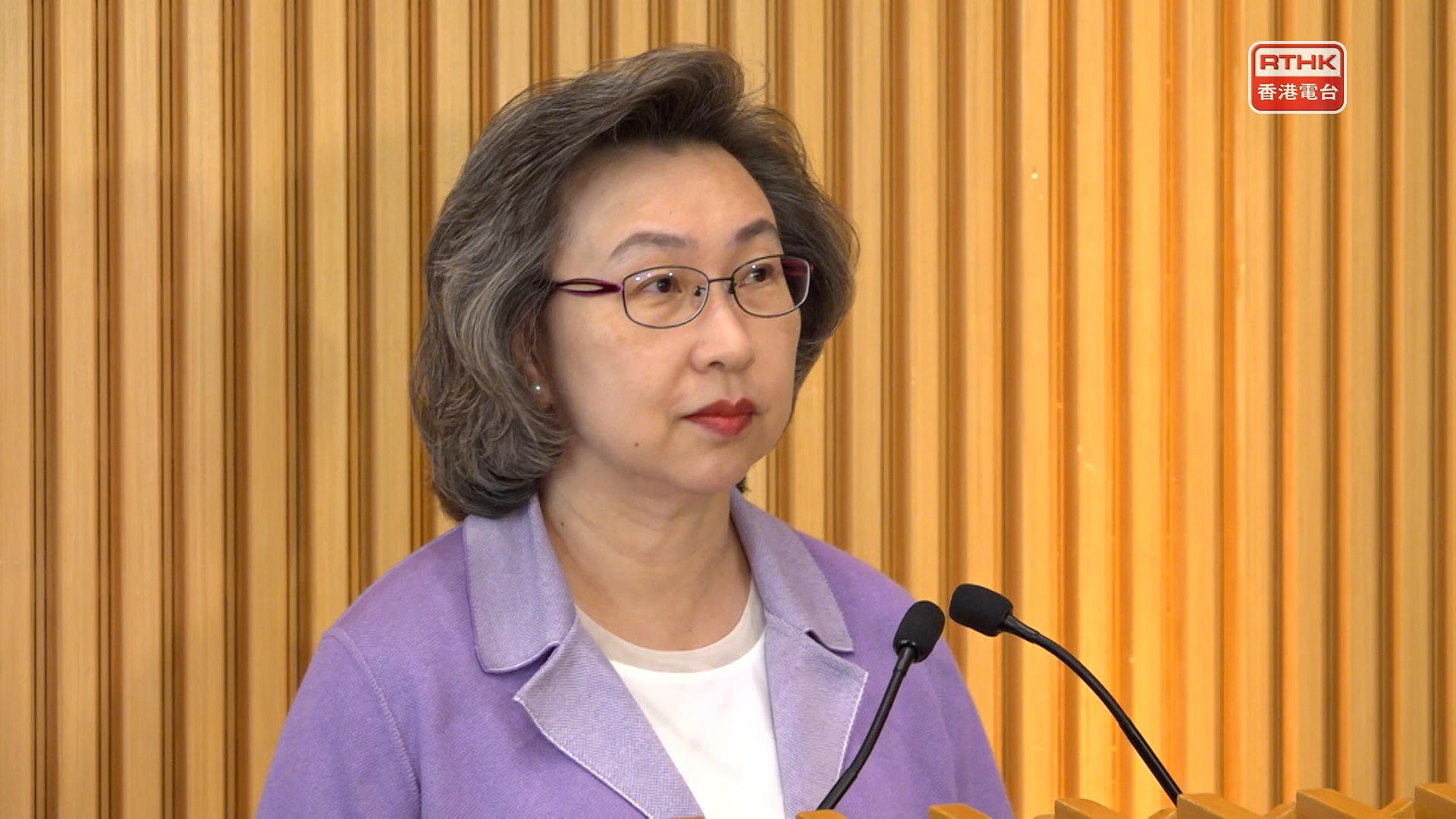
An enhanced appraisal system for civil servants will only cover some grades in the first stage, Secretary for the Civil Service Ingrid Yeung said on Saturday.
The revised system will be implemented starting October 1, under which about five to 10 percent of those deemed to have underperformed would not be granted a salary increment.
Yeung told a television programme that a review would be conducted after two years to see if any adjustments needed to be made to the system as well as decide on the number of civil service grades to be included in the second stage of the system's implementation.
The government, she added, is ultimately aiming to have all civil servants appraised under the system.
"Our first phase does not cover all grades, but all departments have to participate," Yeung said.
"Every department, based on their size, has to nominate one or two grades to participate.
"These two grades must be from the core of the department, meaning that they carry out its core duties."
Yeung was asked whether the move would affect cooperation within the civil service and morale as staff attempt to be the top performers.
“In terms of morale, I think if an appraisal is too lenient, then it will affect the morale of those workers who really performed well," she said.
"They may strive to perform well but if they get ratings that are equal to those colleagues who have a significant gap with them, this quite affects morale."
Implementation of the enhanced appraisal system comes amid the recent release of pay trend survey findings – which the government references in deciding the pay rises for more than 170,000 civil servants in the city – that point the way to possible salary increments of 4.12 percent for seniors, 2.64 percent for middle-ranking staff and 1.17 percent for juniors.
While the Executive Council has yet to make the final decision, as the result is only one of the factors that it has to consider, Yeung stressed that the government has to provide attractive salary levels in order to be able to compete with the private sector for talents and retain their services.
Edited by Thomas McAlinden
Civil service reviews 'to start with some grades'
2026-05-30 HKT 15:19
Share this story


