


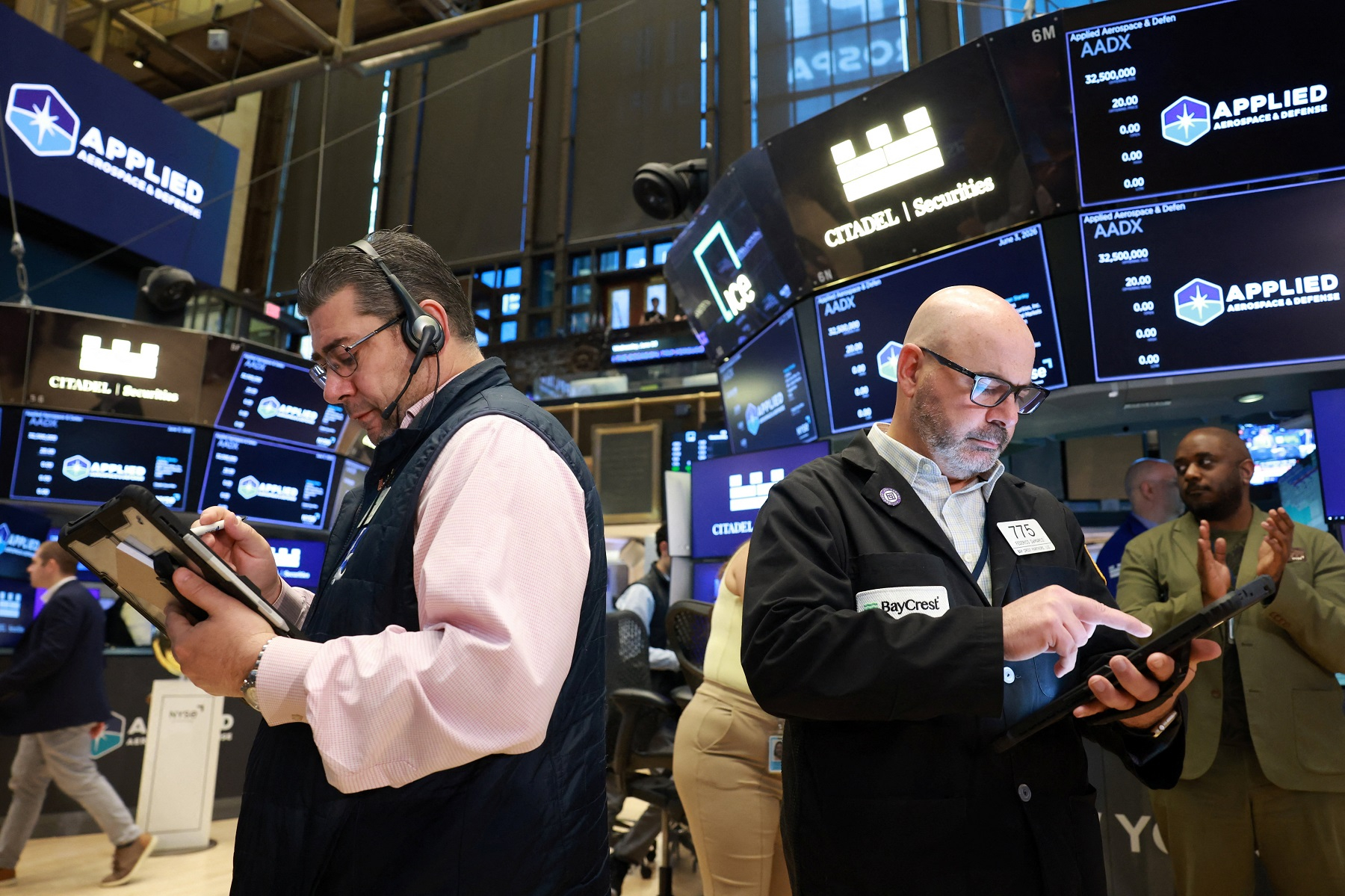
Wall Street stocks pulled back from record highs on Wednesday as flaring tensions in the Middle East and rising crude prices stoked inflation jitters and convinced investors to take some profits.
All three major US stock indexes closed in negative territory, dragged lower by financials and tech, with the small-cap Russell 2000 underperforming its larger-cap counterparts.
Chips gained 1.4 percent, indicating the artificial intelligence fervour is alive and well. Even so, six of the Magnificent Seven group of AI-related megacaps ended lower. Meta Platforms was the sole gainer, rising 4.2 percent.
"The AI names are trading on their own completely separate world, largely oblivious to macro and geopolitical risk, at least within reason," said Ross Mayfield, investment strategy analyst at Baird in Louisville, Kentucky.
"And so there's going to be a bid for those names, especially on days where everything else looks a little bit less attractive."
Middle East hostilities intensified as the US and Iran traded a new round of air strikes, the latest test of a shaky ceasefire. Oil prices rose, adding to worries that upward pressure on energy prices could metastasise into broader, systemic inflation.
"This market continues to demonstrate a tug of war between fundamentals in the US economy, which are incredibly positive, and concerns that the duration of the conflict in the Middle East will lead to downside risks," said Bill Northey, senior investment director at US Bank Wealth Management, Billings, Montana.
"Our framework is centred around the duration of the closure of the Strait of Hormuz as the primary input to inflation expectations."
"The longer the duration of that closure, the less likely the Federal Reserve will be able to ease in 2026," Northey added.
In fact, financial markets are pricing in a 41.1 percent likelihood of a rate hike at the conclusion of the US Federal Reserve's December meeting, up from 9.1 percent one month ago, according to CME's FedWatch tool.
New York Fed President John Williams reiterated his position that the central bank does not need to change interest rates despite upside inflation risks, stating monetary policy is "in the right place."
Economic data suggested the labour market was stable, and the services sector continued to expand, but input prices remained elevated and corporate spending plans appeared soft amid rising energy costs and geopolitical uncertainties.
The Beige Book, the Fed's regional economic survey, showed economic activity gathered steam in recent weeks, employment was little changed, but the fallout from higher energy prices due to the war was pervasive.
The Dow Jones Industrial Average fell 620 points, or 1.2 percent, to 50,687, the S&P 500 lost 56 points, or 0.7 percent, to 7,553 and the Nasdaq Composite lost 239 points, or 0.9 percent, to 26,853.
GameStop jumped 6 percent after the original meme stock posted a rise in quarterly revenue and unveiled a US$2 billion share buyback programme. Elon Musk's SpaceX plans to price its IPO at US$135 a share to raise a record US$75 billion, a source familiar with the matter told Reuters on Tuesday. (Reuters)
Edited by Cecil Wong
Wall Street ends lower as Middle East tensions rise
2026-06-04 HKT 06:38
Share this story


