


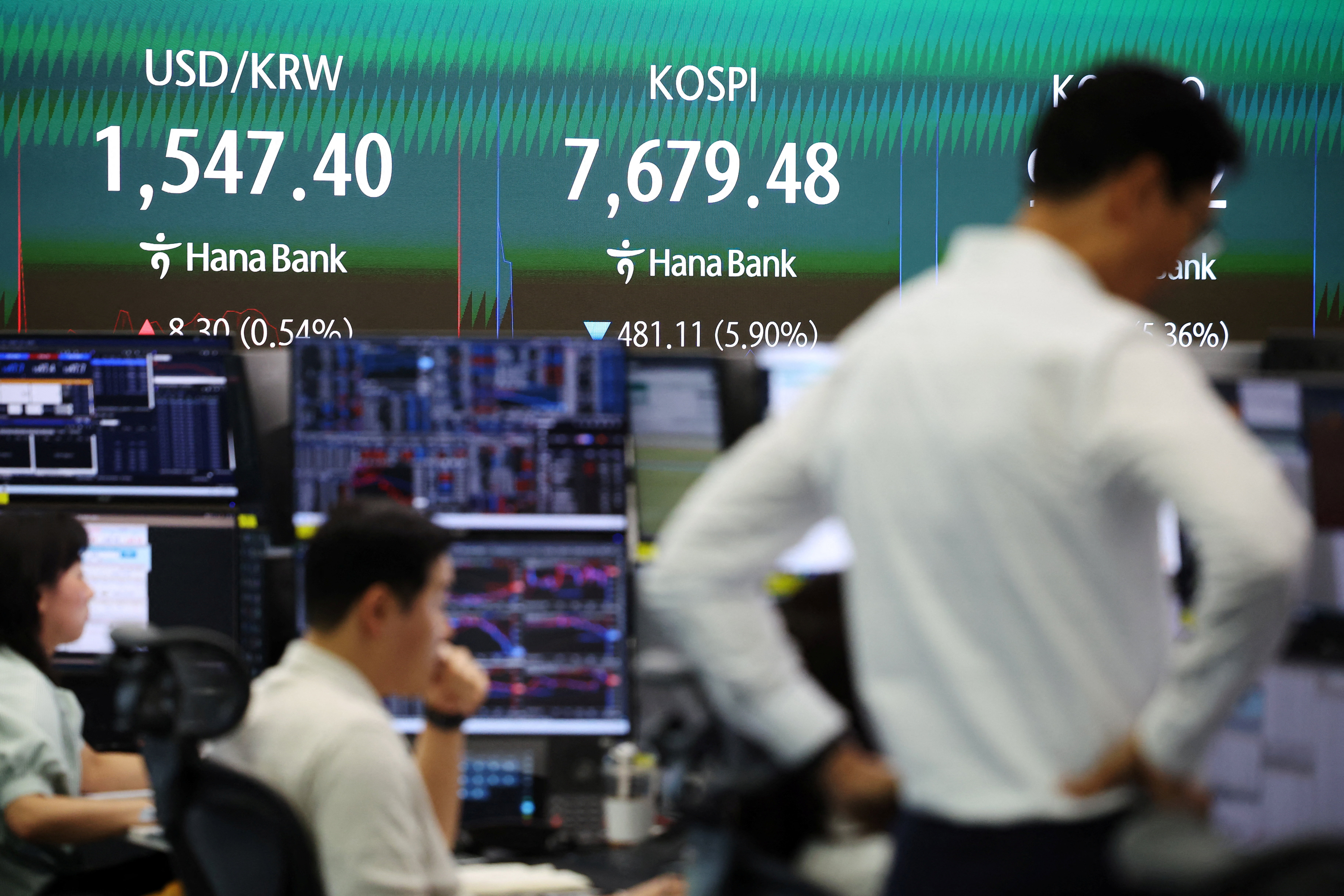
Seoul's Kospi stock index dived more than eight percent to lead a rout across Asia on Monday as tech firms were hammered and strong US jobs data fuelled bets on a Federal Reserve interest rate hike.
In Hong Kong, the benchmark Hang Seng Index fell 304 points, or 1.2 percent, to 24,657 on turnover of HK$363.97 billion.
The China enterprises index was 95 points, or 1.1 percent, lower at 8,341 while the tech index was 132 points, or 2.7 percent, down at 4,755.
Up north, the Shanghai Composite Index closed down 68 points, or 1.7 percent, at 3,959 on turnover of 1.27 trillion yuan.
The Shenzhen Component Index dropped 493 points, or 3.22 percent, to close at 14,821 on turnover of 1.53 trillion yuan while the ChiNext Index declined 146 points, or 3.69 percent, to 3,811 on turnover of 722.402 billion.
In Tokyo, the Nikkei share average ended down 2,563 points, or 3.85 percent, to 64,024, its most in three months, on renewed concerns about technology valuations and a flare-up in Middle East hostilities.
The broader Topix slid 96 points, or 2.45 percent, to 3,852.
In Seoul, the Kospi plunged 676 points, or 8.3 percent, to close at 7,484, its biggest daily fall since March 4, tripping circuit breakers, after robust US jobs data lifted bets on a Federal Reserve rate hike and unleashed a selloff in the tech-heavy market that had powered the broader AI rally.
News that Iran and Israel had traded fire sparked worries about an escalation of the Middle East crisis, adding to the gloomy mood on trading floors and sending oil prices surging more than three percent.
The technology sector bore the brunt of losses as investors cashed out following a breathtaking surge in recent months powered by a race into all things linked to artificial intelligence.
The selling came after a closely watched report on Friday showed more than double the amount of US jobs than expected were created in May, while those in the previous two months were revised higher.
Analysts said that showed the world's top economy remained resilient in the face of surging prices, but ramped up bets on the Fed raising interest rates. (AFP/Xinhua)
Edited by Tony Sabine
HK stocks retreat as Kospi dives amid market jitters
2026-06-08 HKT 16:42
Share this story


